
Beautiful Plants For Your Interior
Beautiful Plants For Your Interior
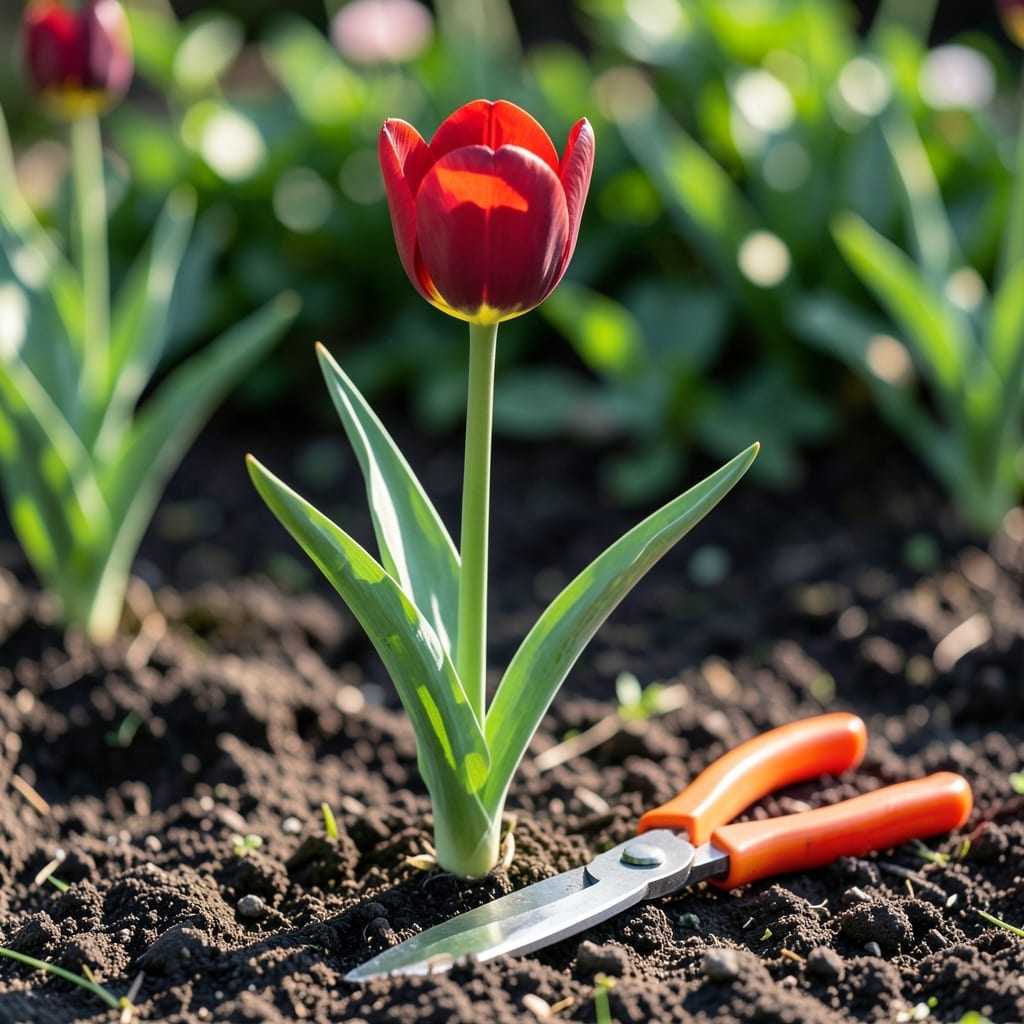
Leave tulip leaves intact until they turn yellow or brown, usually 6-8 weeks after blooming. Removing them too early cuts off nutrient supply to the bulb for next year’s growth.
Those unsightly leaves are actually solar panels for your bulbs, converting sunlight into energy reserves. 💫 I’ve seen gardeners make the mistake of tidying up too soon, only to get weak blooms the following spring. The foliage needs that full 6-8 week period to photosynthesize and store nutrients, even after the flowers fade completely.
💡 In This Article
Those green leaves are powerhouses of photosynthesis, working overtime even after flowers fade. They capture sunlight to produce sugars through chlorophyll, which then travel down to the bulb as stored energy. This process fuels next year’s growth, with 6-8 weeks being the critical window for maximum nutrient absorption. 💫
Cutting leaves prematurely is like unplugging a phone mid-charge. The bulb misses out on essential carbohydrates it needs to develop a strong flower bud for the following season. Studies show bulbs with full foliage retention produce 30-40% larger blooms the next year compared to those with early leaf removal. 🌟
You’ll notice the leaves gradually turn yellow as chlorophyll breaks down—nature’s signal that photosynthesis is complete. At this stage, the bulb has absorbed about 90% of the nutrients it needs for dormancy and future growth. The remaining 10% comes from the final brown, papery stage. ⚡
The timing isn’t arbitrary. Tulips evolved this way in their native Central Asian habitats, where they needed to store energy during short growing seasons. This adaptation is why modern hybrids still follow the same biological rhythm, even in your garden. The foliage isn’t just decorative—it’s the plant’s survival strategy. ✨
What most gardeners overlook is that even ugly, floppy leaves are working hard. I’ve seen perfectly healthy tulips with yellowing foliage still producing vibrant blooms the next spring, while those with prematurely removed leaves often skip a year or produce weak, stunted flowers. The visual mess is temporary; the payoff is long-term. 💛
Keep them until they turn yellow or brown, which takes about 6-8 weeks after flowers fade. This full period ensures the bulb stores enough energy for next year’s growth cycle.
Fold them in half lengthwise instead of cutting. This keeps your garden tidy while allowing photosynthesis to continue. Removing green foliage early starves the bulb of essential nutrients.
Premature removal can result in smaller or no blooms next year. The bulb misses out on up to 40% of its energy reserves, often leading to weak or stunted flowers.
Water lightly only if soil feels dry. Tulips prefer well-drained conditions during dormancy. Avoid overwatering, which can cause bulb rot in the resting phase.