
Beautiful Plants For Your Interior
Beautiful Plants For Your Interior
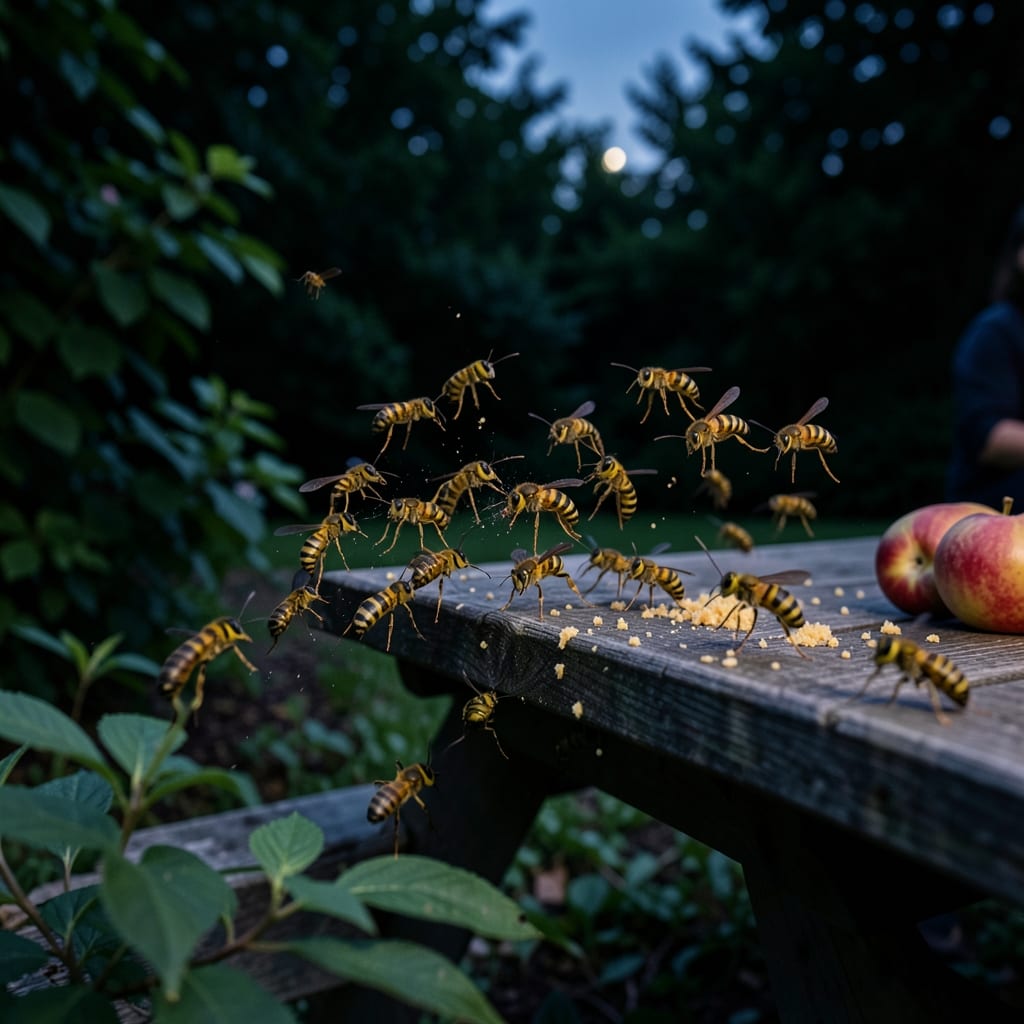
Yellow jackets are primarily active during the day and rarely sting at night. Their reduced visibility and lower aggression levels after dark make nocturnal stings uncommon but not impossible.
I’ve noticed these insects tend to slow down significantly after sunset due to their reliance on light and warmth. 🔥 Their nests become quieter, and they’re less likely to defend them aggressively. That said, disturbing a nest at night can still trigger a response, so caution remains important even in low-light conditions.
💡 In This Article
These insects follow a strong circadian rhythm tied to daylight. Their internal clocks sync with sunrise and sunset, triggering peak activity during warm, well-lit hours. Research shows their foraging drops by 90% after dusk as their compound eyes struggle to detect movement in low light.
This natural downtime is why you rarely see them buzzing around at night.
Temperature also plays a critical role in their nighttime behavior. Yellow jackets become sluggish when temperatures fall below 50°F, and their metabolism slows dramatically. In cooler nights, they cluster inside their nests to conserve energy rather than patrolling the exterior. This makes them far less aggressive unless directly disturbed.
Unlike nocturnal wasps, yellow jackets don’t have adaptations for dark hunting. Their nests remain active internally, with workers tending to larvae, but external defense decreases. Studies using infrared cameras show minimal guard activity at nest entrances after sunset compared to the constant vigilance seen during daylight hours. ✨
Their reduced aggression isn’t just about vision—it’s also hormonal. Daytime foraging triggers aggression hormones that dissipate overnight. This chemical shift means they’re less likely to attack unless provoked severely. However, vibrations from footsteps or bright flashlights can still trigger a defensive response.
This behavioral pattern explains why professional pest controllers often treat nests at night. The wasps are less mobile, reducing the risk of swarming. But homeowners should never attempt this themselves—disturbing a nest without proper equipment can still result in multiple stings, even in darkness. 🔥
No, they become mostly inactive at night due to poor night vision and cooler temperatures. Their foraging drops by 90% after sunset, and they cluster inside nests to conserve energy.
Direct disturbance like stepping on a nest or shining bright lights can provoke them. Vibrations from footsteps or flashlights may still trigger a defensive response, even in darkness.
Professionals often treat nests after dark when wasps are less mobile. However, homeowners should never attempt this—disturbing a nest without proper equipment can still result in multiple stings.
Wear long sleeves, pants tucked into socks, and closed-toe shoes. Avoid scented products and move slowly near suspected nests to minimize vibrations.