
Beautiful Plants For Your Interior
Beautiful Plants For Your Interior
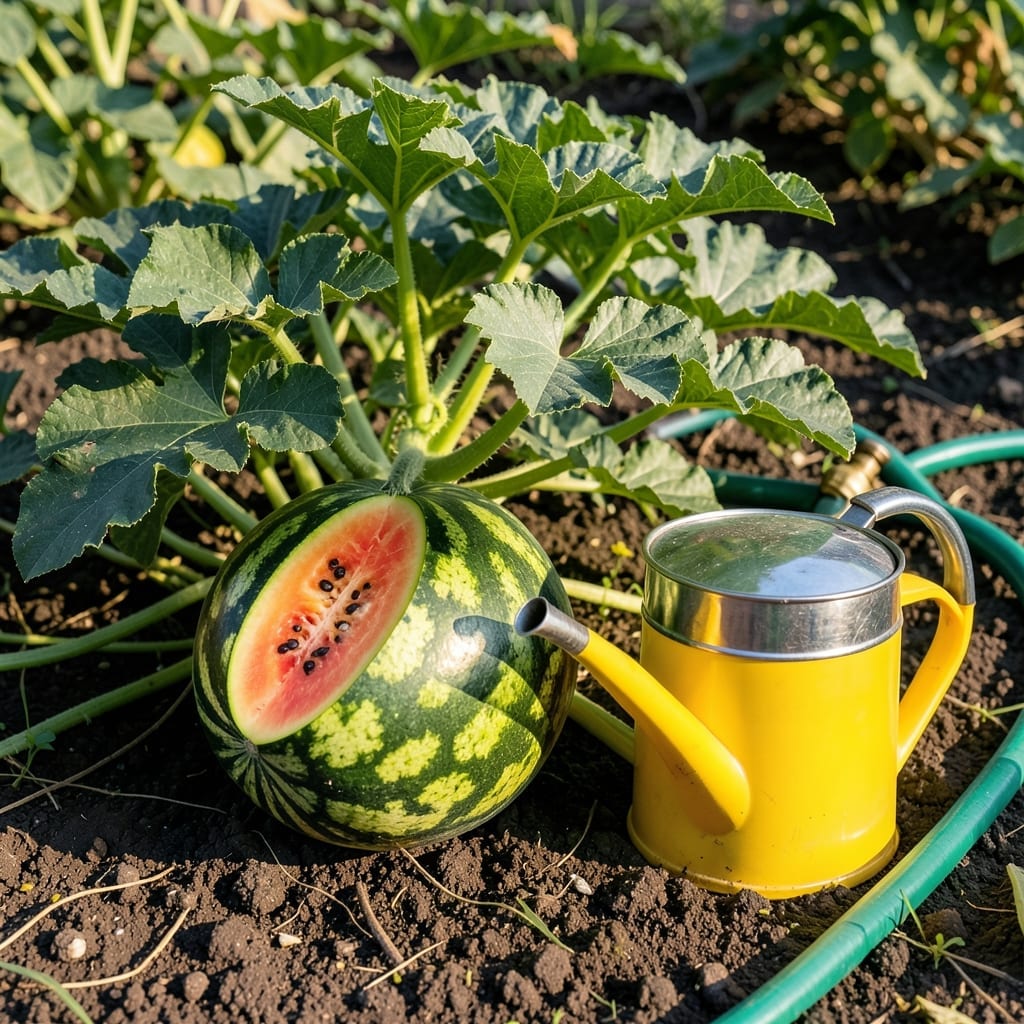
Watermelons are 92% water, but does that mean your 🍉 Watermelon plants need constant watering? Not necessarily. The key to growing those juicy, sweet melons lies in strategy, not just volume.
I’ve seen many gardeners drown their plants in good intentions, only to end up with bland or cracked fruits. The truth is, Watermelon plants have specific needs that change as they grow.
From germination to harvest, getting the watering right can make or break your crop. In zone 6, timing and consistency matter most for healthy vines and big harvests.
Let me show you how to strike that perfect balance. With the right approach, you’ll be enjoying homegrown, mouthwatering melons by July.


If you’ve ever wondered do watermelon plants need a lot of water, the answer is yes—but with strategy. These vines are 92% water when ripe, but overwatering can dilute flavor or cause rot. The key is consistent moisture without soggy soil.
Watermelons thrive with 1-2 inches of water per week, but needs shift as they grow. I’ve found deep watering at the base encourages strong roots while keeping leaves dry prevents disease.
| Growth Stage | Water Needs | Frequency |
|---|---|---|
| Germination | Keep soil evenly moist | Daily light watering |
| Flowering | 1 inch per week | Every 2-3 days |
| Fruiting | 1.5-2 inches | Every 5-7 days |
| Maturity | Reduce to 1 inch | Every 7-10 days |
During germination, I never let the top inch of soil dry out. Seeds need consistent moisture to crack open and sprout. A spray bottle works well here to avoid disturbing the seeds.
Once vines form, I switch to deep watering—soaking the soil 8-12 inches deep to push roots downward. This makes plants more drought-resistant later on.
At flowering, I watch for wilting leaves in the heat of the day. That’s often a sign to increase water slightly, but I always check the soil first. If it’s damp 2 inches down, I hold off.
When fruits form, I back off just a bit. Too much water now can cause bland taste or even cracked melons. I aim for 1.5 inches weekly, but sandy soils may need more.
The maturity stage is critical. I reduce water to 1 inch per week to concentrate sugars. A good rule: if the top inch of soil is dry, it’s time to water.
Signs of underwatering include yellowing leaves and stunted growth. Overwatering shows as wilted vines that don’t recover by evening or mushy stems.
In hot climates, I water in the early morning to reduce evaporation. In cooler areas, I might stretch intervals to 10 days but always monitor soil moisture.
Remember, mulching with straw helps retain moisture and keeps roots cool. I’ve seen 20% less water use with a good mulch layer during peak summer.
🌱I’ve learned that consistent moisture is key for Watermelon plants, but timing matters just as much. Watering in the early morning helps prevent evaporation and fungal issues that can ruin your crop.
In zone 6, aim for 1-2 inches of water per week, but adjust based on your soil type. Sandy soil drains faster, while clay holds moisture longer.
During fruit development, I increase watering to twice weekly in hot weather. But I always check soil moisture first—stick your finger 2 inches deep to test.
For potted Watermelons, you’ll need to water more often, about every 5-7 days. The soil dries out faster in containers, so keep a close eye on moisture levels.
Remember, inconsistent watering can cause fruits to crack. I use mulch to retain moisture and keep soil temperature stable, which helps prevent this issue.
With this schedule, you’ll give your Watermelon plants the right amount of water at the right time, leading to bigger, sweeter harvests by July 🌱