
Beautiful Plants For Your Interior
Beautiful Plants For Your Interior
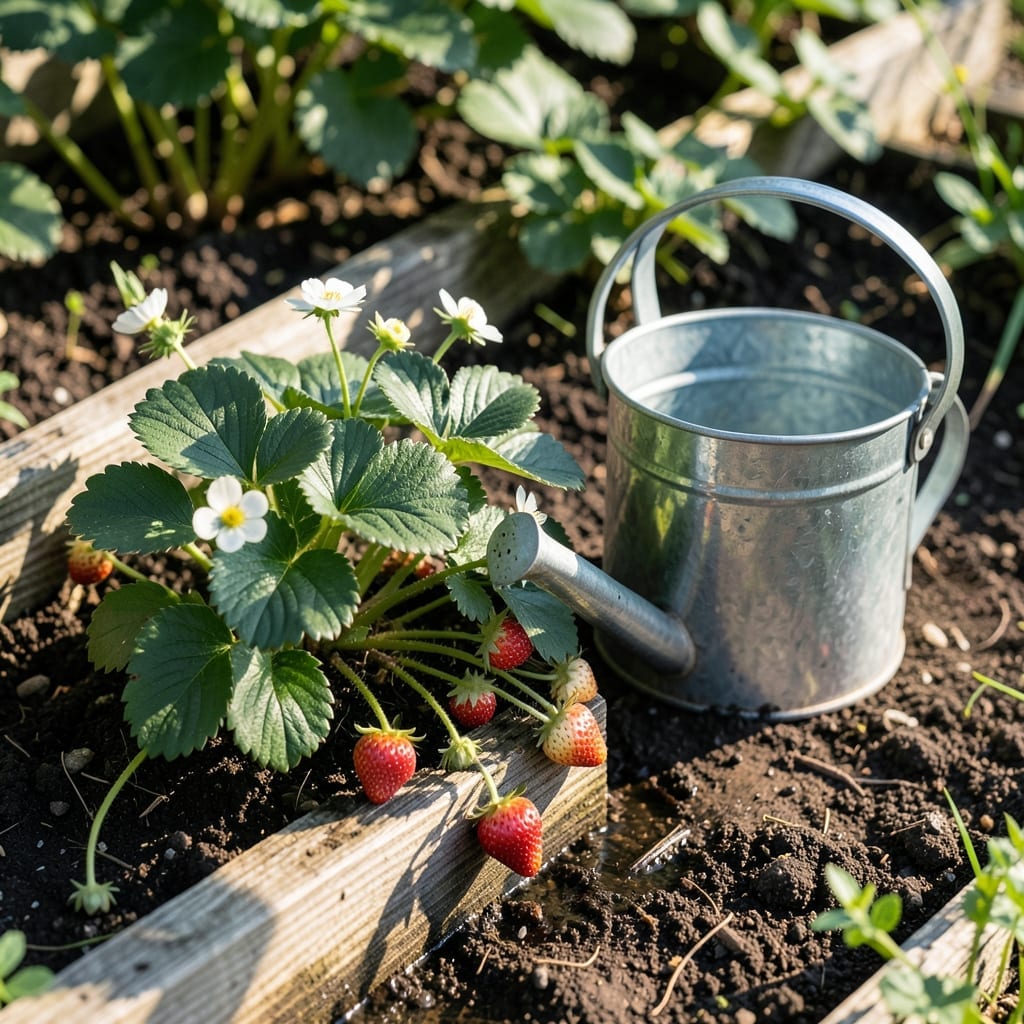
There’s a delicate balance to watering Strawberry 🍓 plants that many gardeners miss. Too little leaves you with dry, bitter berries, while too much can rot your crop before it even starts.
I’ve learned through trial and error that these plants need consistent moisture, but not a swamp. The right approach means juicy, sweet harvests every time.
Discover the simple yet most important watering techniques that will keep your plants thriving in zones 4-9 without the guesswork.
Getting the water amount right is crucial for strawberry plants. They need 1-2 inches per week, whether from rain or irrigation. This keeps the soil consistently moist but never soggy.
I’ve found that morning watering before 10 AM works best. It allows foliage to dry during the day, reducing fungal disease risk. In hotter months, you might need to water every 3-5 days.
| Requirement | Specification |
|---|---|
| Weekly Water | 1-2 inches |
| Best Time | Morning |
| Spring Frequency | Weekly |
| Summer Frequency | Every 3-5 days |
| Fall Frequency | Weekly |
| Winter Frequency | Bi-weekly |
In spring and fall, weekly watering is often enough. The cooler temperatures and occasional rain help maintain soil moisture. But always check the top inch of soil—if it’s dry, it’s time to water.
During summer heat, strawberry plants can dry out quickly. I increase watering to every 3-5 days, especially if the weather is hot and dry. Container-grown plants may need even more frequent attention.
For potted strawberries, the rule changes slightly. They dry out faster, so I water them every 2-3 days. Ensure your pots have drainage holes to prevent root rot from excess water.
In-ground plants can go longer between waterings, about every 5-7 days, depending on your soil type. Sandy soil drains quickly, while clay holds moisture longer. Adjust accordingly.
In winter, strawberries are dormant and need much less water. I switch to bi-weekly watering, just enough to keep the roots from drying out completely.
A good rule of thumb is to water deeply each time. This encourages strong root growth and helps plants withstand dry spells. Shallow watering leads to weak, surface-level roots.
Remember, consistent moisture is key. Fluctuations between too dry and too wet can stress your plants and reduce your harvest quality. Keep it steady for the best results. 🌱
Knowing the warning signs can save your strawberry plants from water-related stress. Yellowing leaves often indicate overwatering, while dry, crispy edges suggest underwatering. Both can stunt growth and reduce fruit quality.
I check my plants regularly for these visual clues. Wilting leaves in the morning might mean too much water, but wilting in the afternoon heat could signal thirsty roots. It’s all about context.
Root rot is a serious overwatering consequence. If you gently dig near the base and see black, mushy roots, you’re watering too much. Healthy roots should be firm and white.
For underwatered plants, the soil will feel dry 1-2 inches down. I use my finger to test—if the top inch is dry, it’s time to water. In containers, the soil may pull away from the edges when too dry.
Another clue is leaf texture. Overwatered leaves feel soft and floppy, while underwatered leaves feel brittle and dry. Fruit quality also suffers—too much water makes berries bland and watery.
I’ve found that morning inspections help catch problems early. Look for drooping leaves or discolored patches before they spread. Early intervention can turn your strawberry plants around quickly. 🌿