
Beautiful Plants For Your Interior
Beautiful Plants For Your Interior
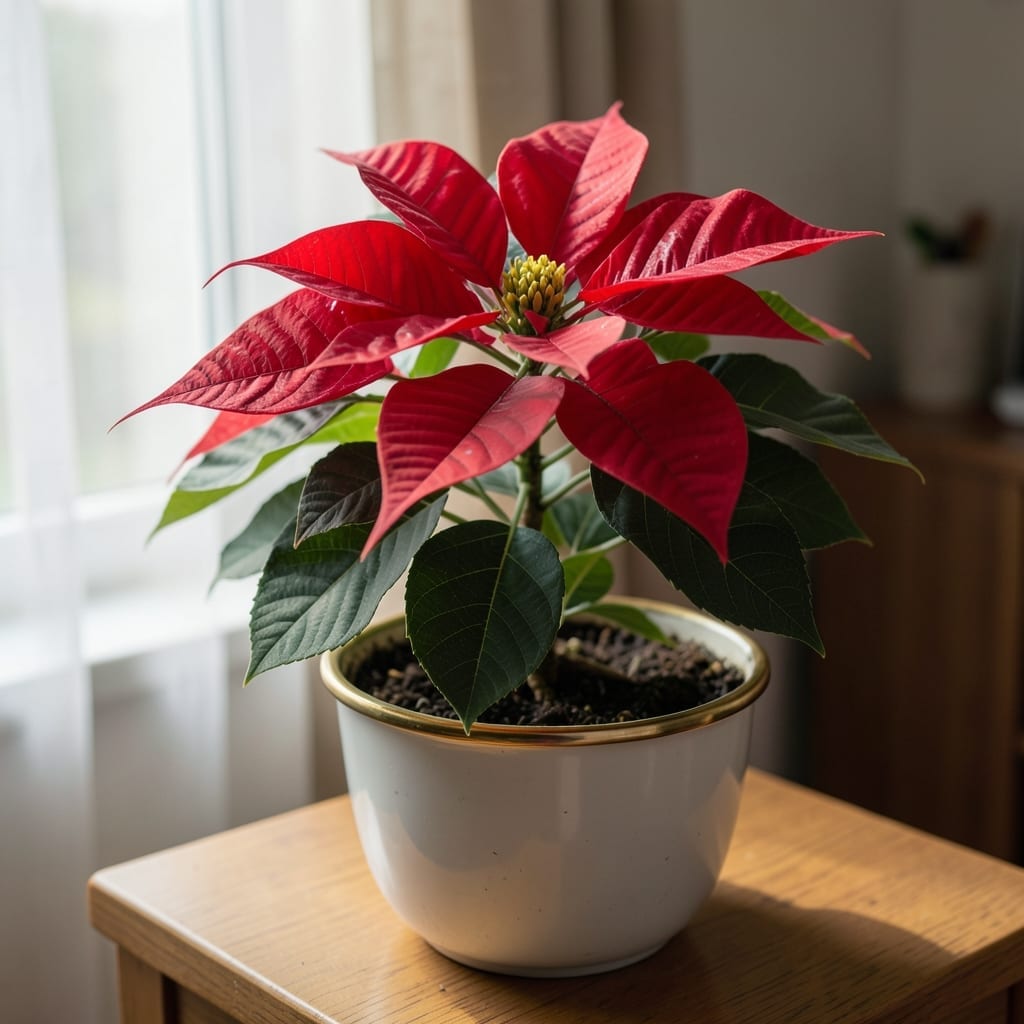
Poinsettias are holiday favorites, but their light needs often leave gardeners confused. Understanding whether the 🌺 Poinsettia requires full sun is key to keeping them healthy.
I’ve seen too many well-meaning plant lovers struggle with wilting leaves or faded bracts. The problem usually comes down to incorrect light exposure.
What if I told you these vibrant plants thrive with 6+ hours of bright, indirect light daily? That’s the sweet spot for most Poinsettias.
Let me walk you through the ideal conditions for your 🌺 Poinsettia, whether it’s indoors by a sunny window or outside in your garden.

I get this question a lot: do poinsettias need full sun? The short answer is no—they thrive in bright indirect light. Too much direct sunlight can actually scorch their leaves and fade their vibrant bracts.
These holiday plants prefer 6+ hours of light daily, but it should be filtered. Think east or west-facing windows where the sun isn’t harsh. Direct south-facing sun can be too intense, especially during peak hours.
| Requirement | Specification |
|---|---|
| Light Type | Bright Indirect |
| Daily Hours | 6+ hours |
| Best Window | East or West |
| Avoid | Direct South Sun |
If you’re growing poinsettias outdoors in zones 9-11, place them in partial shade. Morning sun with afternoon shade works best. Too much shade, though, leads to leggy growth and weak stems.
Indoors, keep them near a bright window but shield them from cold drafts. A sheer curtain can help diffuse harsh light. I’ve seen many gardeners make the mistake of over-exposing their poinsettias, thinking more sun equals better blooms.
In reality, these plants are native to Mexico’s tropical regions, where they grow under dappled sunlight. Mimicking this environment is key. If your poinsettia’s leaves start to yellow or crisp, it’s likely getting too much direct light.
For optimal color retention, especially during the holiday season, ensure they get consistent light. Rotate the pot weekly to promote even growth. This prevents the plant from leaning toward the light source.
If you’re struggling with faded bracts, try moving your poinsettia to a brighter spot—but still out of direct sun. Sometimes, simply adjusting the angle of the blinds can make a big difference.
Remember, poinsettias are sensitive to temperature changes too. Keep them in a spot where the temperature stays between 65-75°F during the day. At night, avoid drops below 60°F.
With the right light and care, your poinsettias can stay vibrant for weeks or even months. It’s all about balance—not too much sun, not too little. ☀️
I’ve found that morning sun is ideal because it’s gentler. If you notice the bracts losing their color, it’s a sign to reduce light exposure. 🌺
Poinsettias are sensitive to light changes, and their needs shift with the seasons. I’ve found that adjusting their exposure prevents stress and keeps those vibrant bracts looking their best. Winter is the trickiest time for most gardeners.
During the holiday season, aim for 6+ hours of bright, indirect light daily. A south-facing window is ideal, but avoid direct sun through glass, which can scorch the leaves. ☀️
In spring and summer, poinsettias can handle more direct light, but I recommend morning sun only. The intense afternoon rays can cause leaf burn, especially in warmer climates. A shaded patio works well.
As fall approaches, you’ll need to reduce light exposure to 12 hours daily. This mimics natural conditions and triggers the color change in bracts. I use a light-proof box to control this precisely.
If you’re growing poinsettias outdoors in zones 9-11, place them where they’ll get dappled sunlight. They’ll thrive under trees or on east-facing porches. Just watch for wilting signs in extreme heat.
Remember, consistency is key. Sudden changes in light can shock the plant. I always transition gradually when moving poinsettias between indoor and outdoor locations. 🌿