
Beautiful Plants For Your Interior
Beautiful Plants For Your Interior
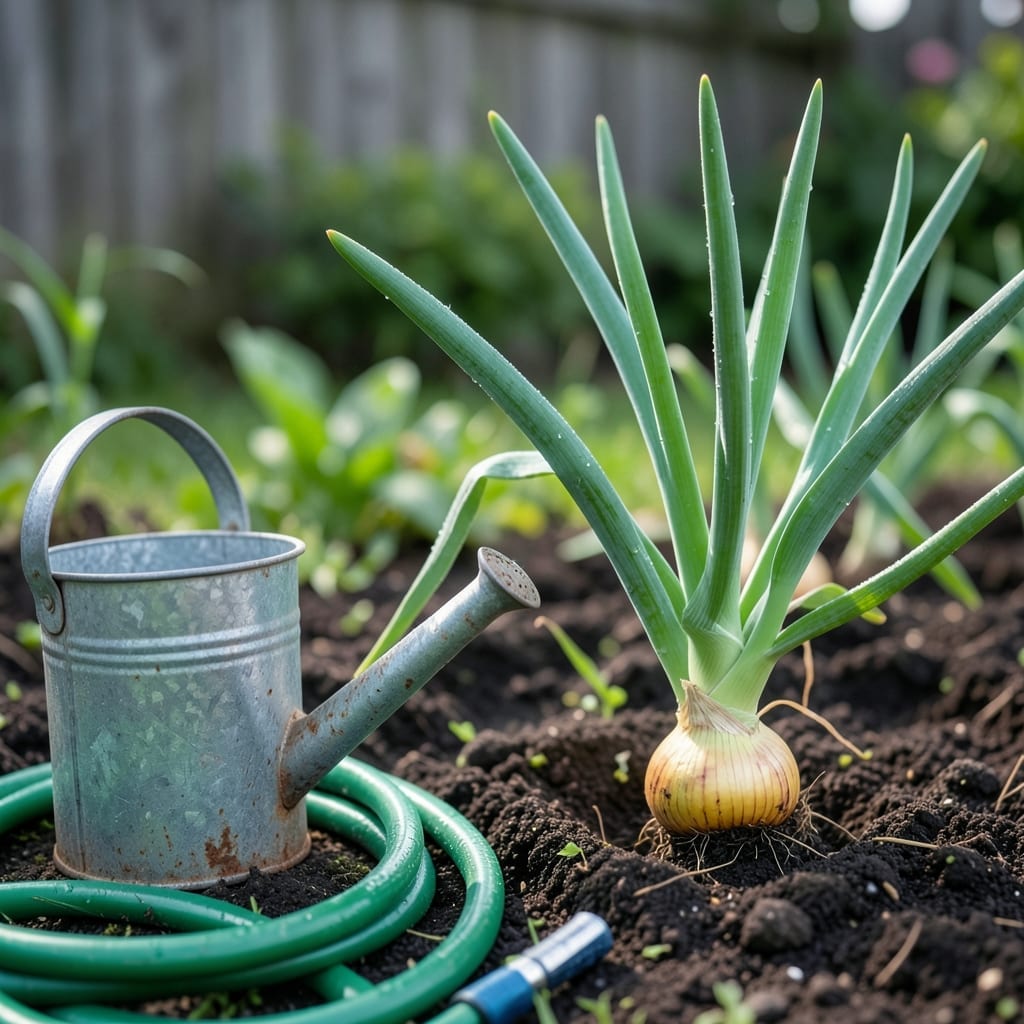
Growing plump, flavorful onions starts with understanding their water needs—but overwatering can be just as damaging as drought.
I’ve learned that healthy 🧅 Onion bulbs thrive with consistent moisture, but too much leads to rot. It’s all about finding the right balance for your garden’s success.
Whether you’re a beginner or seasoned gardener, knowing when and how to water makes all the difference. The key is monitoring soil conditions closely.
Discover the simple yet effective strategies that will help you cultivate robust Onion plants with minimal hassle. Let’s get started.


I’ve found that onions need consistent moisture but not too much. They thrive when the soil stays evenly damp, especially during bulb formation. Too little water leads to small, pungent bulbs, while too much can cause rot.
In my experience, 1 inch of water per week is ideal for most conditions. However, this can vary based on soil type and weather patterns. Sandy soils dry out faster, while clay holds moisture longer.
| Growth Stage | Water Needs | Key Notes |
|---|---|---|
| Seedling | Keep soil moist | Prevent drying out for root establishment |
| Bulb Formation | 1 inch/week | Critical for bulb size |
| Maturation | Reduce water | Stop 2 weeks before harvest |
During the seedling stage, I always ensure the top inch of soil stays moist. This helps the roots establish quickly. A drip irrigation system works great for even moisture distribution.
As the bulbs begin to form, consistent watering is key. I aim for 1 inch per week, including rainfall. If the weather is hot, I may water twice a week to prevent stress.
I watch for signs of overwatering like yellowing leaves or soft bulbs. These indicate root rot or fungal issues. If I see these, I reduce watering immediately.
Conversely, underwatered onions have dry, cracked soil and wilting tops. The bulbs may split or stay small. I check soil moisture by sticking my finger 2 inches deep. If it’s dry, it’s time to water.
I adjust my watering schedule based on the season. In spring and fall, weekly watering is usually enough. During summer heat, I increase to every 3-4 days.
For container-grown onions, I water more frequently since pots dry out faster. I check daily in hot weather and ensure the container has drainage holes to prevent waterlogging.
In clay soil, I’m careful not to overwater since it retains moisture longer. For sandy soil, I may need to water more often to maintain consistent moisture.
Finally, I always stop watering about 2 weeks before harvest. This allows the outer layers to dry for better storage. With the right balance, I get healthy, flavorful onions every time 🌱
I’ve found that onions thrive with consistent moisture but despise soggy roots. The key is deep watering that reaches the root zone without creating waterlogged soil. 1 inch of water per week is ideal for most conditions.
Timing matters too. I always water my onions in the early morning to reduce evaporation and prevent fungal issues. This gives the foliage time to dry before evening.
I prefer drip irrigation over overhead watering because it delivers water directly to the roots. This method also helps prevent fungal diseases that can develop on wet foliage.
During hot summer months, I increase watering to twice a week. But I always check the soil first—if it’s still moist 2 inches down, I hold off.
As the onions mature, I gradually reduce watering. This helps the bulbs cure properly and prevents rot. I stop watering completely when the tops start to yellow and fall over.
Remember, well-draining soil is just as important as proper watering. I always amend my onion beds with compost to improve drainage and moisture retention. 🌱