
Beautiful Plants For Your Interior
Beautiful Plants For Your Interior
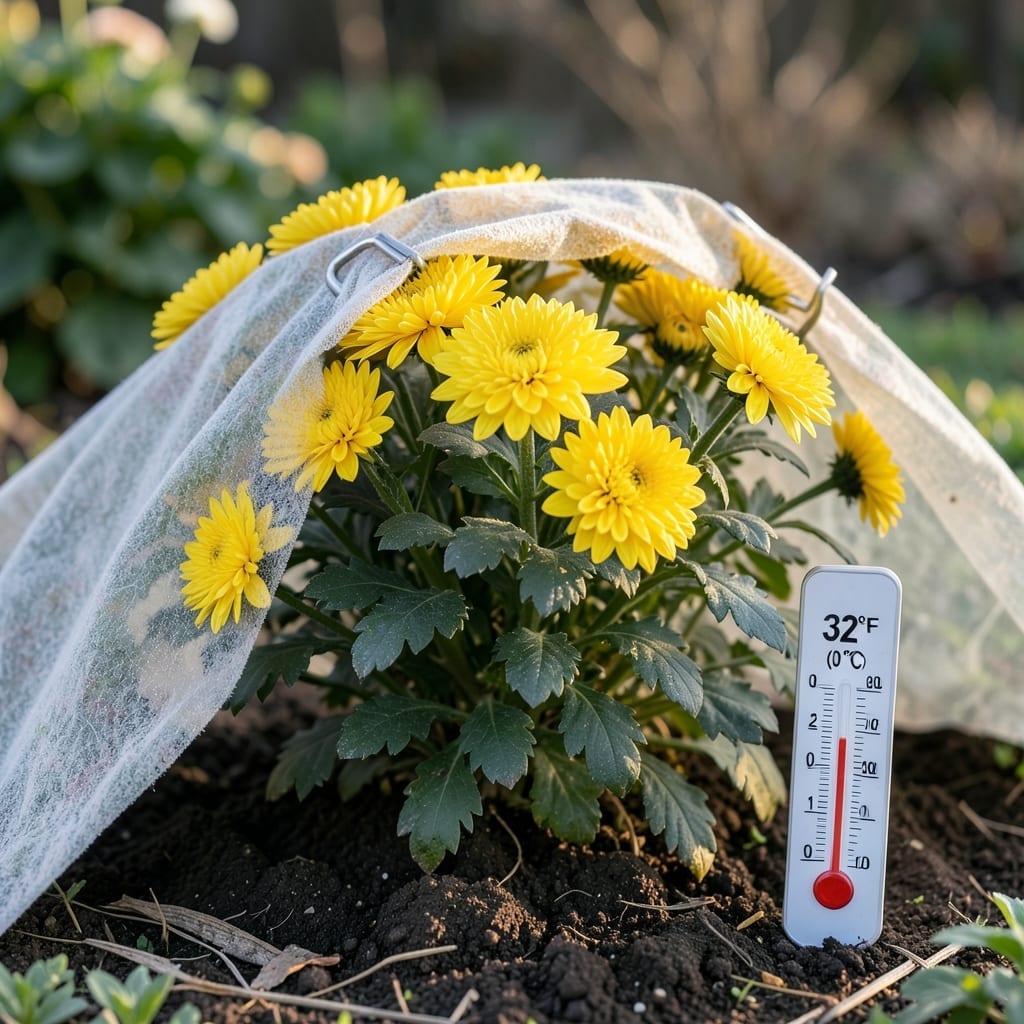
As autumn’s vibrant Chrysanthemum 🌼 brighten your garden, one question looms: will they survive the first frost? The answer could mean the difference between thriving blooms and a sad, wilted display.
If you’ve ever watched your mums shrivel after a cold snap, you know the frustration. The good news is that with the right approach, you can shield these hardy plants from frost damage.
I’ll walk you through when and how to protect your Chrysanthemum in zones 5-9. Whether you’re a seasoned gardener or just starting out, these tips will help you keep your mums looking their best.
Discover simple, effective ways to prepare your garden for those chilly nights. Your mums will thank you.
As a gardener, I know chrysanthemums bring stunning autumn color to any landscape. But when temperatures drop, their survival depends on proper care. Frost can damage or even kill these beauties if left unprotected.
Garden mums are hardier than florist mums, typically surviving down to 20°F (-7°C). However, early frosts or sudden cold snaps can still cause leaf blackening or bud damage.
| Variety | Cold Tolerance | Notes |
|---|---|---|
| Garden Mums | 20°F (-7°C) | Hardy, survive winter |
| Florist Mums | 32°F (0°C) | Tender, need protection |
| Early Frost | Any Mum | Risk of bud damage |
I’ve seen frost-damaged mums firsthand—their leaves turn mushy and petals brown overnight. This happens because ice crystals form inside plant cells, rupturing their structure. Even hardy varieties can suffer if the freeze is severe.
Timing matters when protecting mums. I recommend covering them when forecasts predict temperatures below 32°F (0°C). A light frost might not kill them, but repeated exposure weakens the plant over time.
In my garden, I watch for signs of stress like wilting leaves or blackened stems. These indicate the plant is struggling with cold. Garden mums often recover, but florist mums may not survive without intervention.
USDA zones play a role too. If you’re in zones 5-9, your mums likely have a fighting chance. But in colder climates, extra protection is non-negotiable. I always err on the side of caution.
Don’t wait until the first hard freeze to act. Preventative measures like covering plants with frost cloth or mulching heavily can save your mums. I’ve found that an ounce of prevention is worth a pound of cure.
Remember, healthy mums are more resilient. I ensure mine are well-watered and fertilized before winter hits. Strong plants handle cold better than stressed ones. It’s all about preparation and timing. 🌼
When cold weather threatens, I never leave my mums to chance. Even hardy garden mums benefit from protection when temperatures dip below 32°F (0°C). The key is using the right method for your situation.
I’ve tested various approaches over the years, and some work better than others. Frost cloth is my top choice because it’s breathable and lightweight. It traps heat from the soil while allowing air circulation, which prevents moisture buildup.
Mulching is another great option, especially for in-ground mums. I pile on 4-6 inches of straw or shredded leaves around the base. This insulates the root system and helps retain soil warmth.
For container-grown mums, I simply move them to a garage or covered porch when frost is forecasted. This is the easiest way to ensure they stay safe. Just
I avoid using plastic covers directly on plants because they can trap moisture and cause rot. If plastic is all you have, prop it up with stakes so it doesn’t touch the foliage. Always remove covers during the day to allow sunlight and ventilation.
Timing is everything. I cover my mums in the late afternoon before temperatures drop, and remove the protection by mid-morning the next day. This prevents heat buildup and ensures the plants get the light they need. 🌼