
Beautiful Plants For Your Interior
Beautiful Plants For Your Interior
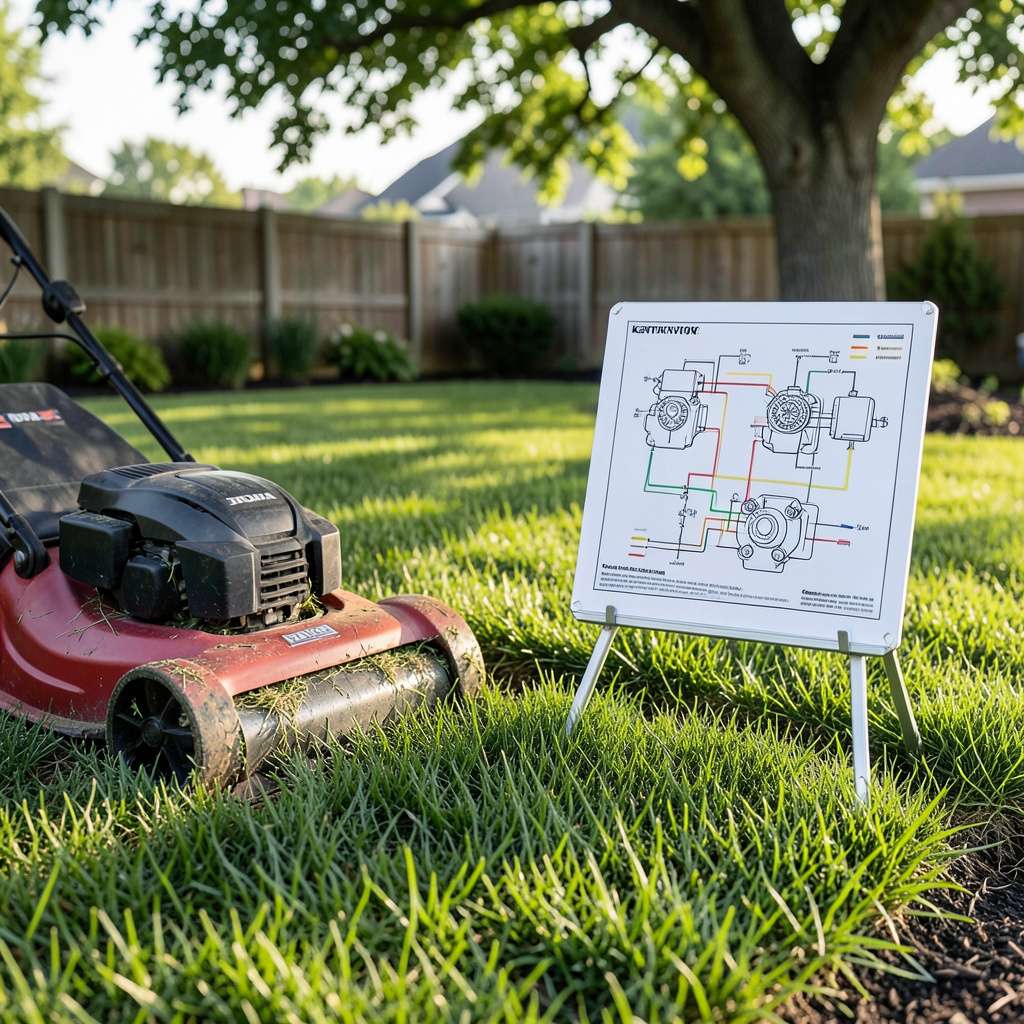
Most modern lawn mowers don’t have traditional alternators like cars, but they use a magneto or stator system to generate electricity. These components charge the battery and power electrical systems while the engine runs, serving a similar purpose to an alternator in a more simplified form.
This design choice comes down to efficiency and space. Small engines in mowers can’t accommodate a full alternator, so manufacturers use compact magnetos that generate current through magnetic induction as the flywheel spins. ✨ I’ve noticed that these systems typically produce 12-15 volts—enough to keep the battery charged and lights running, but without the complexity of a car’s electrical system. The beauty is in the simplicity: fewer moving parts means less can go wrong during those long mowing sessions.
💡 In This Article
Lawn mowers use a clever magnetic induction system instead of bulky alternators. The key component is the magneto—a stationary coil wrapped around a rotating magnet attached to the flywheel. As the engine spins the flywheel at 3,000-3,600 RPM, the magnet passes through the coil, generating alternating current (AC) without brushes or slip rings.
This design eliminates wear points while producing 12-15 volts—perfect for charging small batteries and powering lights.
The stator (a fixed coil assembly) works similarly but often includes multiple windings to produce cleaner current. Unlike car alternators that use electromagnets and voltage regulators, mower systems rely on permanent magnets and simple rectifiers. This means no complex wiring or computer controls—just raw magnetic energy converted directly to usable power.
The simplicity explains why these systems last 5-10 years longer than automotive alternators in similar conditions.
Here’s what’s actually happening during operation: The flywheel’s magnetic field cuts through copper windings 50-60 times per second at operating speed, inducing current. This AC power gets converted to DC through a small rectifier (often built into the stator assembly) before reaching the battery.
The entire process happens without mechanical contact, which is why mower charging systems rarely fail from wear—unlike car alternators with their brushes and bearings.
Manufacturers choose this design for three critical reasons: weight savings (magnetos add just 1-2 pounds vs 10+ for alternators), cost efficiency (no voltage regulators needed), and durability in dirty, vibrating environments. The tradeoff? Lower maximum output—while car alternators produce 50-150 amps, mower systems typically generate just 5-15 amps, which is plenty for their needs.
This explains why you’ll never see a lawn mower jump-starting a car!
What most people don’t realize is how the flywheel’s dual role makes this possible. It serves as both the engine’s balancing component and the charging system’s rotor. The magnetic segments are precisely positioned to maintain engine balance while generating power.
This integration allows the entire charging system to fit within the existing engine footprint—no additional space required. It’s this elegant simplicity that keeps your mower running season after season with minimal maintenance.
The voltage output varies with engine speed, which is why you might notice headlights brighten as you rev the engine. At idle (1,200 RPM), the system might only produce 8-10 volts, while full throttle can push 16-18 volts. This self-regulating characteristic means no complex voltage control is needed—the battery naturally absorbs what it requires.
The beauty lies in how these systems match the mower’s actual power needs without over-engineering.
For comparison, consider that a car alternator contains about 200 parts, while a typical mower magneto has fewer than 20. This reduction in complexity translates to fewer failure points. The most common issues I’ve seen involve corroded wiring connections or failed rectifiers—problems that cost $20-50 to fix versus $200-500 for alternator replacement.
This cost efficiency is why you’ll find magnetos in everything from chainsaws to pressure washers.
The only real limitation comes with electric-start models that require more consistent voltage. Some premium mowers now incorporate small voltage regulators to stabilize output, but even these are simpler than automotive systems.
The next time you pull-start your mower, remember that spinning flywheel isn’t just turning the engine—it’s also generating all the electricity needed to keep everything running smoothly. That’s engineering efficiency at its best!
Mowers use a magneto or stator system that’s simpler and lighter than car alternators. These generate 12-15 volts through magnetic induction as the flywheel spins, without needing brushes or complex regulators. The entire system weighs just 1-2 pounds compared to 10+ pounds for automotive alternators.
Use a multimeter to check battery voltage with the engine off, at idle, and at full throttle. You should see 12.6 volts (off), 13+ volts (idle), and 14+ volts (full throttle). If readings don’t increase with RPMs, your stator or rectifier may need attention. Always test with a fully charged battery first.
This is normal behavior! Mower charging systems produce voltage proportional to engine speed. At idle (1,200 RPM), output may drop to 8-10 volts, causing lights to dim. The system isn’t failing unless lights stay dim at full throttle. Consider this a built-in “RPM gauge” for your charging system.
The rectifier (which converts AC to DC) fails most often, typically costing $15-30 to replace. Corroded wiring connections come second—these cause intermittent issues that seem like system failure. Stator windings rarely fail unless the mower has 500+ hours of use. Regular connection cleaning prevents most problems.
Yes, they often include small voltage regulators to maintain consistent 13.5-14.5 volt output. This prevents battery drain during electric starting. Basic pull-start models skip this regulator, as their simpler systems only need to maintain battery charge. The upgrade adds about $20-40 to repair costs.
