
Beautiful Plants For Your Interior
Beautiful Plants For Your Interior
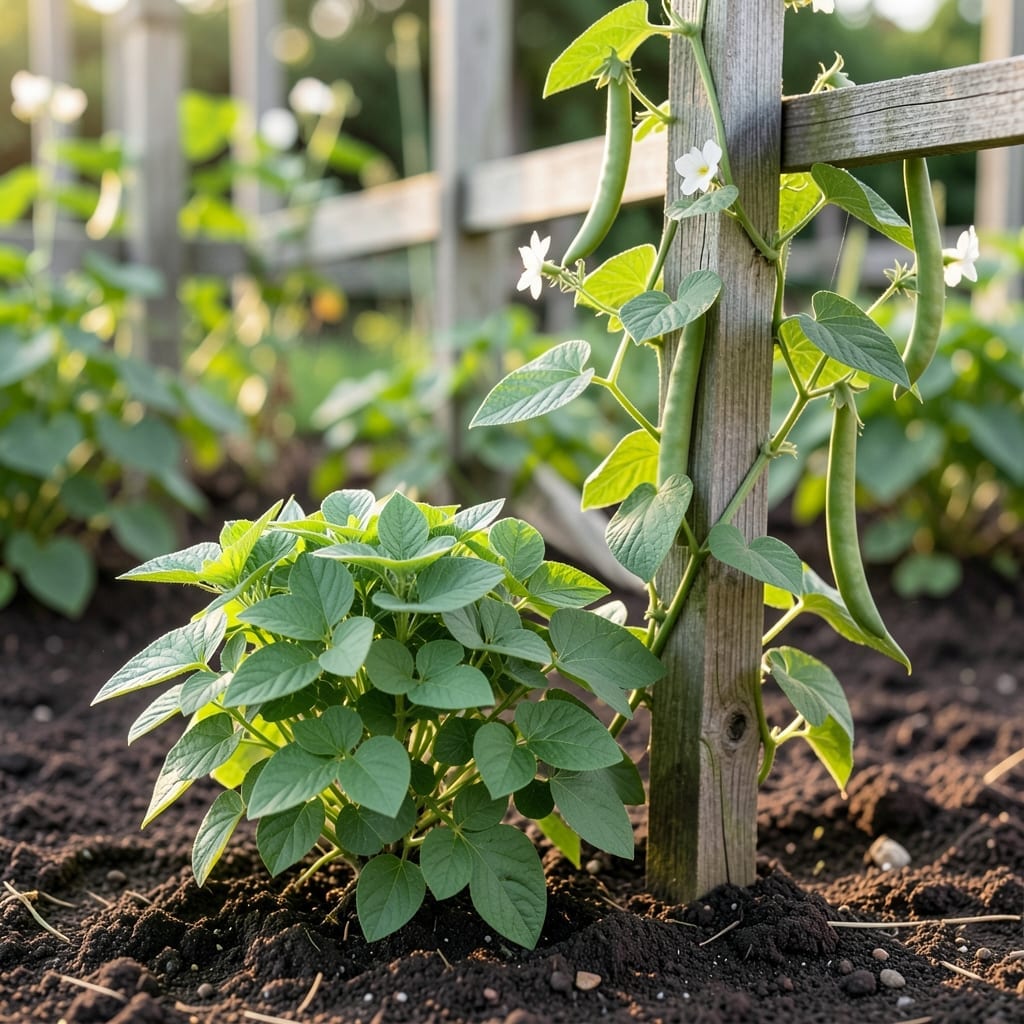
Whether you’re growing Green Bean 🌱 in a small backyard or a sprawling garden, knowing if they need support can make or break your harvest. The answer depends entirely on the variety you choose.
I’ve seen both pole and bush types thrive, but their needs are worlds apart. One climbs toward the sky while the other stands firm on its own. Understanding this difference is the key to a successful crop.
If you’ve ever watched vines sprawl chaotically across the ground, you know the struggle. Support isn’t just about neatness—it’s about healthier plants and bigger yields.
Let me walk you through what works best for each type. You’ll discover how a simple trellis or stake can transform your garden game.
When I first started growing green beans, I quickly learned that not all varieties have the same support needs. The difference between pole beans and bush beans is fundamental to your garden planning.
Pole beans are natural climbers, sending out long vines that can reach 6-8 feet under ideal conditions. Without support, they’ll sprawl across the ground, leading to rotten pods and poor air circulation.🌱
| Variety | Support Needed | Growth Habit | Space Needed | Yield |
|---|---|---|---|---|
| Pole Beans | Yes | Climbing vines | Vertical (1 sq ft) | Higher, longer |
| Bush Beans | No | Compact, self-supporting | Horizontal (4 sq ft) | One flush, moderate |
I always recommend trellises or stakes for pole beans. These vining plants will twine themselves around any structure, making them perfect for vertical gardening in small spaces.
Bush beans, on the other hand, grow as compact plants about 2 feet tall. They stand upright on their own and don’t require any support system, making them ideal for container gardening.☀️
In my experience, pole beans produce more over a longer period because they keep growing upward. Bush beans tend to produce their entire crop at once, then fade.
For those with limited space, pole beans are the clear winner. You can grow three times as many plants in the same footprint by training them vertically.
I’ve found that bamboo poles or cattle panels work wonderfully for pole beans. Just ensure your support is at least 6 feet tall to accommodate their growth.
Bush beans do have one advantage: they mature faster. You’ll typically harvest them 50-60 days after planting, while pole beans may take 60-70 days.🌿
Remember, even bush beans might benefit from a little support if they’re in a windy location or producing an exceptionally heavy crop. A simple low trellis can help keep them upright.
If you’re growing pole beans, they absolutely need support to thrive. These vining plants can reach 6-8 feet tall and will sprawl uncontrollably without a structure to climb. I’ve seen firsthand how proper support leads to healthier plants and bigger harvests. 🌱
For bush beans, support is optional but can still be beneficial. They grow 1-2 feet tall and are more compact, but adding a low trellis or cage can improve air circulation and make harvesting easier.
I recommend bamboo tepees for beginners because they’re affordable and simple to set up. Just tie 3-4 poles together at the top and spread the bottoms out in a circle. Plant 4-6 seeds around each pole, and the vines will naturally climb as they grow. ☀️
For a more permanent solution, cattle panels are my go-to. These 16-foot panels can be bent into an arch or A-frame shape, providing maximum support for large plantings. They’re especially useful if you’re growing beans in raised beds or long rows.
Netting is another great option, particularly for vertical gardening. Attach it to a frame or fence, and train the vines to climb. This method is space-efficient and works well on balconies or small patios. Just ensure the netting has large enough holes for the tendrils to grasp. 🌿
No matter which support you choose, make sure it’s at least 6 feet tall for pole beans. Install it at planting time to avoid disturbing the roots later. With the right structure, your green beans will grow stronger, produce more pods, and be easier to harvest.