
Beautiful Plants For Your Interior
Beautiful Plants For Your Interior
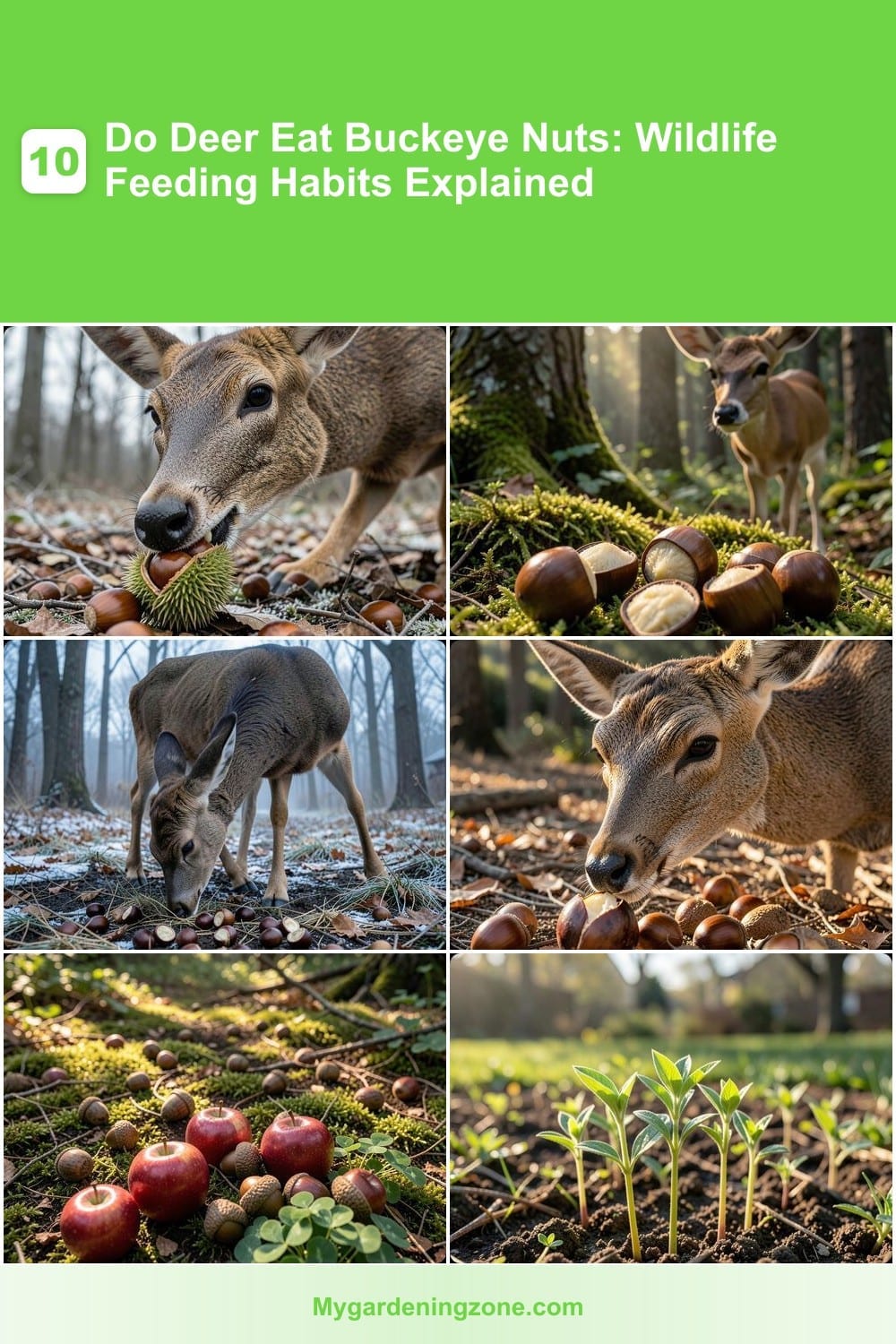
Curious whether deer consume buckeye nuts? This list explores the complex relationship between deer and buckeye trees, revealing surprising feeding behaviors, nutritional realities, and ecological impacts that every gardener and wildlife enthusiast should know.
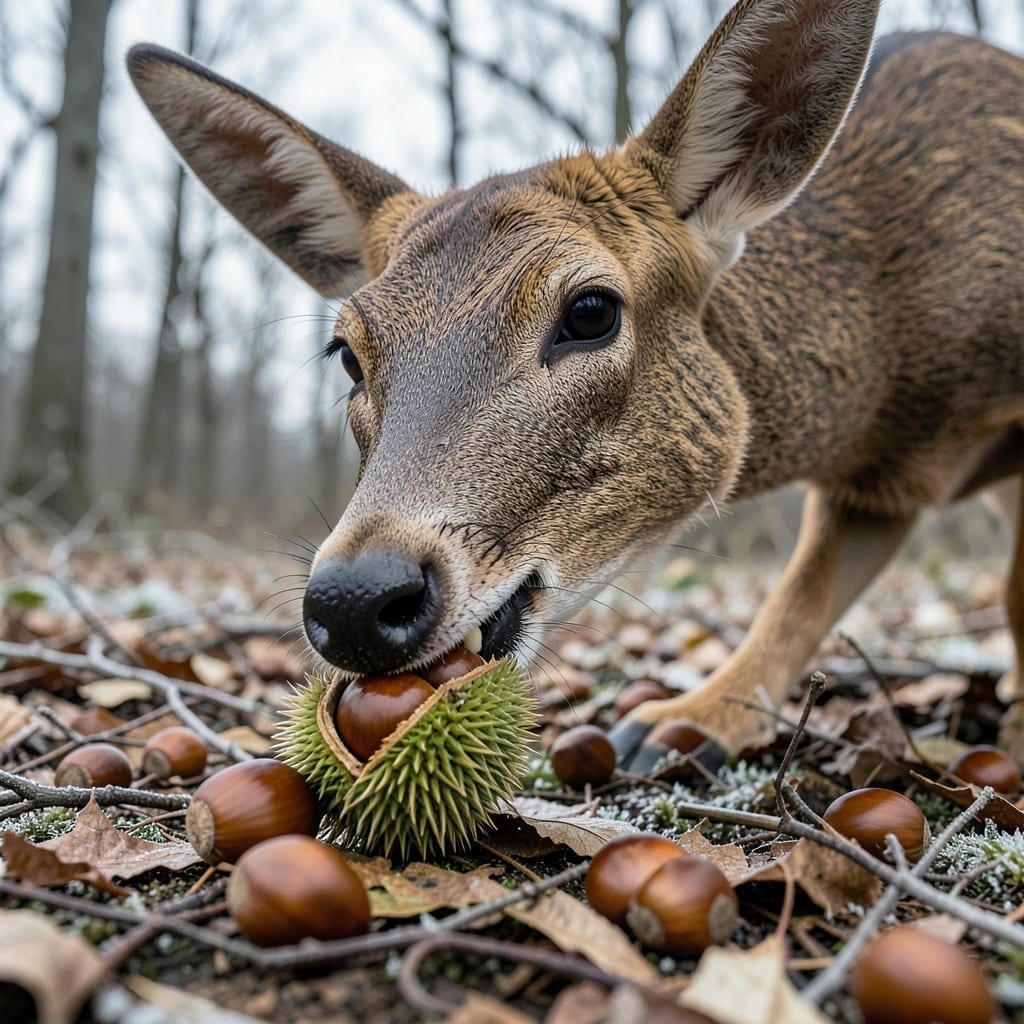
You might assume deer avoid Ohio buckeye nuts entirely, but nature is more complicated. These glossy seeds contain mild toxins that typically deter deer, yet hunger can override their natural caution.
During winter months when food is scarce, deer may nibble small quantities despite the potential for digestive upset. The bitter taste and toxic compounds usually limit consumption, but desperate times call for desperate measures in the wild.
This behavior highlights the adaptability of deer and the importance of understanding plant-wildlife interactions in your garden. 🌿
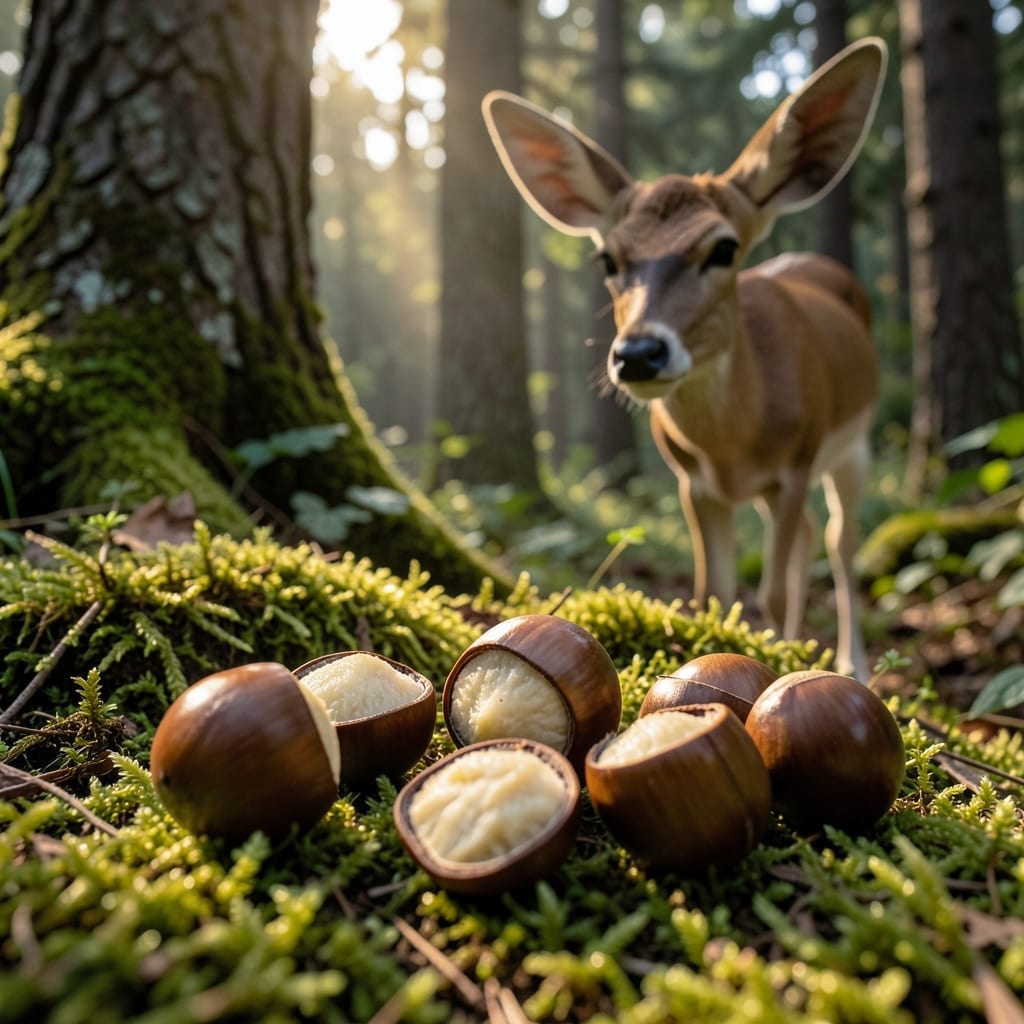
The aesculin in buckeye nuts isn’t just bitter—it’s a natural deterrent that can trigger digestive issues in deer. This glycoside affects their stomachs, but the impact isn’t one-size-fits-all.
Toxicity depends on the buckeye species and how many nuts are eaten. Some deer may sample a few without harm, while others avoid them entirely. The California buckeye is particularly potent, making it a riskier snack for wildlife.
Understanding these nuances helps gardeners predict deer behavior and protect vulnerable plants. 🌿
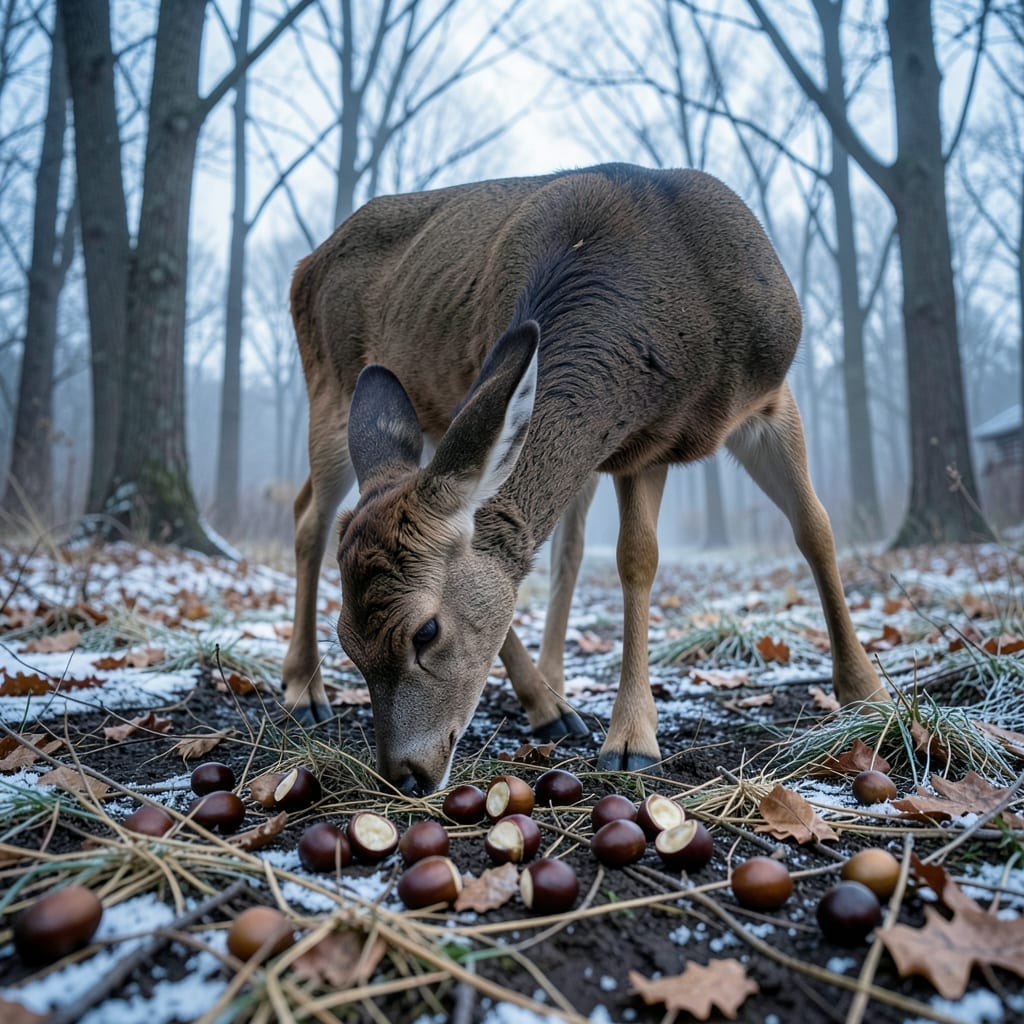
When food grows scarce, deer reveal their true survival instincts. Late fall and winter transform buckeye nuts from ignored to essential, despite their toxic reputation.
During these lean months, deer may consume buckeye nuts as a last resort when acorns, apples, and other favorites disappear. The bitter taste and potential digestive upset don’t deter them as strongly when hunger takes over.
This seasonal shift shows how wildlife adapts to changing conditions, offering gardeners insight into protecting both plants and local deer populations. 🌿
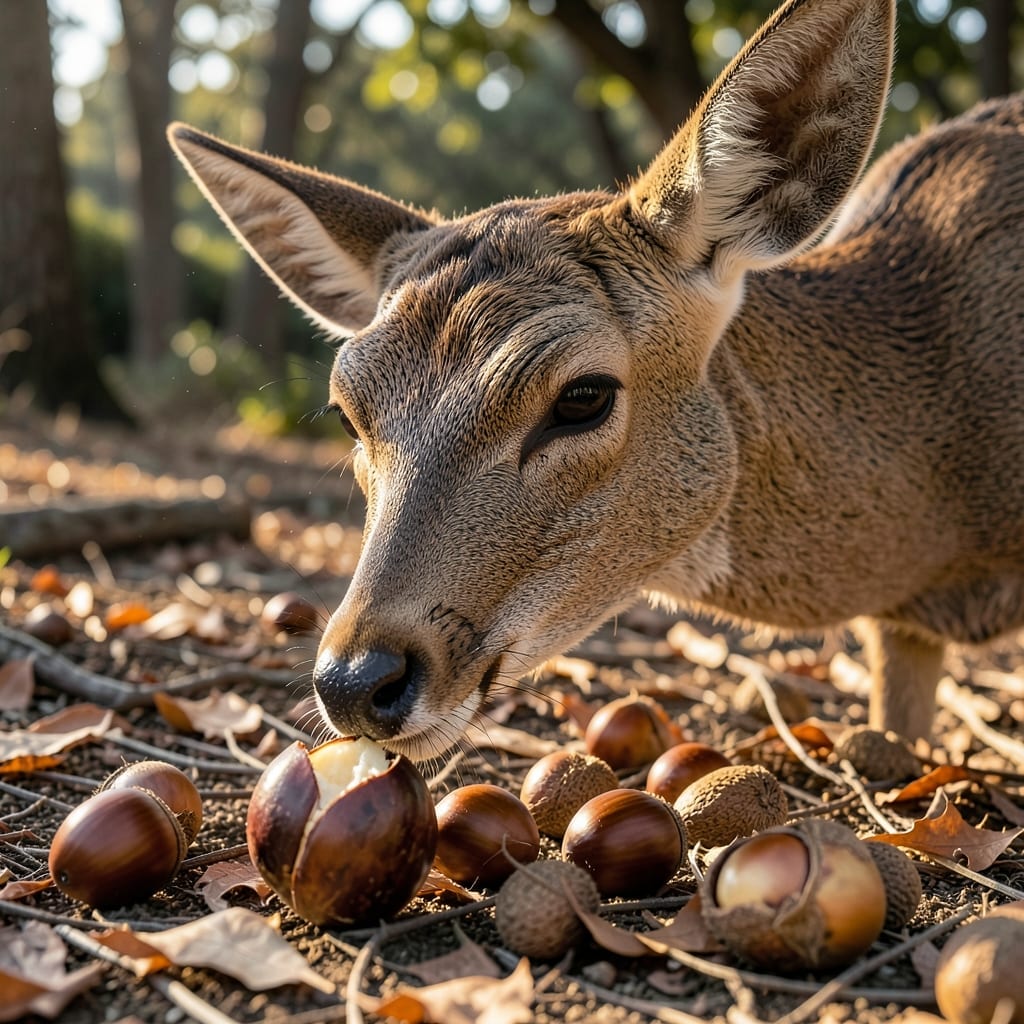
Even the most toxic plants can’t always deter determined wildlife. The California buckeye contains particularly high levels of aesculin, making its nuts among the most dangerous for deer to consume.
Yet observations show regional deer occasionally sample these nuts, possibly due to learned behavior or extreme necessity during food shortages. This rare behavior suggests some animals may have developed a tolerance or specific consumption pattern to minimize risk.
For gardeners in California, this highlights the importance of monitoring both your buckeye trees and local deer populations, especially during drought years. 🌿
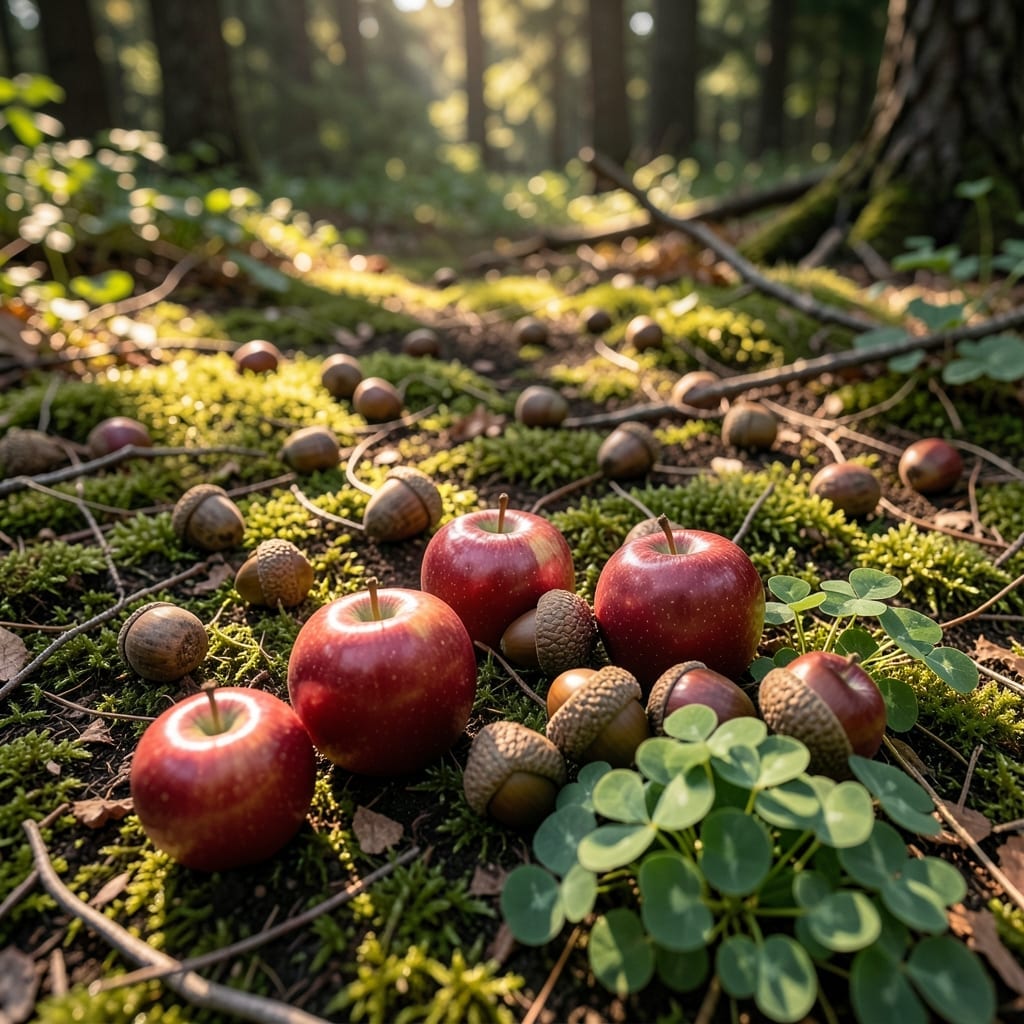
While buckeye nuts might linger on the forest floor, deer have a clear hierarchy of preferred snacks. Acorns, apples, and clover top their menu, offering sweet, nutritious options without the risks of buckeye toxicity.
These favorites provide rich energy and are readily available in most habitats. Buckeye nuts, with their bitter taste and toxic compounds, only become appealing when these preferred foods are scarce, making them a true last resort for deer.
Understanding these preferences helps gardeners create landscapes that support local wildlife while minimizing damage to less desirable plants. 🌿
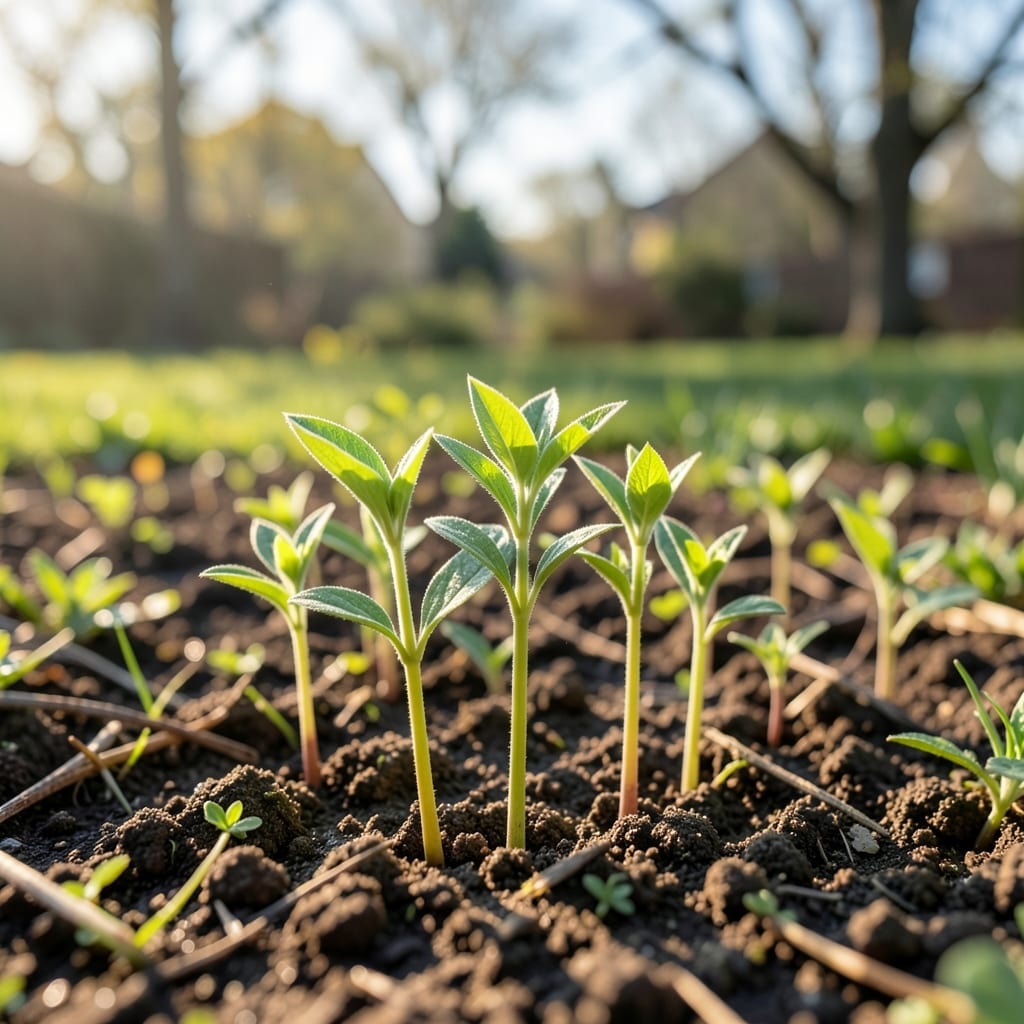
Young buckeye seedlings present a unique vulnerability in the garden. Unlike their mature counterparts, these tender plants contain lower levels of toxic compounds, making them more appealing to deer looking for a snack.
Deer may browse on these seedlings, especially in early spring when other food sources are limited. The softer leaves and stems are easier to consume than the hard, bitter nuts of mature trees, though they still carry some risk of toxicity.
Gardeners should monitor new plantings closely and consider protective measures to give seedlings a fighting chance. 🌱
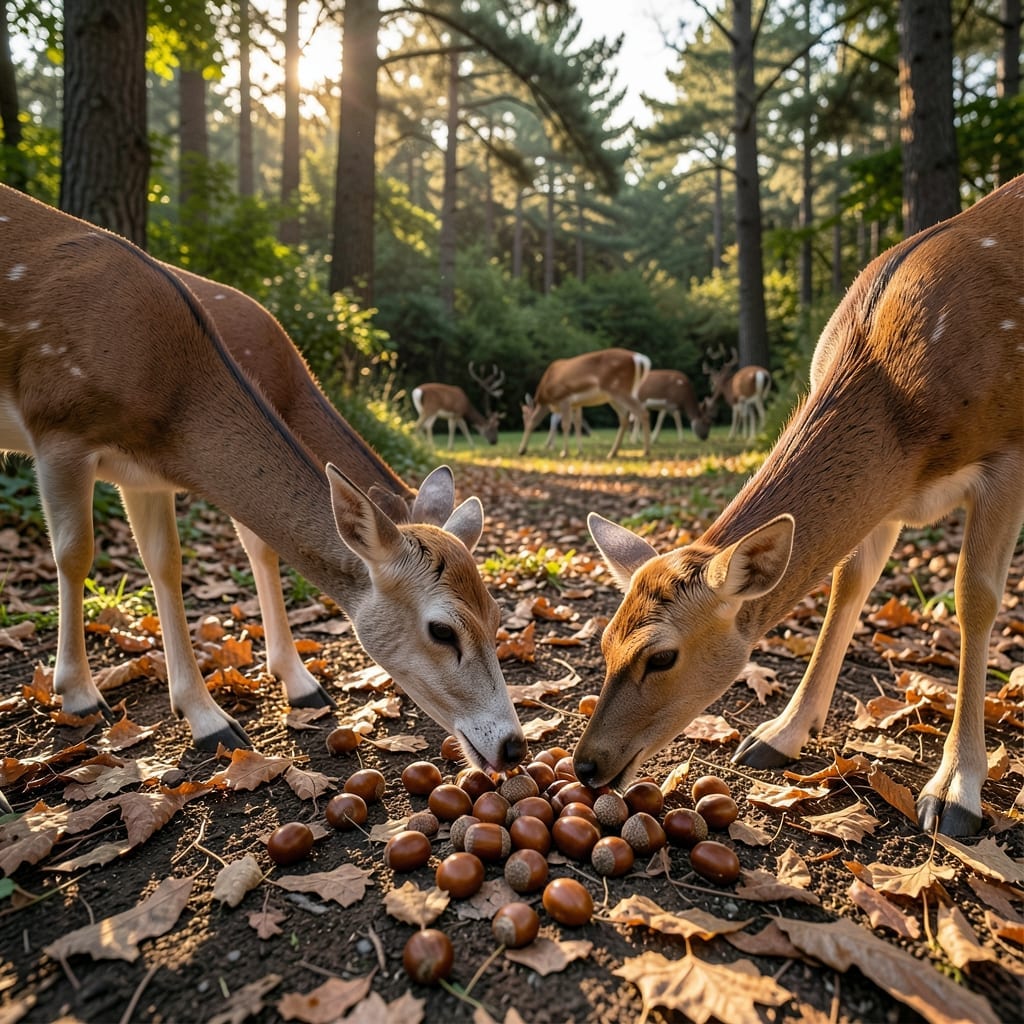
Not all deer treat buckeye nuts the same way across the country. Eastern populations, particularly white-tailed deer, show a surprising willingness to sample these nuts compared to their western counterparts.
This regional tolerance may stem from differences in available food sources or evolved behaviors. While western mule deer typically avoid buckeye nuts due to their toxicity, eastern deer occasionally consume them, especially when preferred foods are scarce.
For gardeners, this means location matters when predicting deer behavior around buckeye trees. Monitoring regional wildlife patterns can help you protect your landscape more effectively. 🌿
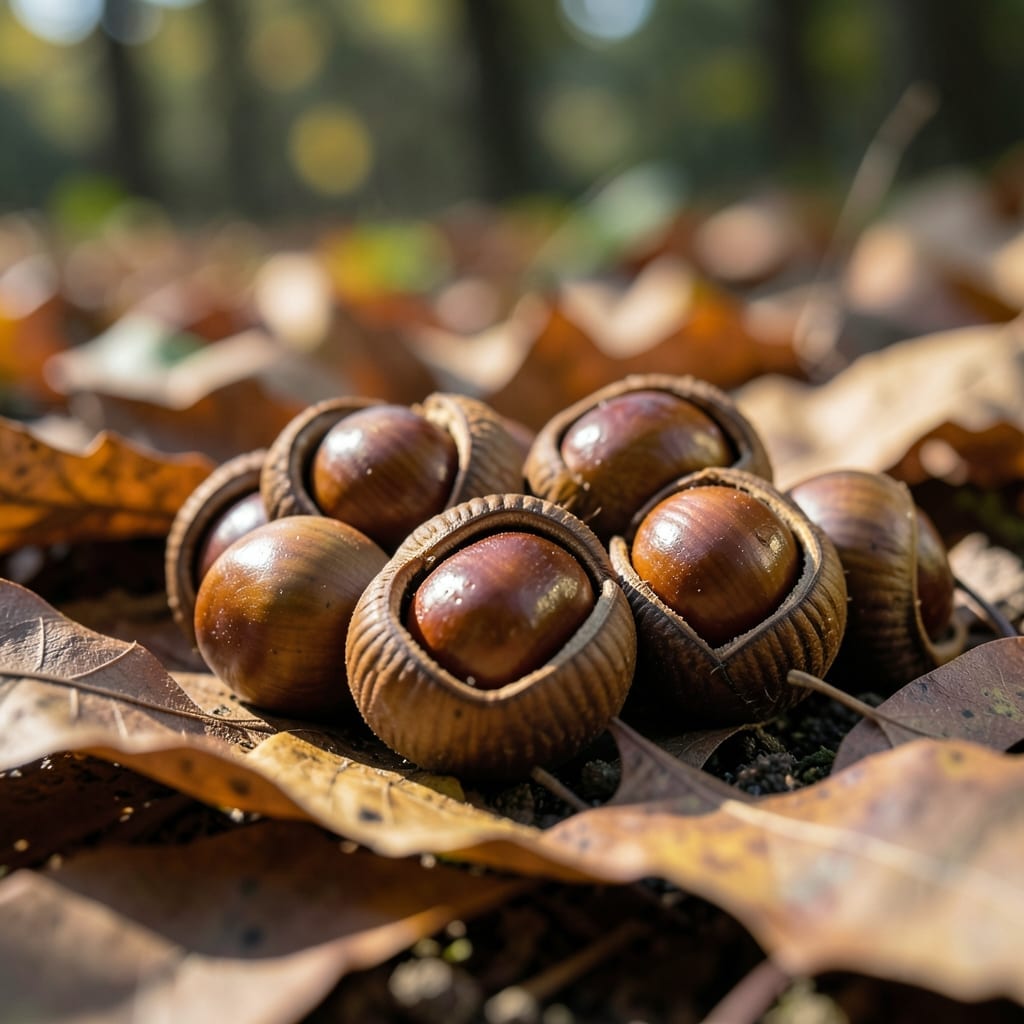
At first glance, buckeye nuts seem like they could be a valuable food source for deer, packed with starches and fats that provide energy. These nutrients could theoretically support deer during harsh seasons when food is limited.
However, the presence of toxic compounds like aesculin often tips the scales against consumption. The bitter taste and potential digestive upset typically deter deer, making buckeye nuts a risky choice despite their nutritional content.
This balance between benefit and harm explains why deer usually avoid them unless absolutely necessary. Understanding this helps gardeners manage wildlife interactions more effectively. 🌿
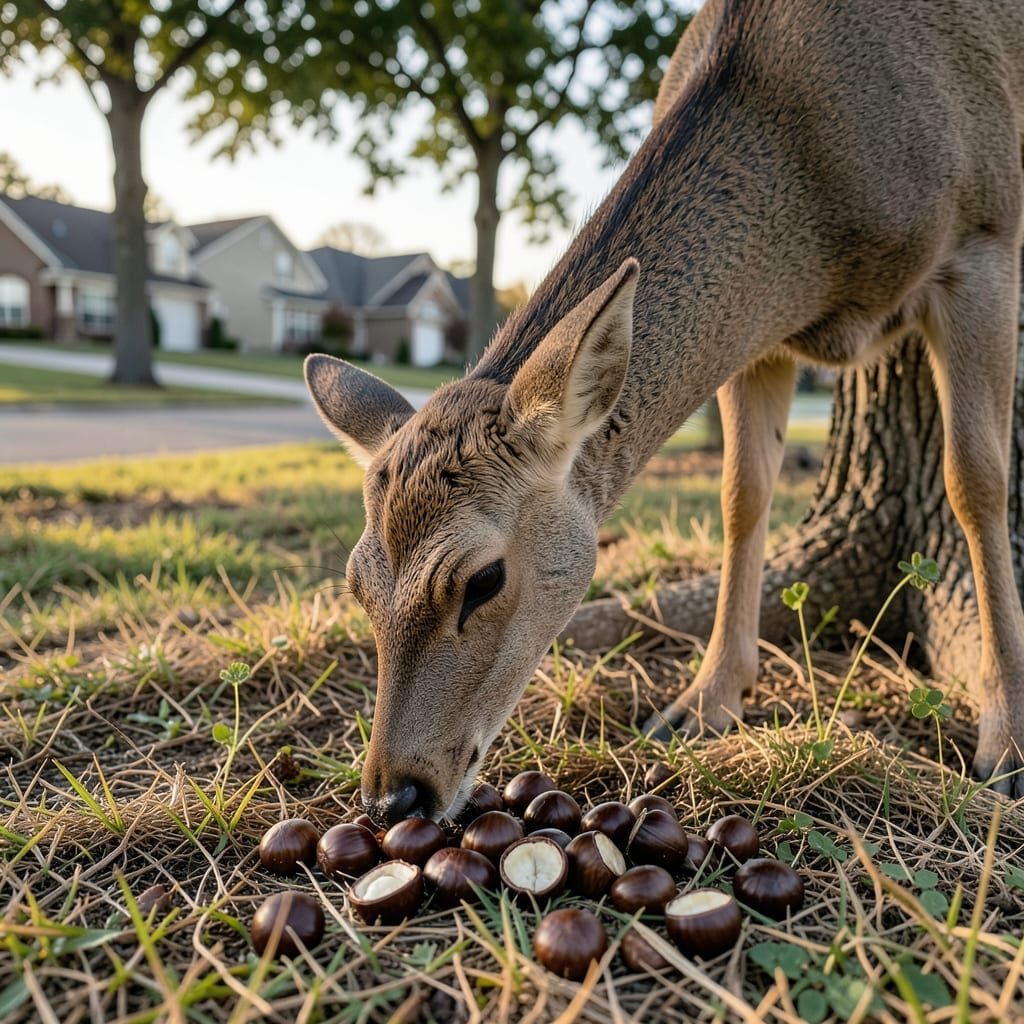
As cities expand into natural habitats, deer face shrinking food options. Urban and suburban development disrupts their traditional diets, often leaving them with fewer ideal choices like acorns or clover.
This pressure can push deer to sample buckeye nuts more frequently, despite their bitter taste and toxicity. While not their first choice, these nuts become a survival option when preferred foods are scarce due to human encroachment.
Gardeners in developing areas should monitor deer behavior, as this adaptation can impact both wildlife health and local plant life. 🌿
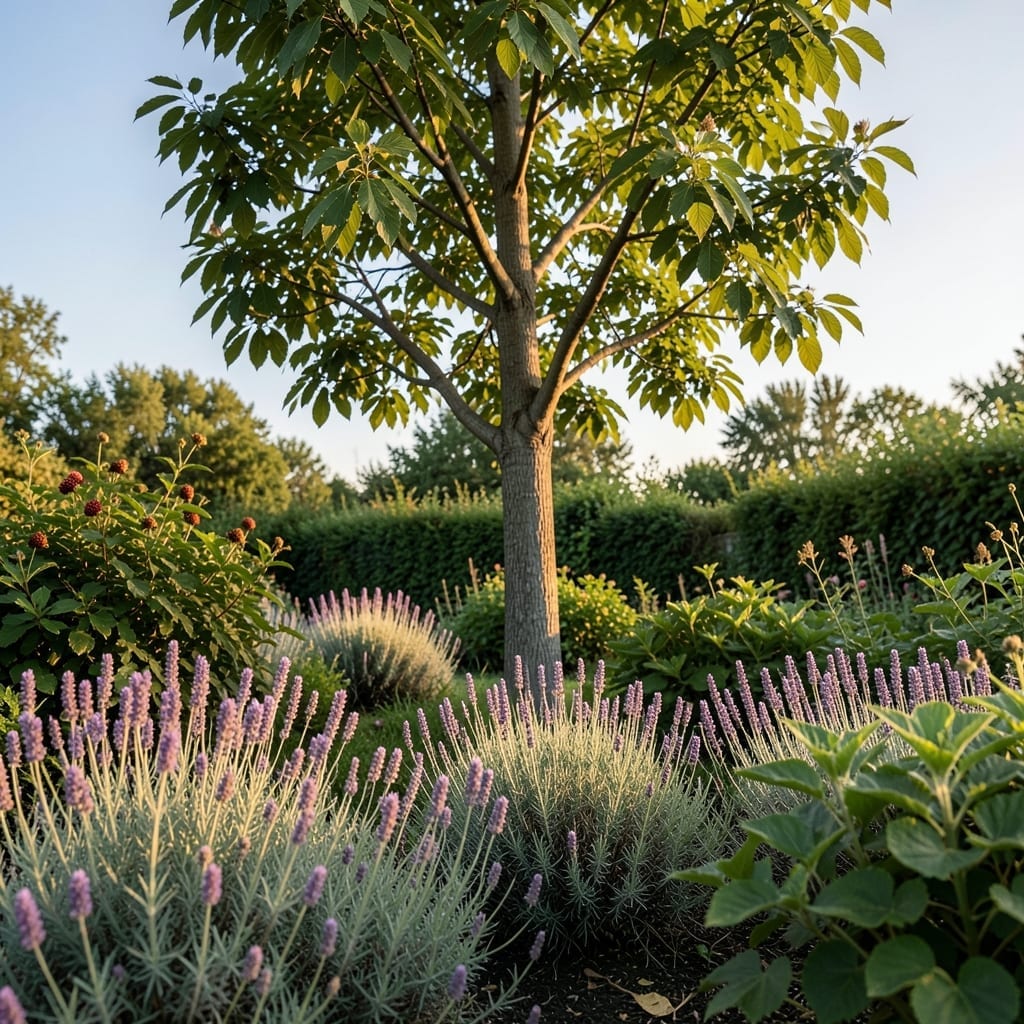
Creating a deer-friendly garden doesn’t mean sacrificing your buckeye trees. The key is strategic planting that satisfies deer while protecting your landscape investments.
Plant deer-resistant species like lavender, Russian sage, or barberry near your buckeyes to redirect browsing behavior. These alternatives offer deer a safer, more appealing food source, reducing pressure on your trees. This approach maintains ecological balance while preserving your garden’s beauty.
Gardeners in deer-prone areas will find this method particularly effective for coexisting with local wildlife. 🌿