
Beautiful Plants For Your Interior
Beautiful Plants For Your Interior
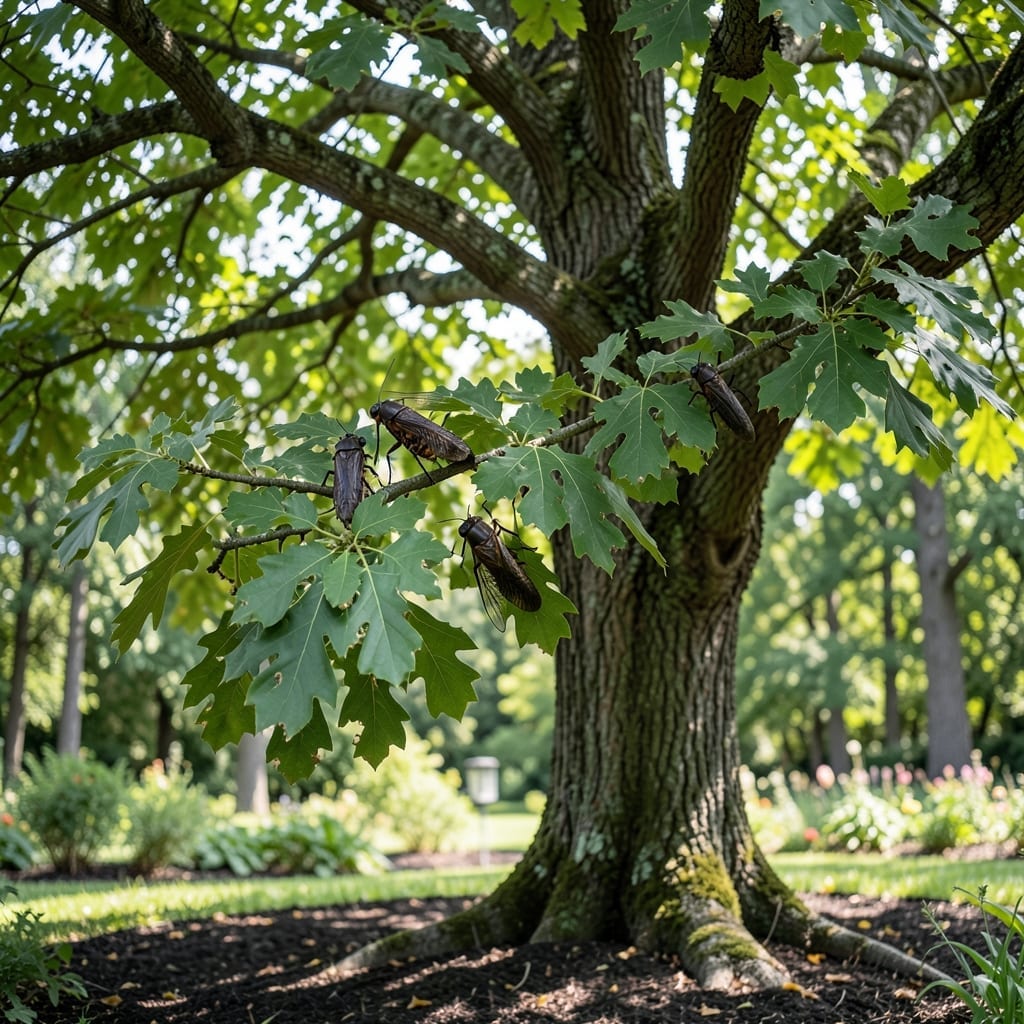
Adult cicadas do not eat leaves or solid food. They feed on tree sap using their piercing mouthparts, while nymphs consume underground root fluids.
I find their feeding habits fascinating because they rely entirely on plant fluids during both life stages. Adults use their needle-like mouthparts to tap into tree xylem, while nymphs stay underground for years, siphoning nutrients from roots. This explains why you’ll never see them chewing on foliage despite their close relationship with plants. 💫
💡 In This Article
The feeding mechanism changes dramatically between cicada life stages. As nymphs, they use their piercing mouthparts to tap into root xylem, extracting water and dissolved minerals from underground plant tissues. This process is passive—they don’t actively pump fluids but rely on root pressure to deliver nutrients to their mouthparts.
Adult cicadas take a different approach. They insert their needle-like rostrum into tree branches to access phloem sap, which is rich in sugars and amino acids. Unlike nymphs, adults can process this nutrient-dense liquid efficiently, allowing them to focus on reproduction rather than feeding. Their mouthparts are specifically adapted for piercing, not chewing. ✨
What’s fascinating is how they locate food sources. Adult cicadas are attracted to trees with high sap flow, often identifying them by chemical cues. Some species even prefer certain tree types—like oak or maple—over others. This selectivity helps explain why you might see more cicadas on specific trees in your yard.
The absence of solid food consumption is a key survival adaptation. Since adults only live for 2-6 weeks, their energy comes entirely from sap. This liquid diet provides enough sustenance for mating and egg-laying without the need for digestion of solid materials, which would be inefficient for their short lifespan. 🔥
This feeding strategy also minimizes competition with other insects. While caterpillars and beetles consume leaves, cicadas occupy a different ecological niche by focusing on plant fluids. Their specialized mouthparts make them uniquely adapted to this liquid-only diet throughout their entire life cycle.
Adults drink tree sap using their piercing mouthparts, while nymphs feed on underground root fluids. They never chew solid food like leaves or bark. Their entire diet consists of liquid nutrients from plants.
Their mouthparts are designed for piercing, not chewing. This adaptation lets them access nutrient-rich sap efficiently. Solid food would be difficult to process during their short adult lifespan of 2-6 weeks.
They don’t eat leaves but may damage young trees by laying eggs in branches. Female cicadas create slits in small branches that can cause dieback. Mature trees usually tolerate this without permanent harm.
Nymphs use their needle-like mouthparts to tap into root xylem, passively drawing up water and minerals. They rely on root pressure to deliver nutrients, requiring no active pumping.
Yes, all species feed exclusively on plant fluids throughout their life cycle. Some may prefer specific tree types like oak or maple, but none consume solid food. Their diet remains consistent across all species.