
Beautiful Plants For Your Interior
Beautiful Plants For Your Interior
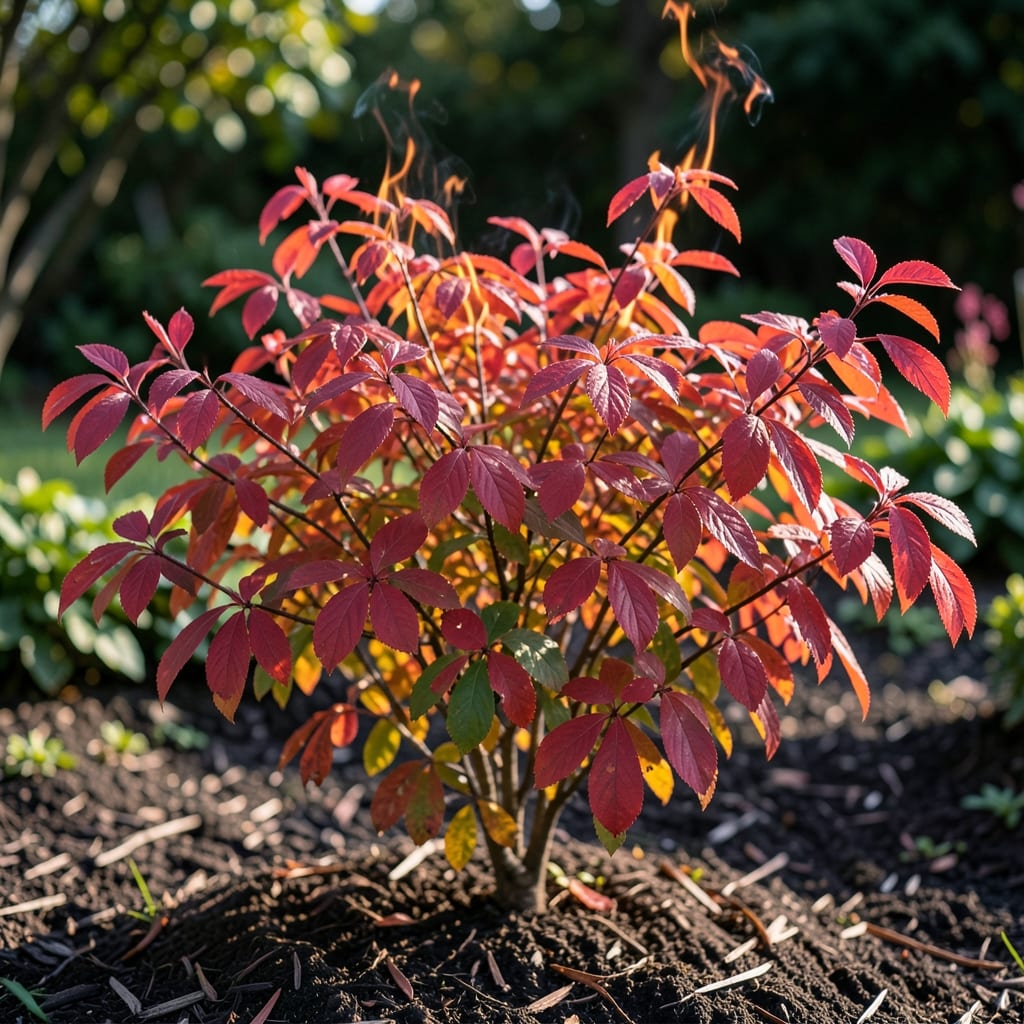
Burning bushes are deciduous shrubs, so they naturally shed all their leaves each fall, revealing bright red stems in winter before regrowing foliage in spring.
This seasonal cycle is a survival strategy—shedding leaves conserves water and energy during colder months when growth slows. Dormancy allows the plant to redirect resources to its roots and vibrant stems. I’ve noticed these shrubs often look their most striking in winter, with those fire-engine red branches creating dramatic contrast against snow. 🔥
💡 In This Article
This process begins with the plant’s internal clock responding to shorter days. As daylight decreases in fall, the burning bush produces less chlorophyll, the green pigment responsible for photosynthesis. This reveals the hidden red and orange pigments always present in the leaves. 🔥
Temperature drops below 50°F trigger the formation of an abscission layer at the base of each leaf stem. This layer of specialized cells acts like a scissor, severing the leaf from the branch while sealing the wound to prevent moisture loss and disease entry.
The plant then enters dormancy, a state similar to hibernation in animals. During this period, the burning bush conserves energy by reducing metabolic activity by up to 90%. This allows it to survive freezing temperatures that would otherwise damage active tissues. ✨
What’s fascinating is how the plant repurposes nutrients before leaf drop. It reabsorbs up to 60% of the nitrogen and phosphorus from the leaves, storing these valuable resources in its roots and stems for next spring’s growth. This efficient recycling is why the stems remain so vibrantly red throughout winter.
The bright red stems serve a dual purpose. They contain higher concentrations of anthocyanins, which act as natural sunscreens protecting the plant from intense winter sunlight. Additionally, the color may help absorb more heat from the sun’s rays, providing a slight warming advantage. 🌟
This entire process typically takes 4-6 weeks from the first signs of color change to complete leaf drop. The timing can vary by up to 2 weeks depending on the specific cultivar and local climate conditions, with northern plants often changing earlier than their southern counterparts.
Leaf drop typically begins in early to mid-fall, usually October in most climates. The process starts with color change, then leaves gradually fall over 4-6 weeks as temperatures drop below 50°F.
The red stems contain anthocyanins that act as natural sunscreens and may help absorb heat. This color remains vibrant throughout winter, creating striking contrast against snow or bare landscapes.
Yes, but less frequently. Water deeply every 2-3 weeks if rainfall is scarce. Morning watering is best to allow absorption before nighttime temperature drops.
Wait until late winter or early spring, just before new growth starts. Fall pruning can stimulate growth that won’t survive frost. Remove dead branches first, then shape by cutting back 1/3 of oldest stems.
No, it’s a natural deciduous process. Attempting to prevent leaf drop would disrupt the plant’s dormancy cycle and could harm its health. The leaf loss is essential for winter survival.