
Beautiful Plants For Your Interior
Beautiful Plants For Your Interior
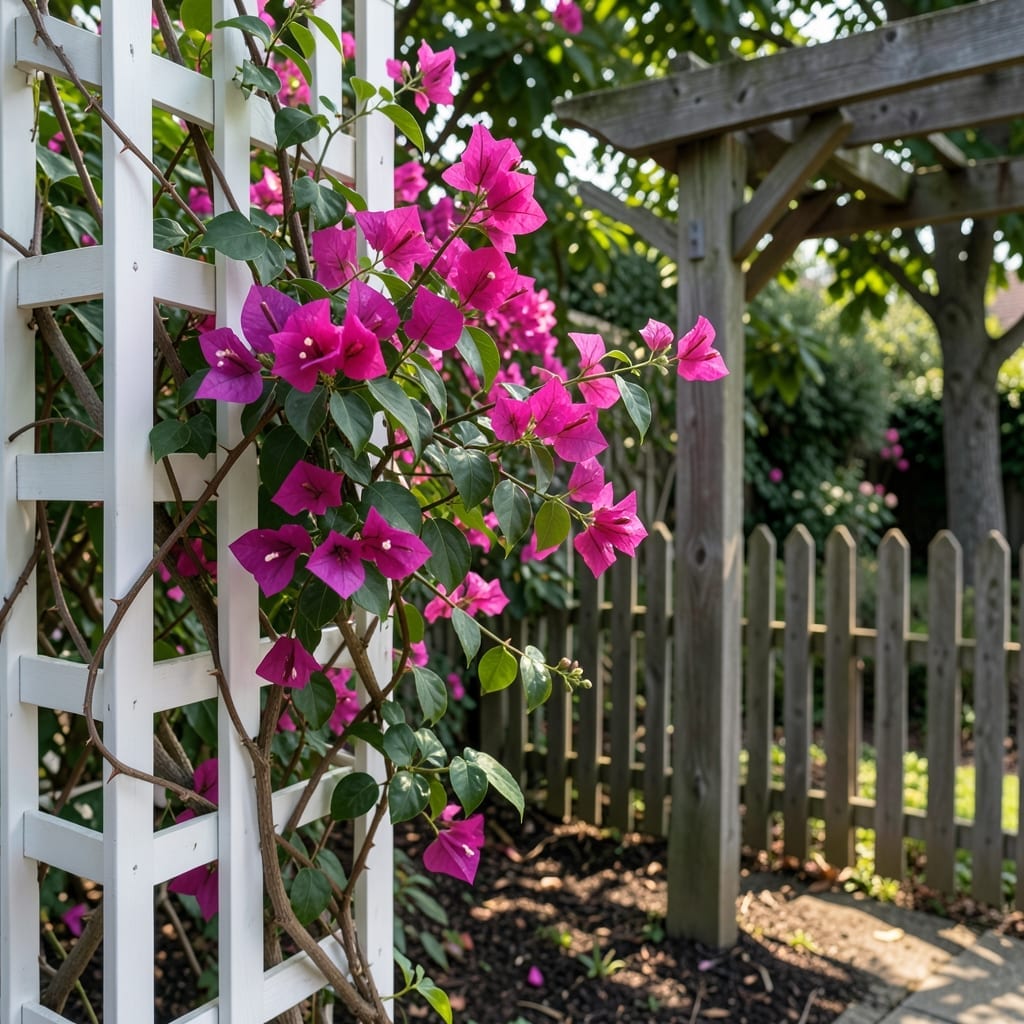
Yes, bougainvillea are natural climbers that use their thorny stems to cling to supports like trellises, fences, or walls, often reaching heights of 15-30 feet with proper guidance.
These vibrant plants thrive when given a sturdy structure to scale, using their sharp thorns as natural hooks. 🌟 I’ve seen them transform bare walls into living tapestries, especially in warm climates where they grow most aggressively. Their ability to climb makes them perfect for creating vertical interest in gardens, patios, or even as a colorful privacy screen.
💡 In This Article
Bougainvillea climbs using its sharp, curved thorns as natural grappling hooks. These modified stems, called axillary thorns, emerge at leaf nodes and harden as the plant matures. Unlike tendrils that wrap around supports, bougainvillea thorns pierce and anchor into surfaces like rough bark, wire mesh, or even stucco walls.
The plant’s long, flexible canes can grow 3-5 feet per year under ideal conditions. 🌿
The growth direction follows a helical pattern, spiraling as it ascends to maximize light exposure. This adaptation evolved in their native South American habitats where they competed for sunlight in dense tropical forests. The thorns also serve as protection against herbivores while facilitating vertical expansion.
In cultivation, this mechanism allows them to scale trellises with remarkable efficiency. ✨
What makes their climbing particularly effective is the combination of thorn density and stem flexibility. Young shoots are supple enough to weave through support structures, while older canes develop woody strength. I’ve observed established plants creating dense mats against walls, with thorns interlocking like a natural Velcro system.
The plant’s weight distribution also helps, as it grows outward before arc upward. 💫
Environmental factors influence climbing success. Warm climates with temperatures between 60-85°F promote the most vigorous growth. The plant’s phototropic nature means it will always grow toward the brightest light source, which gardeners can use to direct its path. In cooler zones, growth slows but the climbing mechanism remains functional, just at a reduced pace. 🔥
This natural climbing ability makes bougainvillea ideal for vertical gardening. Unlike ivy that uses adhesive roots, bougainvillea’s thorn-based system works best with physical supports it can penetrate. The plant’s tendency to bloom more profusely when grown vertically is another benefit, as elevated canes receive better air circulation and sunlight exposure. 🌟
With proper support, they can reach 15-30 feet tall. In ideal conditions, some varieties grow even higher, especially in warm climates where they thrive.
They cling best to rough textures like wire mesh, wooden trellises, or stucco walls. Avoid smooth surfaces like vinyl or glass—thorns can’t grip them.
Yes, gently guide young stems toward supports and secure them with soft ties. Once established, they’ll climb independently using their thorns.
Under ideal conditions, expect 3-5 feet of growth per year. Warmer climates and proper care accelerate this rate significantly.