
Beautiful Plants For Your Interior
Beautiful Plants For Your Interior
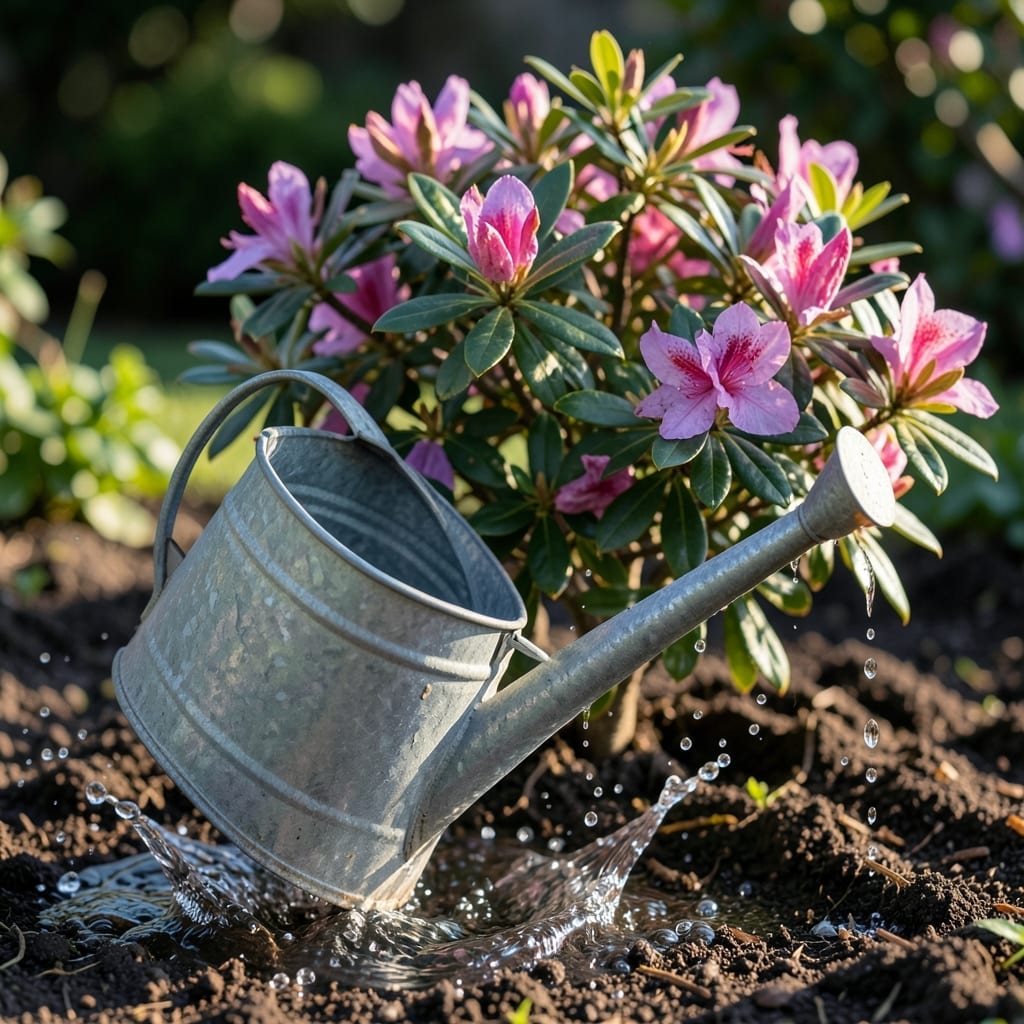
Azaleas light up gardens with vibrant blooms, but their watering needs often puzzle even seasoned gardeners. Overwatering can be just as harmful as underwatering for these finicky shrubs.
The 🌸 Azalea thrives with balanced moisture—not too much, not too little. Getting it right means the difference between lackluster leaves and spectacular spring color.
Discover the simple yet effective approach to watering that keeps your azaleas healthy and blooming beautifully year after year.


I often get asked about azalea watering needs, and the answer isn’t one-size-fits-all. These acid-loving shrubs require consistent moisture but hate soggy roots. The key is deep watering that reaches the root zone without waterlogging the soil.
In most climates, 1 inch of water per week is ideal for established azaleas, but this can vary. Newly planted azaleas need more frequent watering—about 2-3 times weekly—until their roots establish. Always check the top inch of soil before watering.
| Growth Stage | Water Frequency | Amount |
|---|---|---|
| Newly Planted | 2-3x weekly | 1-1.5 inches |
| Established | Weekly | 1 inch |
| Drought | 2x weekly | 1.5 inches |
During hot summer months, I increase watering to twice weekly if rainfall is scarce. Azaleas in sandy soil may need more frequent watering, while those in clay soil require less. Always water early in the morning to reduce evaporation.
Container-grown azaleas dry out faster, so I check them daily in summer. A deep soak every 5-7 days works best. Use a saucer to catch excess water, but empty it after 30 minutes to prevent root rot.
In spring and fall, when temperatures are mild, weekly watering is usually sufficient. I reduce this to every 10-14 days in winter when the plant is dormant, but only if there’s no natural precipitation.
The finger test is my go-to method: stick your finger 2 inches into the soil. If it feels dry, it’s time to water. If it’s damp, wait another day or two. This simple check prevents both overwatering and underwatering.
For optimal moisture retention, I apply a 2-3 inch layer of organic mulch like pine bark or wood chips around the base. This keeps roots cool and reduces water loss through evaporation.
Remember, azaleas prefer acidic soil with a pH between 4.5 and 6.0. If your soil drains too quickly, amending with peat moss or compost can improve moisture retention.
Finally, avoid wetting the foliage when watering. Use a soaker hose or drip irrigation to deliver water directly to the roots. This reduces the risk of fungal diseases and ensures efficient water use. 🌿
I always tell gardeners to watch their azaleas like a hawk for watering clues. These shrubs are dramatic about moisture—too much or too little, and they’ll show clear signs of distress. Catching these early can save your plant.
Overwatered azaleas often develop yellowing leaves that may drop prematurely. The soil stays soggy, and roots can rot, leading to stunted growth and a wilting appearance despite wet conditions. 🌿
Underwatered azaleas have crispy brown edges on leaves and may wilt during hot days. The soil pulls away from the pot edges, and flower buds might drop before opening. These signs often appear gradually but worsen quickly in heat.
To fix overwatering, I stop watering immediately and check the roots. If they’re brown and mushy, trim the damaged parts and repot in fresh, well-draining soil. For underwatering, give a deep soak and mulch to retain moisture.
I’ve found that morning wilting often signals underwatering, while evening wilting can indicate overwatering. A moisture meter takes the guesswork out—aim for 4-6 on the scale for azaleas. This tool is a game-changer for precision.
Remember, azaleas in containers dry out faster than those in ground. If your potted azalea’s leaves feel brittle or the soil cracks when dry, it’s begging for water. Adjust your schedule accordingly, especially in summer heat. 🌱