
Beautiful Plants For Your Interior
Beautiful Plants For Your Interior
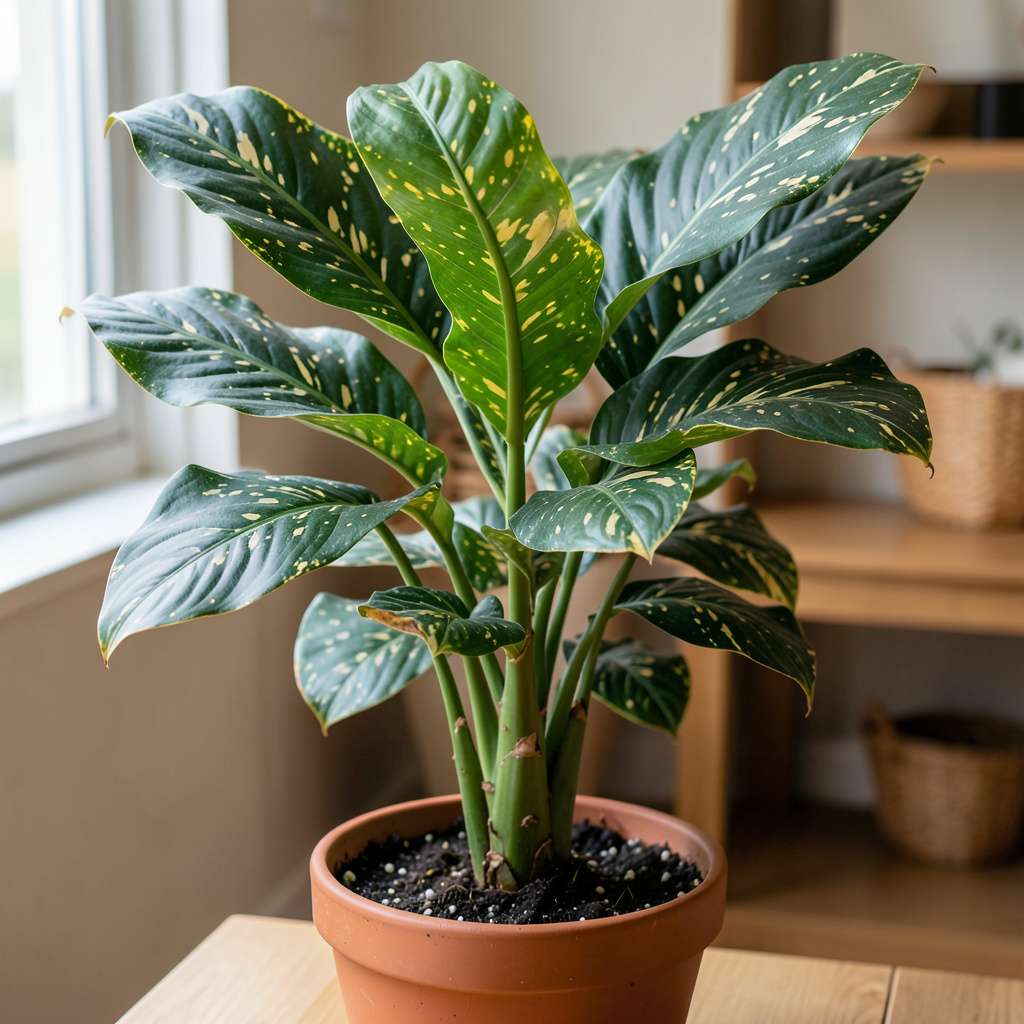
Yellow leaves on dieffenbachia typically signal overwatering, poor drainage, or insufficient light. Check soil moisture first—let the top inch dry between waterings—and ensure bright, indirect sunlight. Nutrient deficiencies or pests may also be culprits.
I’ve seen this happen countless times in my own garden—dieffenbachia plants are surprisingly sensitive to their environment. The yellowing often starts when roots sit in soggy soil too long, cutting off oxygen and inviting fungal issues. 🌱 What many don’t realize is that these tropical plants need consistent moisture but despise “wet feet,” and their large leaves demand more light than people expect for an “indoor” plant.
From my experience, the fix isn’t just about watering less—it’s about creating the right balance. A simple finger test (pushing into soil up to your knuckle) reveals more than any moisture meter. And that perfect bright-but-indirect light? An east-facing window or sheer curtain over a south window works wonders. ✨
💡 In This Article
When dieffenbachia leaves start yellowing, it’s often a cry for help from the roots. Overwatering is the most common culprit—these tropical plants need moisture but can’t tolerate soggy soil. The roots begin to suffocate when water fills the air pockets in soil, preventing oxygen uptake.
Within 24-48 hours of waterlogging, root cells start dying, which cuts off nutrient transport to leaves. 💦 The result? Chlorophyll production slows, and those vibrant green leaves turn pale yellow.
Light stress plays a bigger role than most realize. Dieffenbachia evolved under dappled sunlight in rainforests, so direct sun scorch leaves while deep shade starves them. Ideal light levels measure 1,000-2,000 foot-candles—about what you’d get 3-5 feet from an east-facing window.
Too little light means the plant can’t photosynthesize efficiently, so it breaks down chlorophyll in older leaves to feed new growth. I’ve seen plants recover dramatically just by moving them to brighter indirect light.
The nutrient balance is delicate with these plants. Nitrogen deficiency shows as uniform yellowing (starting with older leaves), while magnesium deficiency creates yellow patches between leaf veins. A soil test revealing pH above 7.0 often indicates nutrient lockout—dieffenbachia prefers slightly acidic soil (6.1-6.5 pH).
What surprises many is that tap water with high minerals can gradually raise soil pH, making nutrients unavailable even when present.
Pests and diseases often get overlooked until they’re severe. Spider mites (tiny red dots) and mealybugs (cottony white masses) suck sap from leaves, causing yellow stippling. Root rot from Phytophthora fungi turns roots mushy and black—this spreads upward, yellowing leaves as vascular tissue clogs. The telltale sign? A foul, musty smell from the soil.
🕵️♂️ I always recommend checking leaf undersides with a magnifying glass—early detection makes treatment much easier.
Temperature fluctuations stress dieffenbachia more than people realize. These plants thrive at 65-80°F during the day with a 10°F drop at night. Drafts from AC vents or cold windows create temperature shocks that disrupt metabolism. The leaves respond by producing stress hormones that interfere with chlorophyll production.
I’ve rescued many plants simply by moving them away from vents and maintaining consistent temperatures.
Here’s what most don’t consider: the pot size matters tremendously. A container that’s too large holds excess moisture around roots, while too-small pots cause root binding that restricts nutrient uptake. The ideal pot is just 1-2 inches wider than the root ball.
Terracotta pots help by wicking away excess moisture through their porous sides—something I’ve found makes a noticeable difference in plant health.
Water when the top 1-2 inches of soil feel dry to your finger. This typically means every 7-10 days in average home conditions. Always check soil moisture before watering—these plants suffer more from overwatering than slight dryness.
Unfortunately, no. Once leaves turn yellow, that chlorophyll is permanently damaged. However, proper care will produce new healthy green growth. Remove yellow leaves to redirect energy to new foliage.
Bright, indirect light is ideal—like an east-facing window or 3-5 feet from a south/west window with sheer curtains. Avoid direct sun which scorches leaves. Grow lights work well if positioned 12-18 inches above the plant.
This usually indicates natural aging or insufficient light. Dieffenbachia naturally sheds older bottom leaves as it grows. If multiple leaves yellow simultaneously, check for root issues or nutrient deficiencies. Prune affected leaves to encourage new growth.
Brown spots often signal fungal issues from overwatering or high humidity. Improve airflow around the plant and reduce watering frequency. Remove affected leaves immediately to prevent spread. A 1:10 neem oil solution can help treat mild cases.
