
Beautiful Plants For Your Interior
Beautiful Plants For Your Interior
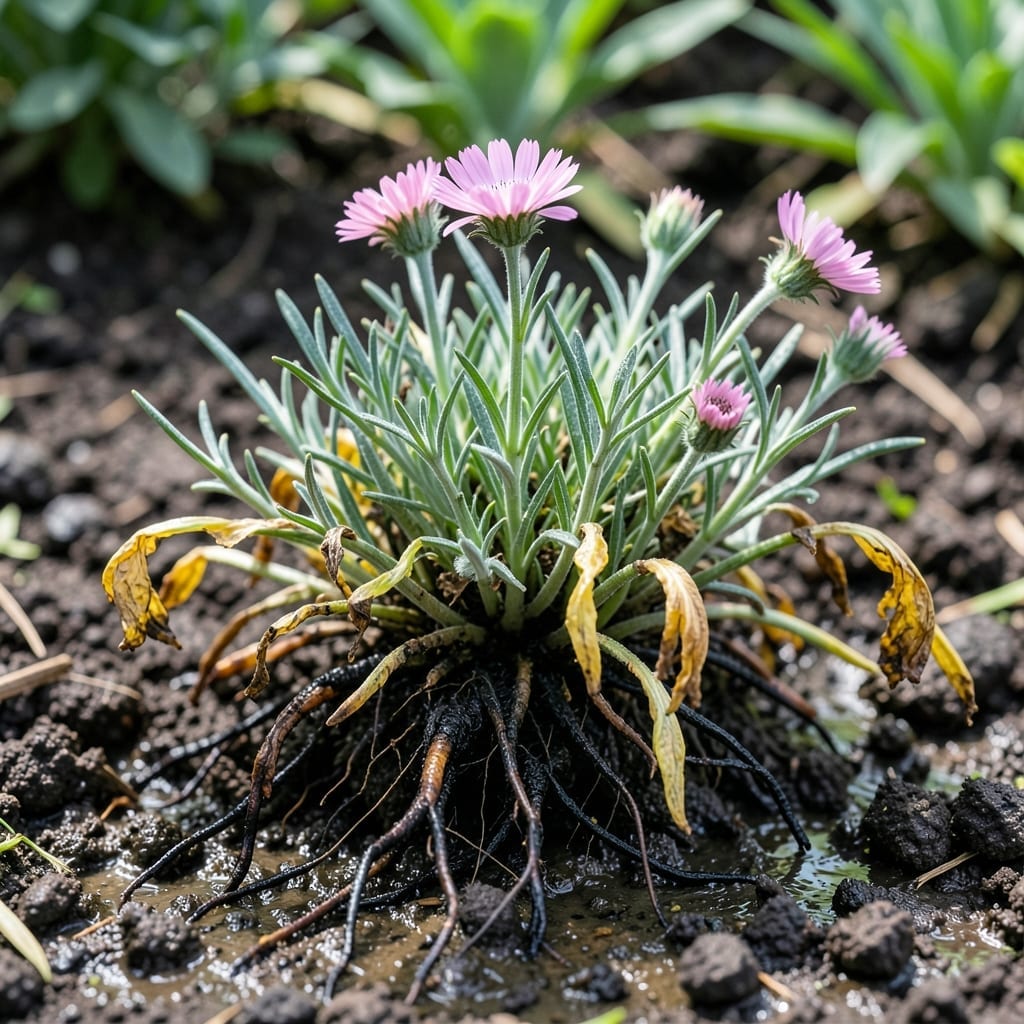
Yellowing leaves and wilting stems on your dianthus aren’t always from thirst. I’ve seen healthy-looking plants collapse overnight from root rot lurking beneath the soil.
Catching it early saves your plants. Look for mushy stems at the base and black, foul-smelling roots. With the right treatment, your dianthus can bounce back and bloom again.
📚 In This Guide
Here’s how I tackle this issue before it spreads and saves your plants.
Start by examining the foliage closely. Yellowing leaves that start at the base of the plant and move upward are your first clue. This discoloration often appears on just one side initially, which can be easy to miss if you’re not looking carefully.
Next, check the stems near the soil line. Soft, mushy stems that darken to brown or black indicate trouble below the surface. I’ve found that plants with root rot often wilt dramatically during the heat of the day, even when the soil feels moist to the touch.
Gently dig around the base of the plant and lift it from the soil. Healthy roots are firm and white, while rotten roots appear dark, slimy, and may fall apart when touched. The smell is another telltale sign—root rot has a distinct, foul odor that’s hard to mistake.
If you see healthy roots mixed with rotten ones, the plant may still be salvageable. When the entire root system is affected, recovery is unlikely. I always wear gloves for this step, as the pathogens can spread through contaminated hands.
Pull up and discard any plants with extensive root damage immediately. Don’t compost them—this only spreads the problem. Instead, seal them in a plastic bag and dispose of them with household trash to contain the pathogens.
For the remaining plants, focus on improving drainage. If the soil stays soggy, amend it with coarse sand or perlite to encourage better water flow. I’ve had success creating small mounds around the base of healthy plants to elevate their roots above waterlogged areas.
Switch to a watering schedule based on soil conditions rather than a fixed routine. Water only when the top 1-2 inches of soil feel dry to the touch. Morning watering gives plants time to dry out during the day, reducing the risk of fungal growth.
After adjusting your approach, watch for new growth as a sign of recovery. Healthy new leaves and stems indicate the plant is responding well. I check my dianthus weekly for any recurrence of symptoms, especially after heavy rains or humid periods.
If the problem persists or spreads, apply a copper-based fungicide according to the product instructions. These are effective against the fungal pathogens that cause root rot. I spray in the early morning or late evening to avoid harming beneficial insects.
Repeat the application every 7-10 days until the plants show clear signs of improvement. Always clean your tools with a 10% bleach solution after working with affected plants to prevent spreading the fungus to healthy areas of the garden.
Small details make the difference between saving your dianthus and losing them entirely.
Early Detection: In Step 1, don’t just look for yellowing leaves—feel the stems near the soil line. Soft, mushy stems that darken are your first physical confirmation of trouble, often appearing before the foliage shows distress. I missed this cue once and lost three plants overnight.
Diagnosis Technique: For Step 2, wear gloves and use a clean trowel to avoid contaminating healthy plants. The foul odor is unmistakable, but if you’re unsure, compare a suspect root to a healthy one from another plant—you’ll notice the difference immediately in color, texture, and smell.
Prevention Strategy: In Step 4, that 1-2 inch soil dryness rule is non-negotiable. After adjusting my watering, I noticed my dianthus perked up within days, and new growth appeared within a week. Morning watering is key—it gives plants the entire day to dry out.
Improve drainage by planting dianthus in well-draining soil or raised beds. Avoid overwatering and ensure containers have drainage holes. Space plants properly for airflow, and remove any infected plants immediately to prevent spread.
Early signs include yellowing or wilting leaves, stunted growth, and soft, dark, or mushy roots. Foul odors from the soil and blackened stems at the base are also red flags. Act quickly if you notice these symptoms!
If caught early, prune affected roots and repot the plant in fresh, sterile soil. Severe cases may require discarding the plant to protect others. Always disinfect tools after handling infected plants to avoid contamination.
While no variety is 100% resistant, some like Dianthus gratianopolitanus (Cheddar Pink) and Dianthus barbatus (Sweet William) tolerate wet conditions better. Still, proper care is key to preventing rot in any variety.