
Beautiful Plants For Your Interior
Beautiful Plants For Your Interior
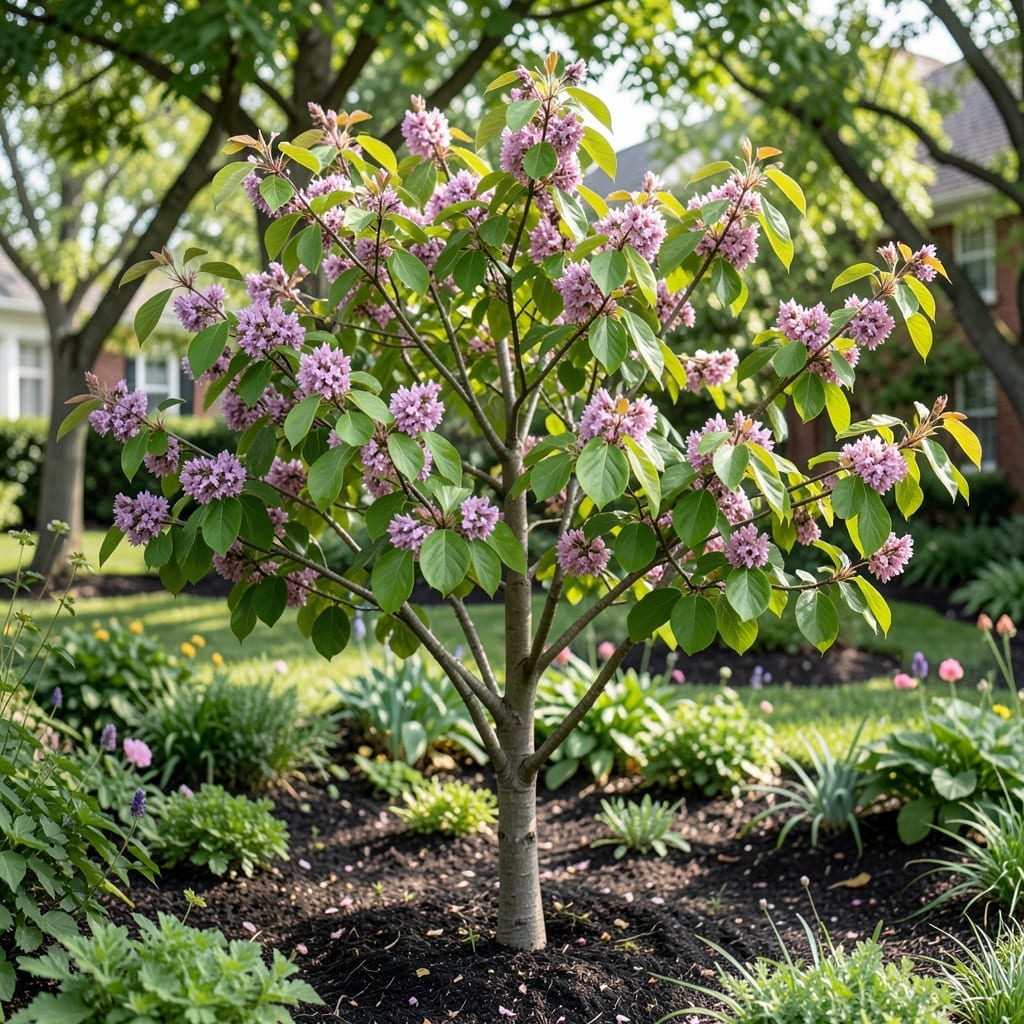
Common deciduous trees with heart-shaped leaves include redbud, catalpa, and littleleaf linden, all featuring distinct cordate foliage that turns vibrant in fall.
I love how these trees transform landscapes with their unique cordate leaves, which often have a pointed tip and rounded base. Their fall colors range from golden yellow to deep crimson, making them standout choices for ornamental planting. Each variety also has distinct bark textures and growth patterns that add year-round interest. ✨
💡 In This Article
Cordate leaves feature a distinct rounded basal lobe with a notch where the stem attaches. This shape maximizes sunlight capture by spreading the leaf surface horizontally, a key adaptation for understory trees. The pinnate venation pattern creates a feather-like network that distributes water and nutrients efficiently across the broad surface.
Leaf margins on these trees can be entire (smooth) or serrated, with redbuds typically showing smooth edges while catalpas often display fine teeth. The tip usually comes to a pointed apex, though some varieties like the American linden have a more rounded end.
This combination of features creates a silhouette that’s instantly recognizable in the wild. 🌿
The size varies dramatically between species. Eastern redbud leaves measure 2-3 inches across, while northern catalpa leaves can reach a massive 12 inches in width. This size difference affects how the trees interact with their environment, from water retention to wind resistance.
These leaves often have a slightly asymmetrical base, with one side of the heart shape being slightly larger than the other. This subtle asymmetry helps distinguish them from other leaf shapes. The texture ranges from smooth and glossy in redbuds to slightly fuzzy in catalpas, adding another identifying characteristic.
Color changes throughout the seasons provide additional clues. New growth often appears bronze or reddish in spring, maturing to deep green in summer. The most dramatic transformation occurs in autumn when chlorophyll breaks down, revealing the vibrant anthocyanins and carotenoids hidden beneath. ✨
This leaf structure also influences how the trees grow. The broad surface area allows for maximum photosynthesis, supporting rapid growth in ideal conditions. However, the large leaves can be susceptible to damage from strong winds or heavy rain, which is why many of these trees thrive in sheltered forest environments.
Silver linden and basswood also feature cordate foliage, though their leaves are often larger. Sweetgum has a star-like shape that can appear heart-like from certain angles. Always check leaf size and texture for proper identification.
The breakdown of chlorophyll reveals hidden pigments. Redbuds often turn purple-red from anthocyanins, while catalpas show golden-yellow from carotenoids. Soil pH and weather conditions can influence the intensity.
Eastern redbuds grow 12-18 inches annually, reaching 20-30 feet tall. Northern catalpas can add 2 feet per year, eventually topping 40-60 feet. Growth rates depend on soil, water, and climate conditions.
Dwarf varieties like ‘Lavender Twist’ redbud adapt well to large containers. Use pots at least 24 inches deep with drainage holes. Regular watering and seasonal fertilizing are essential for container health.