
Beautiful Plants For Your Interior
Beautiful Plants For Your Interior
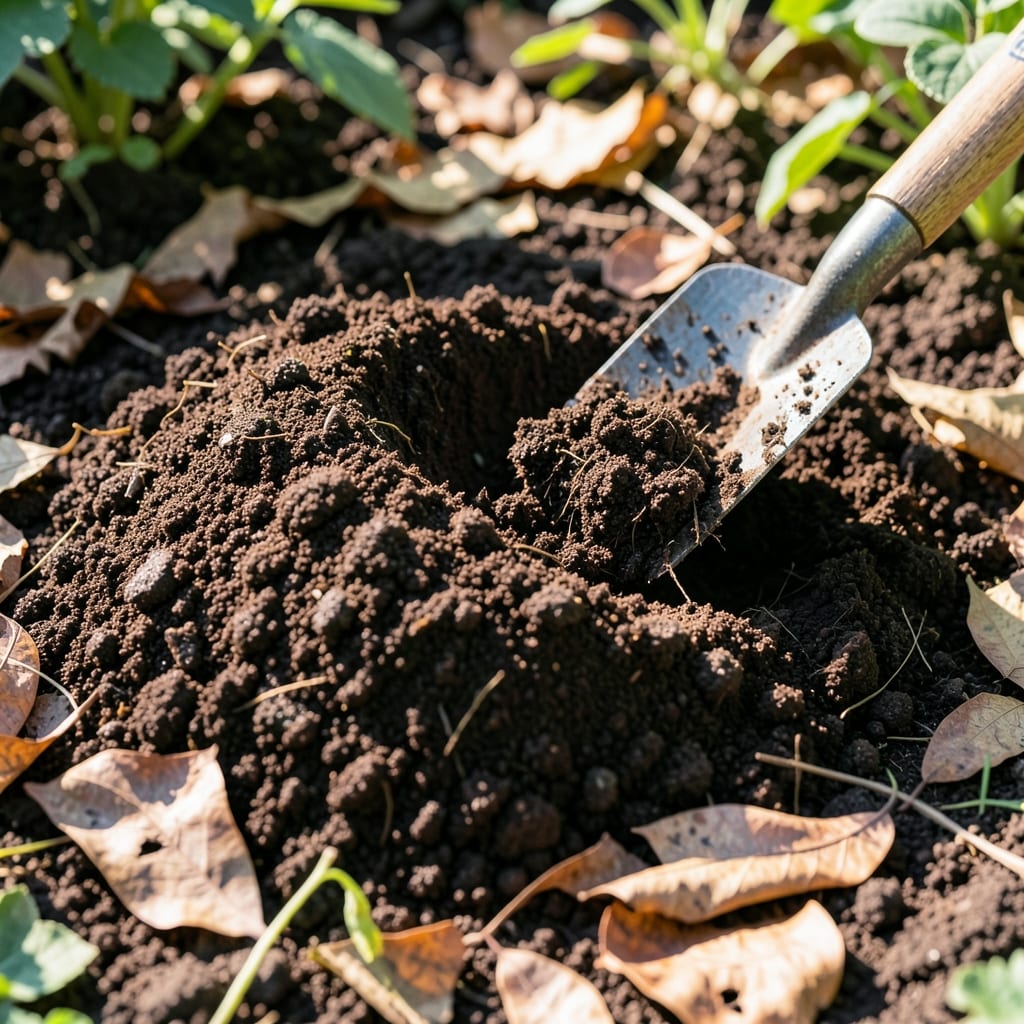
This is humus, a stable, dark organic matter created by decomposed plant and animal material. It improves soil structure, retains moisture, and provides essential nutrients for plant growth.
I’ve seen firsthand how this natural process transforms ordinary dirt into a thriving ecosystem. 🔥 The microscopic organisms breaking down leaves and roots create a spongy texture that holds water while allowing roots to breathe. In my garden, beds rich in this organic matter produce noticeably healthier plants with deeper color and stronger resistance to pests.
💡 In This Article
Here’s what’s actually happening beneath the surface: microorganisms like bacteria and fungi break down organic matter through a complex biochemical process. They secrete enzymes that dissolve the cellular structure of leaves, roots, and animal remains, converting complex carbon compounds into simpler organic acids.
This transformation typically takes 6 months to 2 years in temperate climates, though tropical conditions can accelerate it to just 3-6 months. 🔥
The key factor is the carbon-to-nitrogen ratio in the decomposing material. Ideal ratios range from 20:1 to 30:1 for efficient breakdown. Materials like fresh grass clippings (15:1) decompose rapidly, while woody stems (50:1 or higher) may take years.
Earthworms play a crucial role by physically breaking down material and creating aeration channels that help microbes thrive.
What most people don’t realize is that humus formation involves more than just decomposition—it’s also about humification. This chemical process transforms simple organic compounds into complex, stable humic substances that resist further breakdown.
These dark, amorphous materials give humus its characteristic color and ability to hold nutrients for 10-100 times longer than the original organic matter. ⚡
The resulting substance has a incredible cation exchange capacity (CEC) of 150-300 meq/100g, compared to clay’s 10-50 meq/100g. This means it can store vast amounts of plant-available nutrients like calcium, magnesium, and potassium. The spongy structure also improves water retention, holding 80-90% of its weight in moisture while still allowing for proper drainage.
Temperature and moisture levels significantly impact the process. In ideal conditions (70-90°F with 50-60% moisture), microbial activity peaks. Too dry, and decomposition stalls; too wet, and anaerobic conditions produce foul-smelling compounds instead of stable humus. This is why well-managed compost piles often reach 130-160°F at their core during active decomposition. ✨
Forest soils often develop humus layers called mor or mull depending on the ecosystem. Mor humus, found under coniferous trees, forms a distinct layer due to slow decomposition of needle litter, while mull humus in deciduous forests mixes thoroughly with the mineral soil.
Both types contribute to the soil’s fertility in different ways, supporting diverse plant communities.
In temperate climates, it typically takes 6 months to 2 years for organic matter to fully decompose. Tropical conditions can speed this up to just 3-6 months. The process depends on temperature, moisture, and the carbon-to-nitrogen ratio of the material.
Yes! A well-managed compost pile can produce it in 2-6 months. Maintain a 20:1 to 30:1 carbon-to-nitrogen ratio, keep it moist like a wrung-out sponge, and turn it regularly to aerate. Earthworms will help speed up the process.
While it’s highly beneficial, exceeding 50% organic matter can suffocate plant roots by reducing oxygen availability. It can also cause waterlogging. Aim for 20-40% depending on your plants’ needs.
It improves soil structure long-term while providing slow-release nutrients. Unlike chemical fertilizers, it won’t leach away quickly and helps retain moisture. For best results, use both: this material for soil health and fertilizers for immediate nutrient needs.