
Beautiful Plants For Your Interior
Beautiful Plants For Your Interior
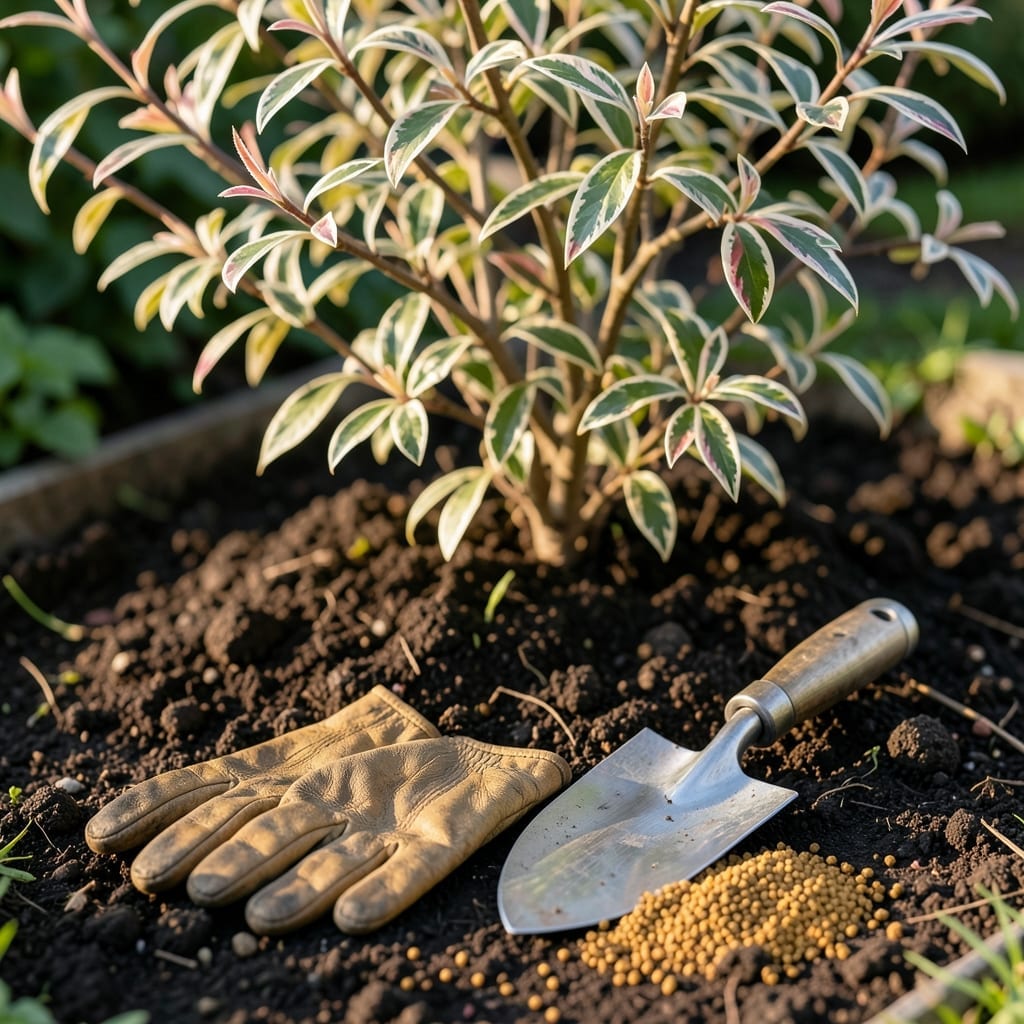
Picture this: your Dappled Willow 🌿 looking lackluster when it should be bursting with vibrant color. The culprit might be simpler than you think – it’s all about what you’re feeding it.
Many gardeners unknowingly sabotage their trees with the wrong approach to fertilization. What your Dappled Willow needs is a balanced strategy that changes with the seasons.
I’ve seen firsthand how the right feeding schedule transforms these trees. With proper care, you can achieve that stunning foliage that makes Dappled Willows so special.
Discover the seasonal secrets that will keep your shrub thriving from spring through fall. Let’s get started on the path to more vibrant growth.
Choosing the right fertilizer for dappled willow is key to vibrant foliage. These shrubs thrive with a balanced NPK ratio, like 10-10-10, to support leaf color and growth.
I recommend organic options like compost or well-rotted manure for slow-release nutrients. Synthetic fertilizers work too but require careful dosing to avoid burn.
A 10-10-10 fertilizer is ideal for dappled willow care, providing equal parts nitrogen, phosphorus, and potassium. This balance supports leaf vibrancy and strong stems.
For organic gardeners, compost or worm castings enrich the soil naturally. These improve soil structure while feeding your willow slowly over time.
Slow-release granules are another great choice, especially for busy gardeners. They feed your dappled willow for 2-3 months with minimal effort.
Avoid high-nitrogen fertilizers as they can cause excessive leafy growth at the expense of colorful foliage. Stick to balanced or slightly higher phosphorus formulas.
I’ve found that liquid fertilizers work well for a quick pick-me-up, especially if your willow’s leaves look dull. Apply every 4-6 weeks during the growing season.
Always water deeply after fertilizing to help nutrients reach the roots. This prevents fertilizer burn and ensures even distribution in the soil.
Remember, less is more with fertilizers. Overfeeding can lead to weak growth and even damage your dappled willow’s roots. 🌿
Feeding your dappled willow at the right time ensures vibrant foliage and strong growth. I’ve found that spring feeding kickstarts new growth, while summer maintenance keeps leaves colorful.
A consistent seasonal schedule prevents over- or under-fertilizing. I recommend adjusting based on your USDA zone and local climate conditions.
🌱 Seasonal Feeding Guide
Spring: Feed for new growth | Summer: Light feed for color | Fall: Feed for dormancy | Winter: Skip
In early spring, I apply a balanced fertilizer like 10-10-10 to promote lush growth. This is when the plant is most active and can utilize nutrients effectively.
During summer months, I switch to a light feeding every 4-6 weeks. This maintains the variegated leaves without overwhelming the plant in heat.
Come fall, I give one final balanced feed to prepare the willow for winter. This helps root development and ensures a strong start next spring.
In winter, I skip fertilizing entirely. The plant is dormant, and excess nutrients can lead to weak, frost-sensitive growth.
Always water deeply after fertilizing to help nutrient absorption and prevent root burn. This simple step makes a big difference in plant health 🌿