
Beautiful Plants For Your Interior
Beautiful Plants For Your Interior
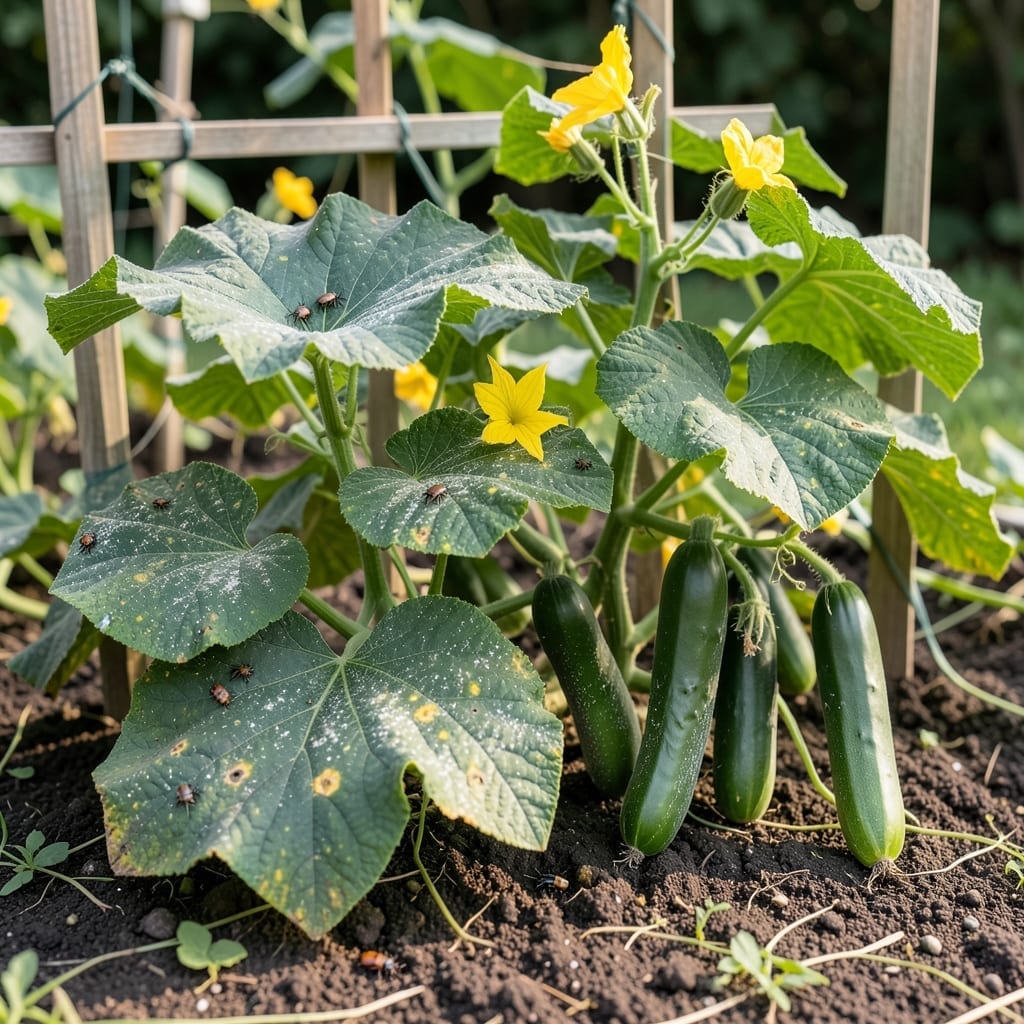
Nothing ruins a thriving 🥒 Cucumber patch faster than unseen diseases or hungry pests quietly destroying your plants. I’ve seen firsthand how quickly a healthy garden can turn into a battleground.
Recognizing the early warning signs is the key to saving your harvest. From wilting leaves to mysterious spots, your plants are trying to tell you something important.
Discover how to spot trouble before it spreads and learn practical ways to protect your Cucumber plants all season long. Let’s keep your garden thriving.
I’ve learned that early detection is your best defense against cucumber diseases. Many gardeners lose their entire crop because they miss the first subtle signs of trouble.
From white powdery coatings to yellowing leaves, each disease has its own warning signs. Knowing what to look for can save your plants and your harvest.
| Early Symptoms | Cause | |
|---|---|---|
| Powdery Mildew | White powdery spots on leaves | Fungal spores in dry conditions |
| Downy Mildew | Yellow patches on upper leaves | Fungal growth in wet weather |
| Bacterial Wilt | Wilting vines during day | Beetle-transmitted bacteria |
| Anthracnose | Water-soaked spots on leaves | Fungal infection from wet foliage |
Powdery mildew often appears as white dusty patches on older leaves first. I check my plants daily for this telltale sign in hot, dry weather.
Downy mildew shows as yellow angular spots on top with grayish growth underneath. It thrives in cool, damp conditions, so morning inspections are crucial.
Bacterial wilt causes sudden wilting that doesn’t recover at night. The cucumber beetles spreading this disease are often visible on the plants.
Anthracnose creates sunken circular spots with yellow halos. These spread quickly in wet conditions, so I remove affected leaves immediately.
I always remove infected plant parts promptly to prevent spread. Disinfecting pruners between cuts is a must to avoid transferring diseases.
For fungal diseases, I improve air circulation by proper spacing and avoid overhead watering. These simple steps reduce most fungal problems significantly.
Remember, prevention is easier than treatment. Healthy plants in good conditions resist diseases better than stressed ones. ☀️
I’ve found that cucumber pests can be just as destructive as diseases. These invaders often go unnoticed until they’ve caused significant damage to your plants.
From chewed leaves to stunted growth, each pest leaves its own calling card. Learning to recognize these signs early can save your cucumber crop from disaster.
| Pest | Identification | Damage Signs |
|---|---|---|
| Cucumber Beetles | Yellow-green with black stripes | Chewed leaves and wilted vines |
| Aphids | Tiny green or black insects | Curled leaves and sticky residue |
| Squash Bugs | Flat brown shield-shaped bugs | Yellow spots on leaves |
| Spider Mites | Tiny red or yellow specks | Stippled leaves and fine webbing |
Cucumber beetles are the most dangerous as they spread bacterial wilt. I look for their distinctive striped patterns on leaves and flowers.
Aphids cluster on new growth, causing leaf curling. Their honeydew secretion attracts ants and promotes sooty mold growth.
Squash bugs suck plant juices, causing yellowing and eventual death. Their eggs are often laid in clusters on leaf undersides.
Spider mites thrive in hot, dry conditions. I check leaf undersides for their fine silk webbing when plants show stippling.
I always inspect plants weekly for pests, focusing on leaf undersides and new growth. Early removal prevents infestations from spreading. 🌿