
Beautiful Plants For Your Interior
Beautiful Plants For Your Interior
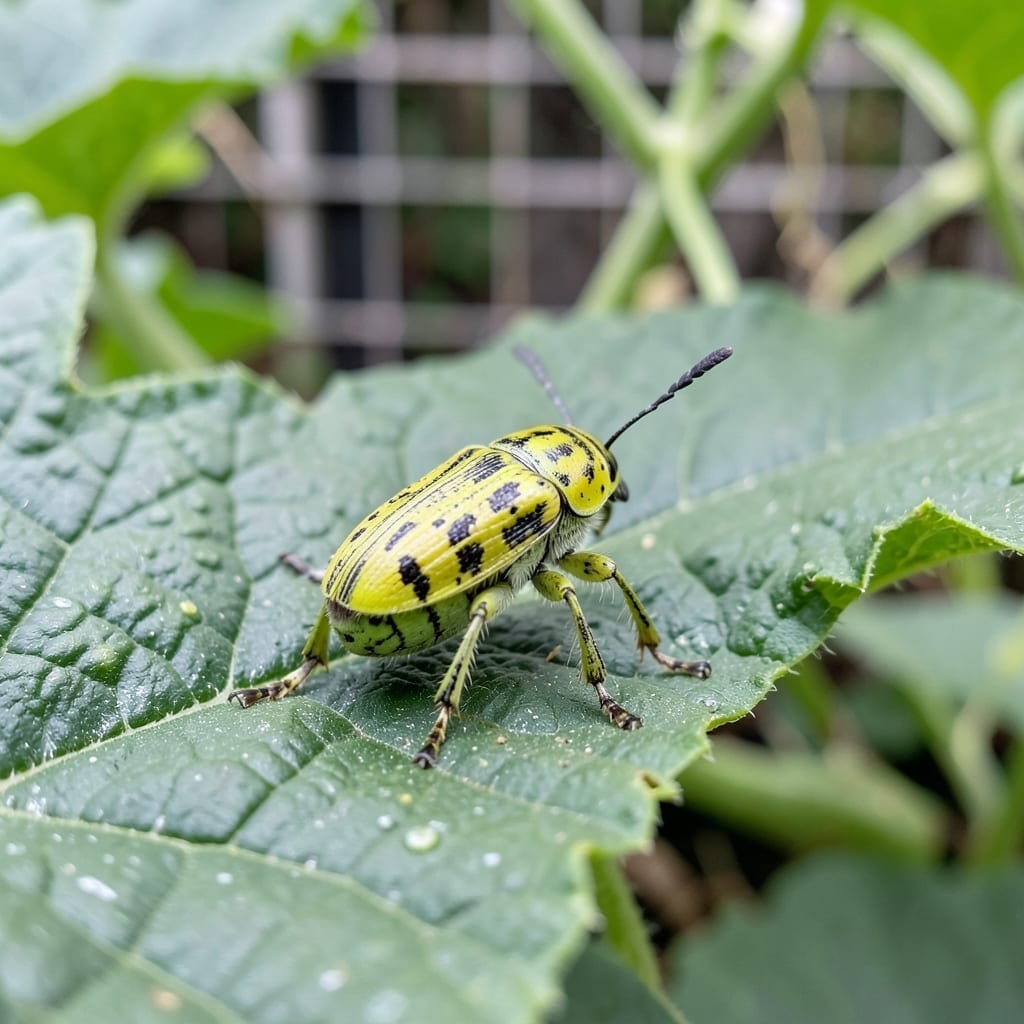
Those yellow and black striped beetles destroyed my cucumber vines last summer. They chew leaves, spread disease, and can wipe out a crop in a week if left unchecked.
I tried every trick before finding a spray that actually works. The key is catching them early and applying consistently. Organic options exist that protect your plants without harsh chemicals.
You’ll see results within 24-48 hours of the first application. Beetles stop feeding, new growth returns, and your vines start recovering fast.
Works for cucumbers, melons, and squash alike. Here’s the exact method that saved my garden.
Understanding why cucumber beetles target your garden is the first step in effective control. These pests aren’t just random invaders—they’re drawn by specific environmental and plant-based cues. Below are the key reasons they appear, along with the science behind their behavior.
Cucumber beetles (Diabrotica undecimpunctata and Acalymma vittatum) are specialized feeders, evolving to target plants in the cucurbit family (cucumbers, squash, melons, and pumpkins). These plants emit volatile organic compounds (VOCs)—like cis-3-hexenal and linalool—that beetles detect from miles away. Once they locate a host, they both feed on leaves and lay eggs at the base, ensuring their larvae have immediate food.
Beetles thrive in temperatures between 75–85°F (24–29°C). As soil warms in late spring, overwintering adults emerge and begin feeding. Their activity peaks during sunny, dry conditions, as moisture slows their movement. Early planting or unseasonably warm spells can accelerate their lifecycle, leading to rapid infestations if unchecked.
Adult cucumber beetles hibernate in garden debris, leaf litter, or grassy areas during colder months. When temperatures rise, they migrate to fresh cucurbit crops. Rototilling or removing plant residue in fall can reduce their numbers, but untended gardens provide safe harbor, ensuring their return the following season.
In conventional gardens, beneficial insects like ground beetles, parasitic wasps, and spiders—which prey on cucumber beetle eggs and larvae—are often absent due to pesticide use. Without these natural controls, beetle populations explode unchecked, necessitating interventions like organic sprays.
Cucumber beetles can wreak havoc on your garden, but these practical solutions will help you reclaim control. Below are targeted fixes for common causes, paired with prevention tips to keep your plants thriving.
Fix: Apply kaolin clay spray to young plants. This creates a protective barrier that deters beetles from feeding and laying eggs. Reapply after rain or every 7–10 days for best results.
Prevent: Use floating row covers early in the season to physically block beetles from reaching seedlings. Remove covers once plants begin to flower to allow pollination.
Fix: Spray neem oil directly on affected foliage. Neem disrupts the beetles’ feeding and reproductive cycles. For severe cases, mix with a few drops of dish soap to improve adhesion.
Prevent: Rotate crops annually to avoid giving beetles a familiar host. Plant trap crops like radishes or nasturtiums nearby to lure beetles away from cucumbers.
Fix: Switch to a pyrethrin-based spray (derived from chrysanthemums) for a stronger, fast-acting solution. Apply in the early morning or late evening when beetles are most active.
Prevent: Maintain garden hygiene by removing plant debris and weeds where beetles overwinter. Encourage beneficial insects like ladybugs and parasitic wasps, which prey on beetle larvae.
💡 Pro Tip: Always test sprays on a small section of your plants first to check for sensitivity. Consistency is key—reapply treatments as directed to break the beetle life cycle!
Reapply organic sprays like neem oil every 7-10 days, or after rain. Pyrethrin works best when used every 5-7 days for active infestations. Consistency breaks their life cycle.
Organic options like kaolin clay and neem oil are safe when used as directed. Always wash produce before eating. Avoid harvesting for 24-48 hours after chemical sprays.
They may be overwintering in garden debris or migrating from nearby areas. Remove plant residue in fall and use floating row covers early in the season to block them.
Yes! Mix 1 tablespoon of dish soap with 1 quart of water for a simple deterrent. For stronger action, add 1 tablespoon of neem oil. Shake well before use.