
Beautiful Plants For Your Interior
Beautiful Plants For Your Interior
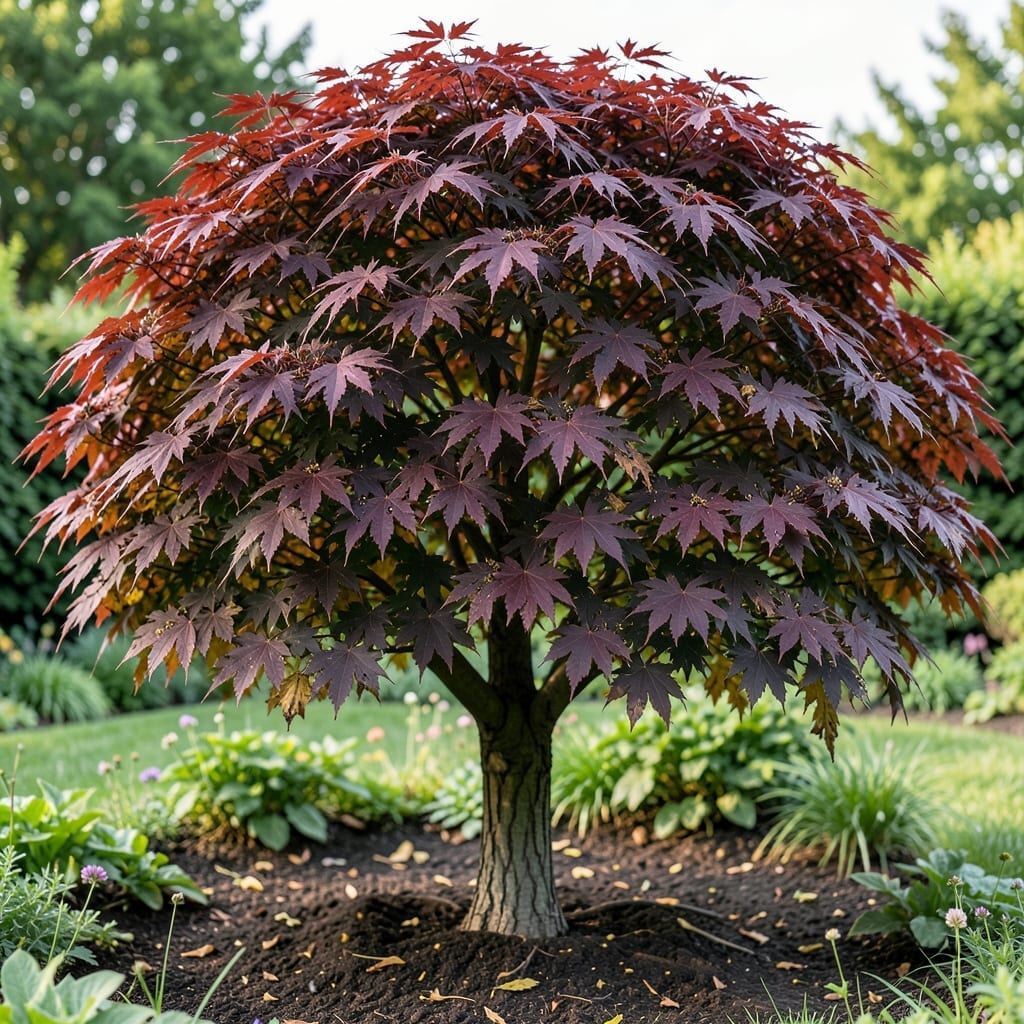
That first summer I planted my Crimson King, the leaves turned crispy in a week. Wilting foliage and bark splitting aren’t just ugly—they’re distress signals from a tree that needs help fast.
Most problems start with stress: too little water, compacted soil, or sudden temperature swings. I’ve seen bark splitting after a late frost and wilting when roots can’t keep up with summer heat.
Solutions are simpler than you’d think. Consistent watering, mulch to protect roots, and watching for early signs of pests or disease can turn things around in 2-3 weeks.
Prevention is the real win. Once you know what to look for, you’ll catch issues before they spiral. Here’s how to keep your maple thriving, not just surviving.
The Crimson King Maple (Acer platanoides ‘Crimson King’) is a hardy, visually striking tree, but even it can fall victim to environmental and biological stressors. Below are the primary causes of its most common problems, explained scientifically yet practically.
Rapid shifts from freezing to thawing can cause bark splitting. In winter, water inside the tree’s cells freezes and expands, creating internal pressure. When temperatures rise quickly, the outer bark—now brittle—cracks under the strain. This is especially true for young trees with thinner bark.
Both overwatering and underwatering can lead to wilting foliage. Overwatering suffocates roots, reducing oxygen uptake and promoting root rot (Phytophthora spp.). Conversely, drought stress causes leaves to curl and brown as the tree conserves moisture. Crimson Kings prefer consistently moist but well-drained soil.
Pathogens like Verticillium wilt and Tar Spot (Rhytisma spp.) thrive in wet, poorly ventilated conditions. Verticillium blocks the tree’s vascular system, leading to sudden wilting and branch dieback. Tar Spot, while less deadly, weakens the tree by disrupting photosynthesis, resulting in yellowing or black-spotted leaves.
Sap-sucking insects such as aphids and scale pierce leaf cells, causing chlorosis (yellowing) and stunted growth. Meanwhile, borers (e.g., Asian Longhorned Beetle) tunnel into the trunk, disrupting nutrient flow and inviting secondary infections.
Crimson Kings thrive in slightly acidic to neutral soil (pH 6.0–7.5). High alkalinity can lock out essential nutrients like iron and manganese, leading to interveinal chlorosis. Compacted or nutrient-poor soil also restricts root development, making the tree more susceptible to stress.
Dealing with Crimson King maple tree woes doesn’t have to be overwhelming. Here’s how to tackle the most common problems with practical, step-by-step solutions and prevention tips to keep your tree thriving.
If your tree’s leaves are drooping or turning crispy, it’s likely thirsty or drowning. Check the soil—if it’s bone-dry, water deeply (1–2 inches per week) at the base, avoiding the leaves. If the soil is soggy, improve drainage by amending it with compost or creating small trenches to redirect water. Prevention tip: 💡 Mulch around the base (2–3 inches deep) to retain moisture without suffocating the roots.
Splitting bark often results from temperature fluctuations or physical damage. Wrap the trunk in burlap or a tree guard during winter to shield it from frost cracks. For existing splits, clean the wound with a soft brush and water, then apply a thin layer of horticultural wound dressing. Prevention tip: ✨ Avoid pruning in late summer or early fall, as fresh cuts are vulnerable to winter damage.
Scale insects and aphids love maples. For mild cases, blast them off with a strong water spray. For stubborn pests, apply neem oil or insecticidal soap, following label instructions. Prevention tip: 🎯 Encourage beneficial insects like ladybugs by planting companion flowers nearby.
Spotting tar-like spots or powdery mildew? Remove infected leaves and dispose of them (don’t compost!). Apply a copper-based fungicide at the first sign of trouble. Prevention tip: 🌡️ Space trees properly for airflow and avoid overhead watering to reduce humidity.
With these fixes, your Crimson King maple will bounce back—just stay consistent and proactive!
Brown leaves often signal underwatering or heat stress. Check soil moisture 2-3 inches deep—if dry, water deeply at the base. Mulching helps retain moisture during hot spells.
Clean the split with water and a soft brush, then apply a thin layer of horticultural dressing. Wrap the trunk with burlap in winter to prevent future damage.
Improve airflow by spacing trees properly and water at the base, not the leaves. Remove infected foliage immediately and apply copper fungicide at first signs.