
Beautiful Plants For Your Interior
Beautiful Plants For Your Interior
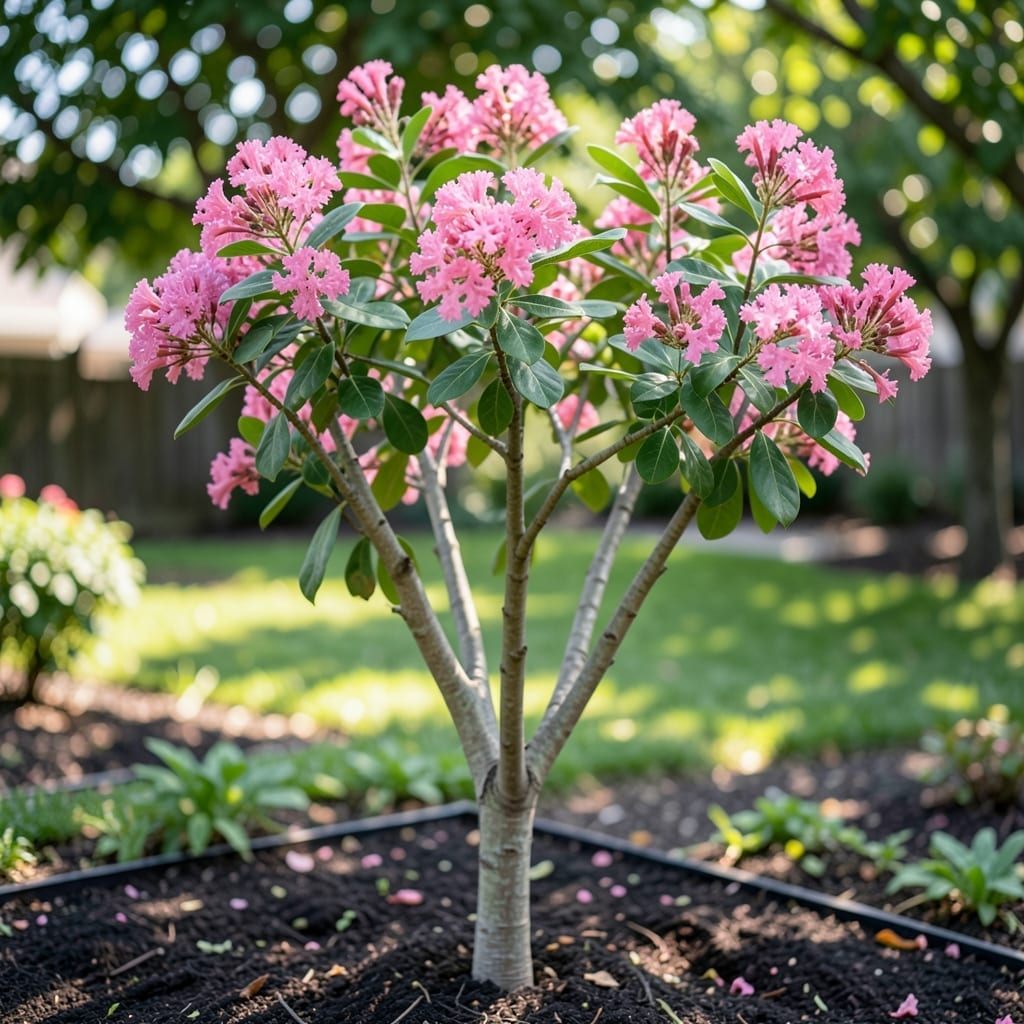
Crepe myrtles thrive when their roots have room to spread. I learned the hard way that crowded roots mean weak blooms and stunted growth.
Healthy roots need well-draining soil and space to stretch. With the right start, you’ll see vibrant blooms and a tree that stands strong for years.
📚 In This Guide
Here’s the method I rely on for establishing strong crepe myrtles from root cuttings.
Choose healthy pencil-thick roots from an established crepe myrtle in late winter while the plant is still dormant. I look for roots that are firm and white inside when cut, avoiding any that appear mushy or discolored. Cut 4-6 inch sections with clean pruners, making sure each piece has at least one visible bud or node.
Soak the cuttings in lukewarm water for 2-3 hours to rehydrate them. This step helps remove any air pockets and prepares the roots for faster establishment. You’ll notice the cuttings plump up slightly during this time, which is your visual cue they’re ready for planting.
Fill a shallow tray or individual pots with a well-draining rooting medium like perlite or coarse sand. I prefer a mix of 50% perlite and 50% peat moss for optimal moisture control. Insert each cutting vertically about 2-3 inches deep, with the top bud just above the soil surface.
Space the cuttings 2-3 inches apart to prevent tangling roots as they grow. Press the medium gently around each cutting to eliminate air pockets. Water thoroughly until you see moisture draining from the bottom—this settles the medium and ensures good contact with the cutting.
Maintain consistent moisture without waterlogging. I check daily by touching the medium—it should feel evenly damp but never soggy. Place the tray in a location with bright, indirect light and temperatures between 65-75°F.
Cover the tray with a clear plastic bag or dome to maintain humidity. You’ll see new growth emerging from the buds in 3-6 weeks. Remove the cover once you notice new leaf development to prevent mold and encourage hardening off.
Once roots are 2-3 inches long (usually visible through drainage holes), transplant each cutting to its own 1-gallon container filled with standard potting mix. I use a mix with added compost for that first nutrient boost.
Water deeply after transplanting and place in partial shade for the first week to reduce stress. Gradually introduce more sunlight over 7-10 days. You’ll know they’re established when you see new top growth and resistance when gently tugged.
After 6-8 weeks of growth in containers, harden off the plants by placing them outside for increasing periods each day. Start with 1-2 hours in a sheltered spot and gradually increase to full days.
Plant in the garden after the last frost when night temperatures stay above 50°F. Space plants 6-8 feet apart to accommodate mature size. Water thoroughly at planting and maintain consistent moisture for the first growing season as they establish their root systems.
Small adjustments in planting and care make a big difference in long-term success.
Sunlight Essentials: The 6-8 hours of direct sunlight isn’t just a suggestion—it’s critical for abundant blooms. I learned this the hard way when my first crepe myrtle in partial shade produced only a handful of flowers. If your yard doesn’t have a full-sun spot, consider container planting so you can move it to follow the sun.
Planting Depth Matters: That 1-2 inches above soil level rule for the root ball isn’t arbitrary. After losing a young plant to trunk rot from improper depth, I now use a ruler to confirm the height. This slight elevation creates a gentle slope that directs water away from the vulnerable trunk area.
Root Preparation Secret: In Step 3, when you make those vertical cuts on bound roots, don’t be timid. I was hesitant at first, but after seeing how dramatically it improved root spread in my clay soil, I now make three to four cuts on each side of severely bound root balls. This encourages outward growth instead of circling.
Watering Wisdom: The 2-3 times per week schedule for the first 2-3 months works perfectly if you water deeply each time. I use a simple trick: place an empty tuna can near the base and water until it’s full—that’s about one inch of water, which is what your new plant needs to establish strong roots.
Crepe myrtle roots typically spread 2-3 times the width of the canopy but stay shallow, often within 12-18 inches deep. This makes them less invasive than many trees, but they can still lift sidewalks if planted too close.
Generally, no—crepe myrtle roots are not aggressive enough to crack foundations. However, planting them within 5-10 feet of structures can still cause minor issues like driveway cracks or pipe interference. Always leave space!
Late fall or early spring is ideal, as it gives roots time to establish before extreme heat or cold. Avoid summer planting, which can stress the tree and lead to weak root growth.
Dwarf crepe myrtle varieties (like ‘Petite Snow’ or ‘Raspberry Sundae’) have compact root systems. For non-crepe options, consider dwarf lilacs or hydrangeas for similar beauty with less root intrusion.
Prune the offending roots carefully (avoid removing more than 20% at once) and install root barriers. For severe cases, consult an arborist—removing too many roots can harm the tree’s health.