
Beautiful Plants For Your Interior
Beautiful Plants For Your Interior
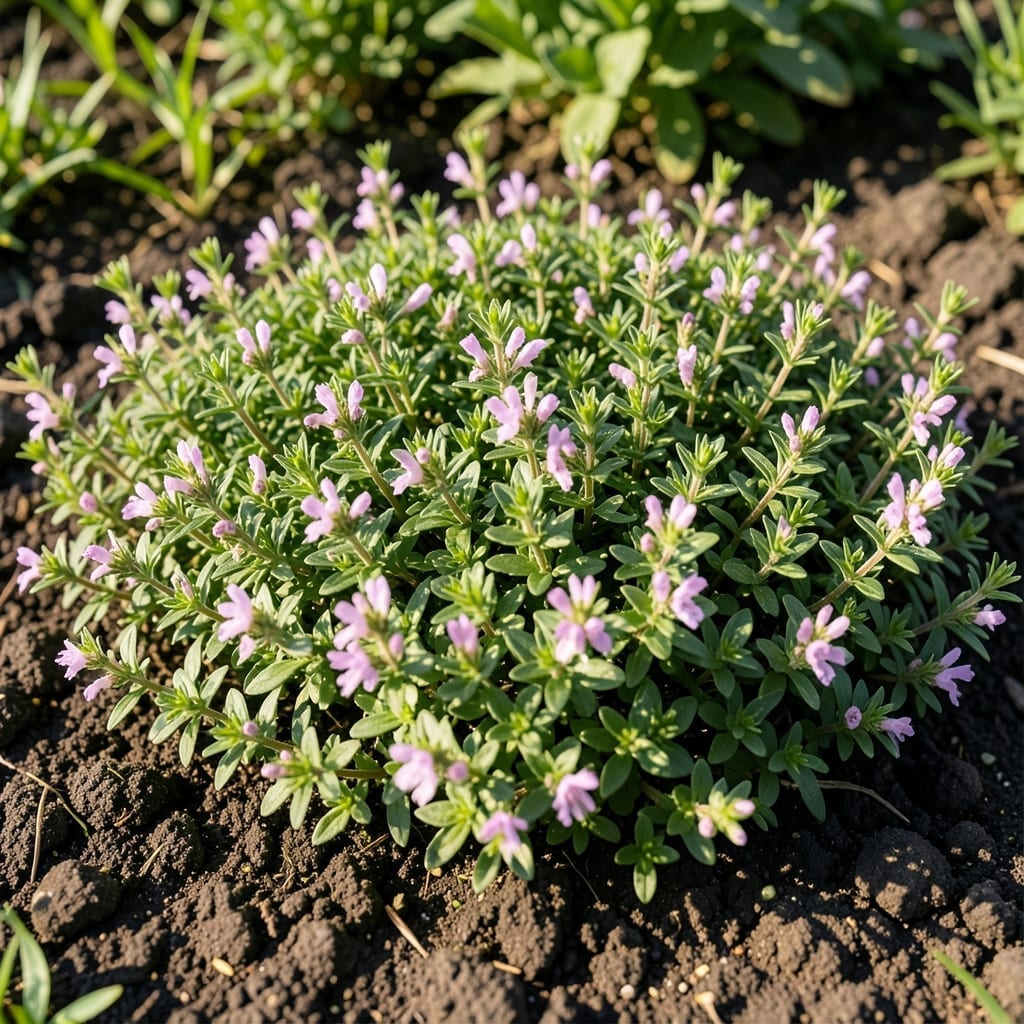
Creeping thyme transforms gardens into fragrant, pollinator-friendly carpets, but its lush growth depends entirely on one crucial factor: proper sunlight.
Get it wrong, and you’ll end up with sparse, weak 🌿 Creeping Thyme instead of a thriving ground cover. This hardy herb isn’t fussy, but it does have specific needs when it comes to light.
Whether you’re planting in zones 4-9 or just starting your garden journey, understanding these requirements is the first step to success.
I’ll show you exactly how to give your creeping thyme the light it craves for dense foliage and vibrant blooms.

If you want creeping thyme to thrive, sunlight is non-negotiable. This hardy ground cover demands 6-8 hours of direct sun daily to achieve its signature dense, fragrant mat. Anything less, and you’ll notice the difference in growth and vibrancy.
I’ve seen firsthand how full sun exposure transforms creeping thyme. The foliage becomes lush, the flowers bloom abundantly, and the plant spreads more aggressively, creating that coveted carpet effect. It’s a sun-worshipper at heart. ☀️
| Requirement | Specification |
| Ideal Daily Sun | 6-8+ hours of direct light |
| Light Type | Direct sunlight preferred |
| Minimum Sun | 4-6 hours for survival |
| Flowering Impact | More sun = more blooms |
| Spread Rate | Faster in full sun |
In hotter climates, creeping thyme can handle the intensity, but I recommend afternoon shade in extreme heat to prevent scorching. This is especially true for USDA zones 8-9, where temps can soar.
For cooler regions, like zones 4-6, maximize sunlight to compensate for shorter growing seasons. A south-facing slope or a spot against a sun-warmed wall can work wonders for your thyme patch.
The quality of light matters too. Morning sun is gentler and ideal, while harsh afternoon rays can stress the plant in peak summer. Observe your garden’s light patterns to find the sweet spot.
If you’re planting in containers, ensure they receive full sun for most of the day. Rotate pots periodically to encourage even growth and prevent the plant from leaning toward the light source.
I always tell gardeners that creeping thyme is forgiving but not indestructible. If your space gets partial shade, expect slower growth and fewer flowers. It’ll survive, but it won’t thrive like it does in sun-drenched spots.
For the best results, pair ample sunlight with well-draining soil and minimal competition from taller plants. This combo lets creeping thyme do what it does best: spread into a vibrant, low-maintenance ground cover. 🌿
Remember, light intensity affects more than just growth. It influences the essential oil production in the leaves, which is why sun-grown thyme often has a stronger aroma and flavor. That’s a win for both your garden and your senses.
Even with the best intentions, creeping thyme can struggle if it’s not basking in enough sunlight. The first red flag I notice is leggy growth, where stems stretch thin and sparse, reaching for light.
Another telltale sign is fewer flowers or blooms that never appear. This ground cover thrives on sunlight to produce its tiny, fragrant blossoms that attract pollinators like bees and butterflies.
🌿 Spot These Light-Deprivation Symptoms
If you see yellowing leaves, it’s often a sign of stress from insufficient light. Healthy creeping thyme should have rich green foliage that forms a dense, lush carpet.
In my experience, partial shade can work, but only if the plant still gets 4-6 hours of direct sun. Anything less, and you’ll likely see these symptoms appear over time.
The good news? These issues are fixable. I’ve had great success relocating plants to sunnier spots or pruning back nearby shrubs that cast too much shade. A little adjustment can make a world of difference.
For existing plants, try thinning out overhanging branches or moving container-grown thyme to a south-facing location. You’ll be amazed at how quickly it bounces back with the right light 🌿