
Beautiful Plants For Your Interior
Beautiful Plants For Your Interior
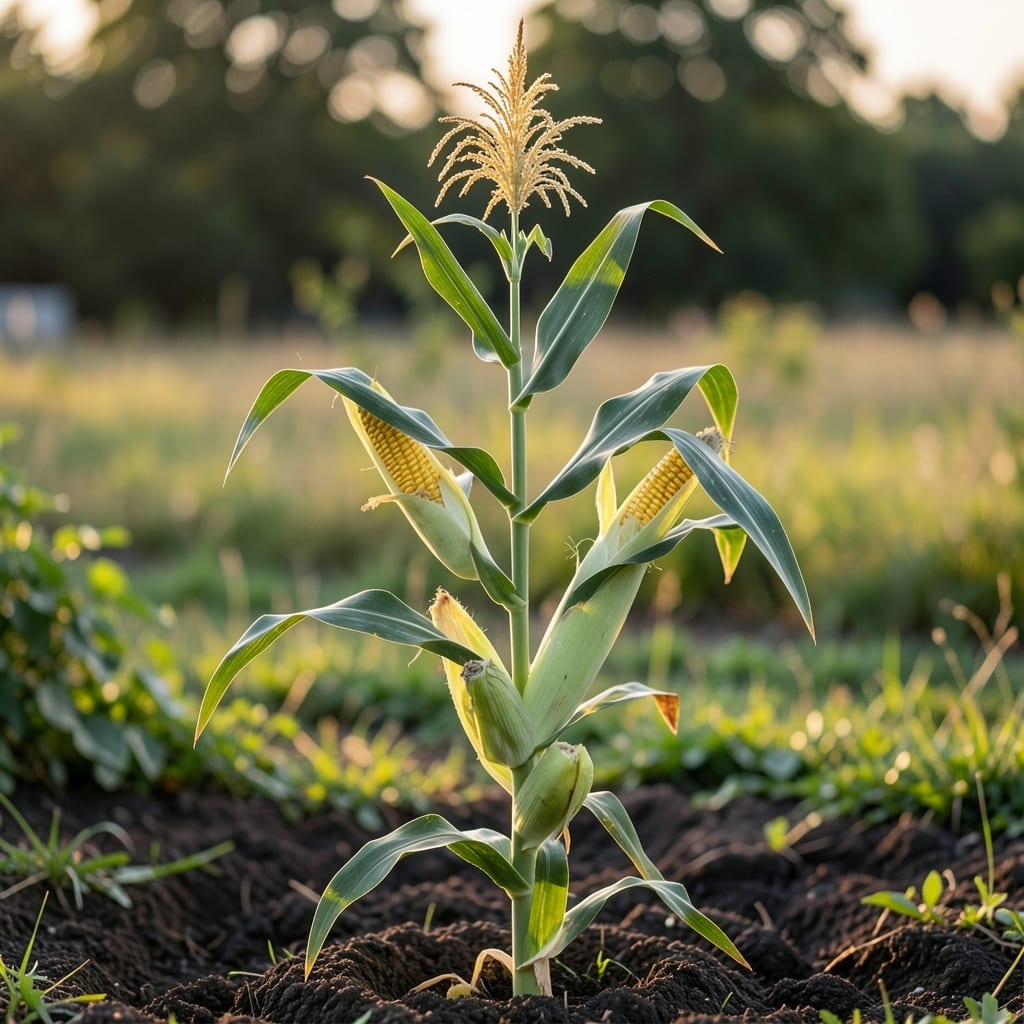
Healthy corn starts underground. I’ve learned that strong roots mean stronger stalks and better yields, but most gardeners overlook what they can’t see.
This system anchors plants, absorbs water, and prevents lodging. With proper care, your corn will stand tall through wind and storms, producing fuller ears come harvest time.
📚 In This Guide
Here’s how I ensure corn develops the deep, extensive roots it needs for stability and nutrient uptake.
Loosen the soil to a depth of at least 12-18 inches before planting. Corn roots grow deep and wide, so compacted soil restricts their development. I use a broadfork or tiller to break up hardpan layers, which can block roots entirely.
Amend the soil with well-rotted compost to improve structure and microbial activity. Avoid fresh manure—it can burn tender roots and introduce pathogens. The ideal soil texture should crumble easily in your hand but hold its shape when squeezed.
Sow corn seeds 1-2 inches deep in rows spaced 30-36 inches apart. Planting too shallow exposes seeds to drying out, while planting too deep delays emergence and weakens root establishment. I place seeds 4-6 inches apart within the row, thinning to 12 inches apart after germination.
Proper spacing prevents competition for water and nutrients, allowing each plant to develop a robust root system. Crowded plants produce weak, shallow roots that struggle to anchor the stalk during wind or heavy rain.
Corn roots thrive with deep, infrequent watering. Aim for 1-1.5 inches of water per week, either from rainfall or irrigation. I water at soil level to keep foliage dry, which reduces disease risk and ensures moisture reaches the root zone.
Check soil moisture by digging 4-6 inches down—if it feels dry, it’s time to water. Shallow watering encourages roots to stay near the surface, making plants more vulnerable to drought stress. Consistency is key; fluctuations in moisture can crack the soil and damage developing roots.
Apply a 2-3 inch layer of organic mulch, such as straw or shredded leaves, around the base of the plants. Mulch retains soil moisture, suppresses weeds, and keeps soil temperatures stable—critical for root health. I avoid piling mulch directly against the stalk to prevent rot.
As the mulch breaks down, it adds organic matter to the soil, further supporting root growth. Without mulch, soil can crust over after heavy rain, making it harder for roots to access air and water. This step is especially important in hot, dry climates.
Watch for signs of root stress, such as wilting, yellowing leaves, or lodging (stalks falling over). These often indicate poor soil structure, insufficient water, or nutrient deficiencies. I inspect roots by carefully digging around a struggling plant—healthy roots should be white and firm, not brown or mushy.
If roots appear stunted or discolored, test soil pH and nutrient levels. Corn prefers a pH of 6.0-6.8. Adjust as needed with lime or sulfur, and consider a balanced fertilizer to encourage vigorous root growth. Early intervention can save a struggling crop.
Small adjustments in your approach can significantly impact root development and overall plant health.
Soil Preparation Depth: The 12-18 inch loosening in Step 1 isn’t arbitrary—corn roots can extend that deep, and hardpan layers below this depth can completely block their progress. I’ve seen plants with stunted growth that perked up immediately after breaking up compacted soil at 18 inches.
Planting Precision: That 1-2 inch seed depth in Step 2 is critical. After testing various depths, I found seeds planted at exactly 1.5 inches emerge most consistently, with roots establishing strongest when they don’t have to fight through too much soil to reach the surface.
Watering Technique: The 4-6 inch moisture check in Step 3 works because that’s where most active root growth occurs. I use a simple soil probe to check moisture at exactly 5 inches down—if it’s dry there, it’s time to water, regardless of what the surface looks like.
Mulch Application: For the 2-3 inch mulch layer in Step 4, straw works best in my experience because it breaks down slowly while still allowing water to penetrate. I’ve tried thicker layers, but they can actually smother the soil and prevent proper gas exchange.
Corn roots usually reach 3-5 feet deep, but in ideal soil conditions, they can extend up to 6-8 feet. Proper water and nutrient availability encourage deeper root development.
Look for stunted growth, yellowing leaves, or lodging (falling over). Poor root health often results from compacted soil, overwatering, or nutrient deficiencies.
Yes! Corn roots can regenerate if the damage isn’t severe. Improve soil aeration, adjust watering, and add organic matter to support recovery.
Loosen compacted soil, ensure proper drainage, and use balanced fertilizers. Avoid overwatering and consider mycorrhizal fungi to boost root health.
Shallow roots may result from compacted soil, poor drainage, or lack of nutrients. Test your soil and amend it with organic material to encourage deeper growth.