
Beautiful Plants For Your Interior
Beautiful Plants For Your Interior
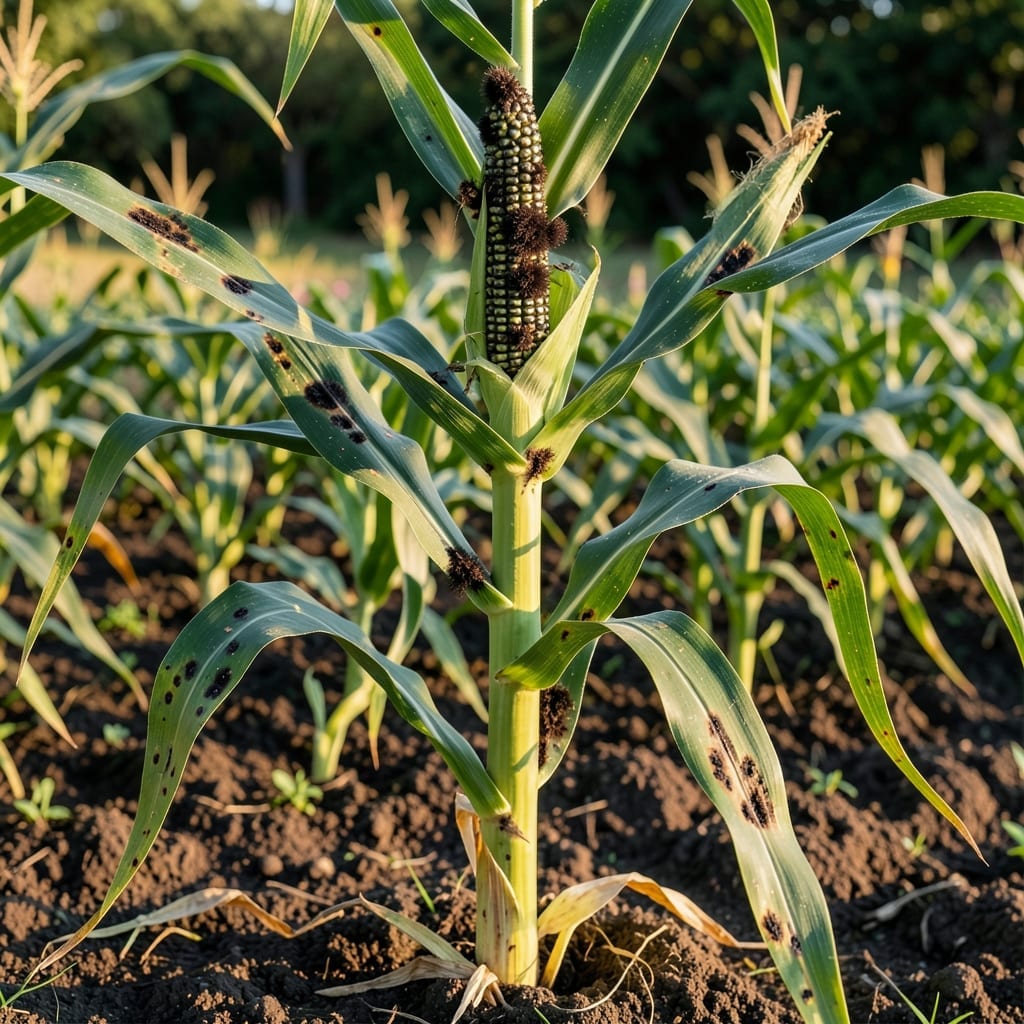
Mexican cuisine uses corn fungus like huitlacoche, a smut that grows on maize, prized for its earthy, mushroom-like flavor in dishes such as quesadillas and soups.
I love how this ingredient transforms simple corn into something extraordinary with its deep, umami-rich profile. Huitlacoche isn’t just edible—it’s celebrated across Oaxaca and central Mexico for adding complexity to tamales, tacos, and even creamy sauces. What started as a crop disease became a gourmet treasure, proving that sometimes nature’s quirks create the most unforgettable flavors. ✨
💡 In This Article
The fungus Ustilago maydis infects corn through spores that land on leaves or silks. It thrives in warm, humid conditions with temperatures between 77-86°F and high moisture. The spores germinate and enter the plant tissue, where they multiply and form galls. 🔥
These galls, or tumors, appear as swollen, dark gray to black masses on ears, kernels, or stalks. Inside, the fungus produces teliospores, which give huitlacoche its characteristic dark color. The infection cycle takes about 10-14 days from initial contact to visible growth. This timing depends on environmental factors like rainfall and temperature consistency.
Certain corn varieties are more susceptible due to genetic factors. Traditional Mexican heirloom corns often show higher infection rates than modern hybrids. The fungus targets the developing kernels most aggressively, transforming them into the edible delicacy known as Mexican truffle. ✨
Farmers in central Mexico sometimes deliberately cultivate conditions to encourage growth. They plant susceptible varieties and time harvests to coincide with the rainy season. This controlled approach ensures a steady supply for culinary use rather than treating it purely as a crop disease.
What makes this relationship unique is the mutual adaptation over centuries. The fungus has evolved to be less aggressive on Mexican corn varieties, while the plants have developed some tolerance. This symbiotic dance creates the perfect conditions for huitlacoche’s distinctive flavor profile. 💫
Its earthy, smoky taste comes from compounds produced as the fungus matures. The dark galls develop rich umami notes similar to mushrooms or truffles. Proper cooking enhances its depth without overpowering other ingredients.
No, it should always be cooked first to neutralize any potential spores. Sautéing for 5-7 minutes or steaming ensures safety while bringing out its best qualities. Never consume it straight from the corn.
The nickname comes from its rarity and gourmet status, much like European truffles. Its complex flavor and high price point in markets make it a prized delicacy. Both are fungi with deep, earthy profiles.
Yes, by inoculating corn with spores and maintaining warm, humid conditions. Expect galls to form in about 2 weeks. Homegrown versions may be smaller but just as flavorful.