
Beautiful Plants For Your Interior
Beautiful Plants For Your Interior
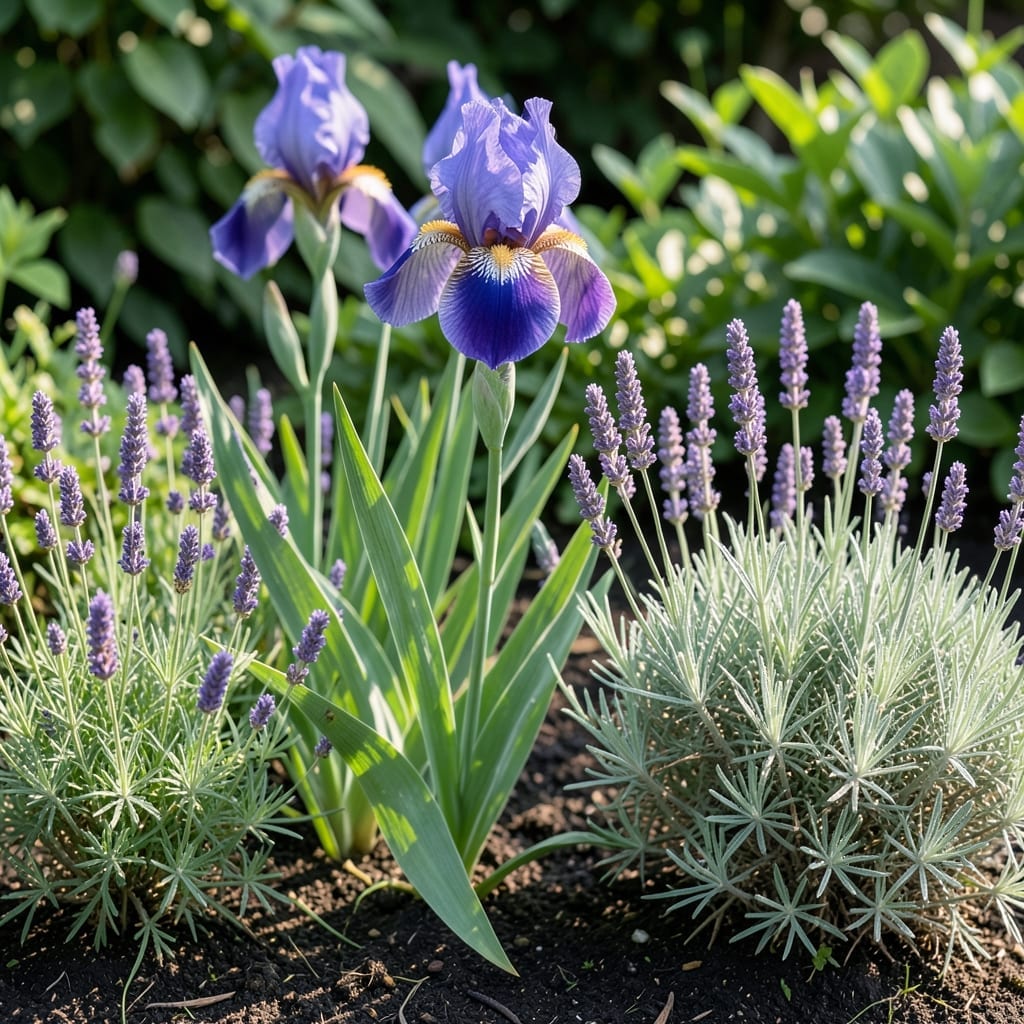
My bearded irises looked lonely until I found their perfect neighbors. The right companions transform a simple iris bed into a thriving ecosystem that blooms brighter and resists pests naturally.
Lavender and salvia proved game-changers—their fragrance masks iris scent to confuse pests while their purple hues complement the irises’ bold colors. Daylilies work too, filling gaps with reliable green foliage even when irises rest.
Spacing matters: give irises 12-18 inches of breathing room while tucking shorter companions up front. Shared soil needs make this almost foolproof—all thrive in well-draining beds with full sun.
The result? More blooms, fewer problems, and a garden that looks professionally designed without the fuss. Here’s how to make it happen.
Companion planting isn’t just a gardening trend—it’s rooted in science. For bearded irises, the right neighbors can transform their growth, health, and bloom quality. Here’s why it works:
Bearded irises thrive in well-draining soil but can deplete nutrients like potassium and phosphorus over time. Companion plants like daylilies or Russian sage have different root depths, reducing competition while improving soil structure. Their roots also host beneficial microbes that break down organic matter, making nutrients more accessible to irises.
Many iris pests, such as iris borers or aphids, are repelled by strongly scented companions like lavender or catmint. These plants emit volatile organic compounds (VOCs) that mask the irises’ scent, confusing pests. Meanwhile, pollinator-friendly companions (e.g., bee balm) attract bees and butterflies, boosting iris pollination and bloom production.
Bearded irises hate soggy roots, but shallow-rooted companions like creeping thyme or sedum act as living mulch, reducing soil evaporation and preventing erosion. Taller companions (e.g., tall garden phlox) provide light afternoon shade in hot climates, protecting iris rhizomes from scald while maintaining air circulation to ward off fungal diseases.
Companion planting can solve common issues with bearded irises, and the fixes are simpler than you think. Here’s how to address each problem with the right plant pairings and care adjustments.
If your bearded irises are struggling in soggy soil, plant them alongside lavender or Russian sage. These companions thrive in well-drained soil and will signal if drainage is still an issue. Prevention tip: 💡 Raise beds or add coarse sand to improve drainage before planting.
Aphids and iris borers hate strong scents. Interplant bearded irises with garlic, chives, or rosemary to deter pests naturally. Prevention tip: 🎯 Rotate companions yearly to keep pests guessing and avoid buildup.
Bearded irises need airflow to prevent fungal diseases. Pair them with creeping thyme or sedum to fill gaps without competing for space. Prevention tip: ✨ Divide irises every 3–4 years to maintain vigor and prevent overcrowding.
If your irises aren’t blooming, they may need more light. Plant daylilies or coneflowers nearby—they’ll thrive in full sun and encourage you to prune back shade-casting plants. Prevention tip: 🌡️ Monitor sunlight patterns and adjust plantings as needed.
Small changes in companions and care can make a big difference in your iris garden’s health and beauty.
Strongly scented herbs like garlic, chives, or rosemary work best. Their fragrance masks iris scent, confusing pests naturally.
Daylilies share similar soil needs and fill gaps with lush foliage. They also complement iris blooms beautifully.
Keep irises spaced 12-18 inches apart. Tuck shorter companions like creeping thyme at the front to avoid crowding.
Yes! Pollinator-friendly plants like bee balm attract bees, boosting iris pollination and bloom production.