
Beautiful Plants For Your Interior
Beautiful Plants For Your Interior
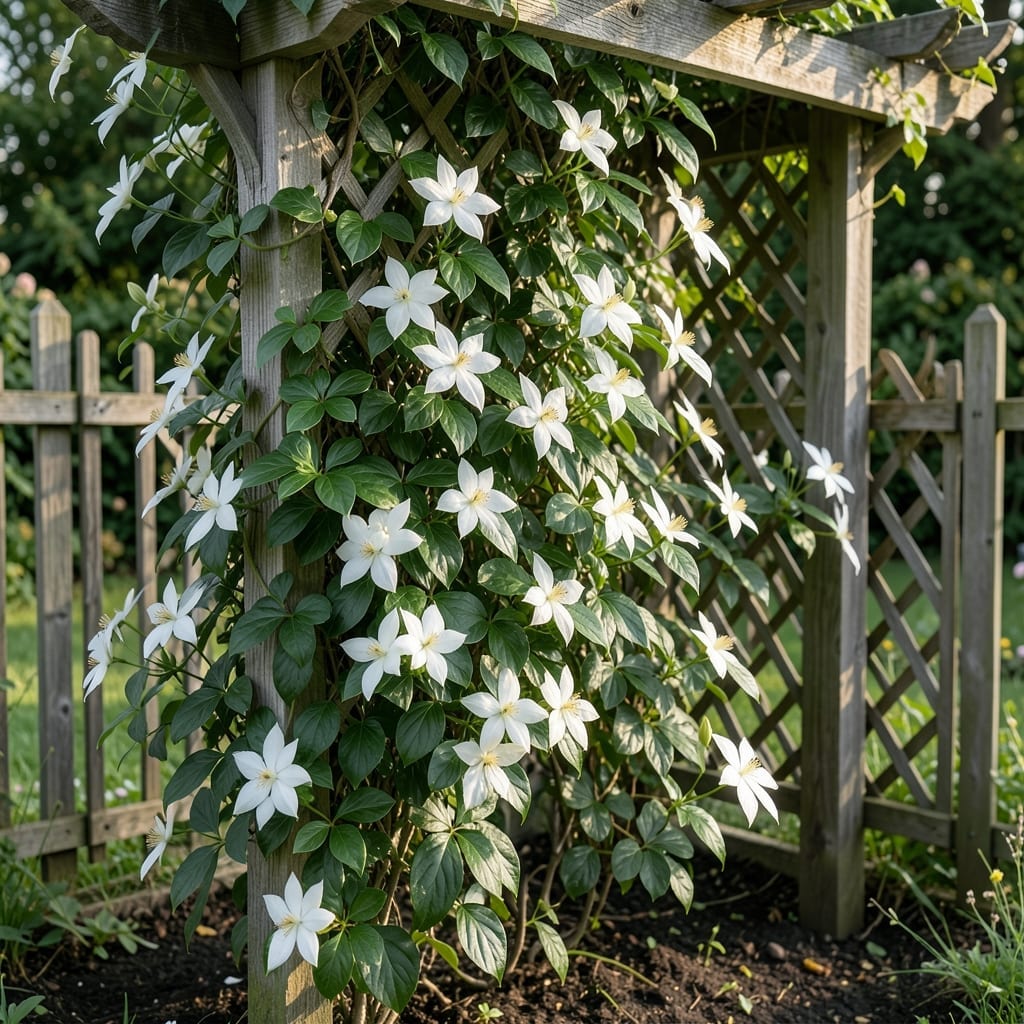
These vines transformed my boring fence into a living wall of blooms. Climbing white clematis needs just the right support and sunlight to take off, but once established, it rewards you with years of cascading flowers.
I learned the hard way that proper pruning at the right time keeps them flowering all season long. The key is matching the variety to your space and giving it room to climb without strangling itself.
📚 In This Guide
Here’s the reliable approach I use to grow vibrant, blooming vines every season.
Choose a spot with full sun to partial shade—clematis thrives with at least 6 hours of sunlight daily. The base of the plant benefits from cool roots, so I plant low-growing companions or use mulch to shade the soil. Avoid areas with strong, hot afternoon sun that can scorch the blooms.
Ensure the location has a sturdy support structure like a trellis, fence, or arbor. Clematis climbs by twining its stems, so the support should have small gaps or thin materials for the vines to grasp. A 4-6 foot tall structure works well for most varieties.
Dig a hole about 12-18 inches deep and 18 inches wide. Clematis prefers well-draining, fertile soil with a slightly alkaline pH. I mix in a generous amount of compost or well-rotted manure to improve soil structure and provide essential nutrients.
If your soil is heavy clay, add coarse sand or grit to enhance drainage. For sandy soil, incorporate organic matter to help retain moisture. The goal is a loose, rich soil that allows roots to spread easily while holding enough moisture for consistent growth.
Place the clematis in the hole so the crown (where the stem meets the roots) is about 2-3 inches below the soil surface. This encourages new shoots to emerge from below ground, which helps protect the plant from clematis wilt and cold damage.
Backfill the hole with the amended soil, firming it gently around the roots. Water deeply after planting to settle the soil and eliminate air pockets. I always add a 2-3 inch layer of mulch around the base to retain moisture and keep the roots cool.
Water the plant regularly, keeping the soil evenly moist but not waterlogged. Clematis needs about 1-1.5 inches of water per week, more during hot, dry spells. I water at the base to keep the foliage dry and prevent disease.
Apply a balanced fertilizer in early spring, then again after the first flush of blooms. I use a slow-release product to provide steady nutrients. Prune according to the plant’s blooming group—white clematis often blooms on new wood, so I prune in late winter or early spring to encourage fresh growth.
Gently tie the young stems to the support structure with soft twine or plant clips. As the vines grow, continue to guide them upward, weaving them through the trellis or support. This keeps the plant tidy and encourages vertical growth.
Monitor the plant for pests like aphids or slugs, and address issues promptly. Deadhead spent blooms to encourage more flowers and maintain a neat appearance. With proper care, your clematis will reward you with abundant white blooms year after year.
These small adjustments make a surprising difference in how your vines flourish.
The Sunlight Factor: The 6 hours of sunlight daily mentioned in Step 1 is non-negotiable for abundant blooms. I learned this the hard way when I planted one in too much shade—fewer flowers and leggy growth. Morning sun with afternoon shade works beautifully for white varieties.
Planting Depth Secret: In Step 3, planting the crown 2-3 inches below the soil surface isn’t just a suggestion. This simple act protects against clematis wilt and encourages stronger root systems. I’ve saved countless plants by following this precisely.
Watering Wisdom: The 1-1.5 inches of water per week from Step 4 needs to be consistent. Clematis hates both drought and soggy roots. I water deeply twice a week rather than daily light watering, which trains the roots to grow deeper and stronger.
Support Strategy: A 4-6 foot tall structure might seem tall, but clematis grows fast. In Step 5, I recommend using soft ties that won’t cut into the stems as they thicken. Thin bamboo stakes work well for young plants before they reach the trellis.
White climbing clematis thrives in well-drained soil with full sun to partial shade. Water regularly, especially during dry spells, and prune in late winter or early spring to encourage new growth and abundant blooms.
Plant in early spring or fall to allow roots to establish before extreme temperatures. Avoid planting in the heat of summer, as it can stress the vine.
Lack of blooms can result from insufficient sunlight, improper pruning, or immature plants. Ensure it gets at least 6 hours of sun daily and prune correctly for its group type.
Yes! Choose a large pot with good drainage, use quality potting mix, and provide a trellis for support. Containers may require more frequent watering and fertilizing.
Watch for aphids, slugs, or clematis wilt. Keep the base of the plant shaded and mulched to prevent wilt, and treat pests with neem oil or insecticidal soap if needed.