
Beautiful Plants For Your Interior
Beautiful Plants For Your Interior
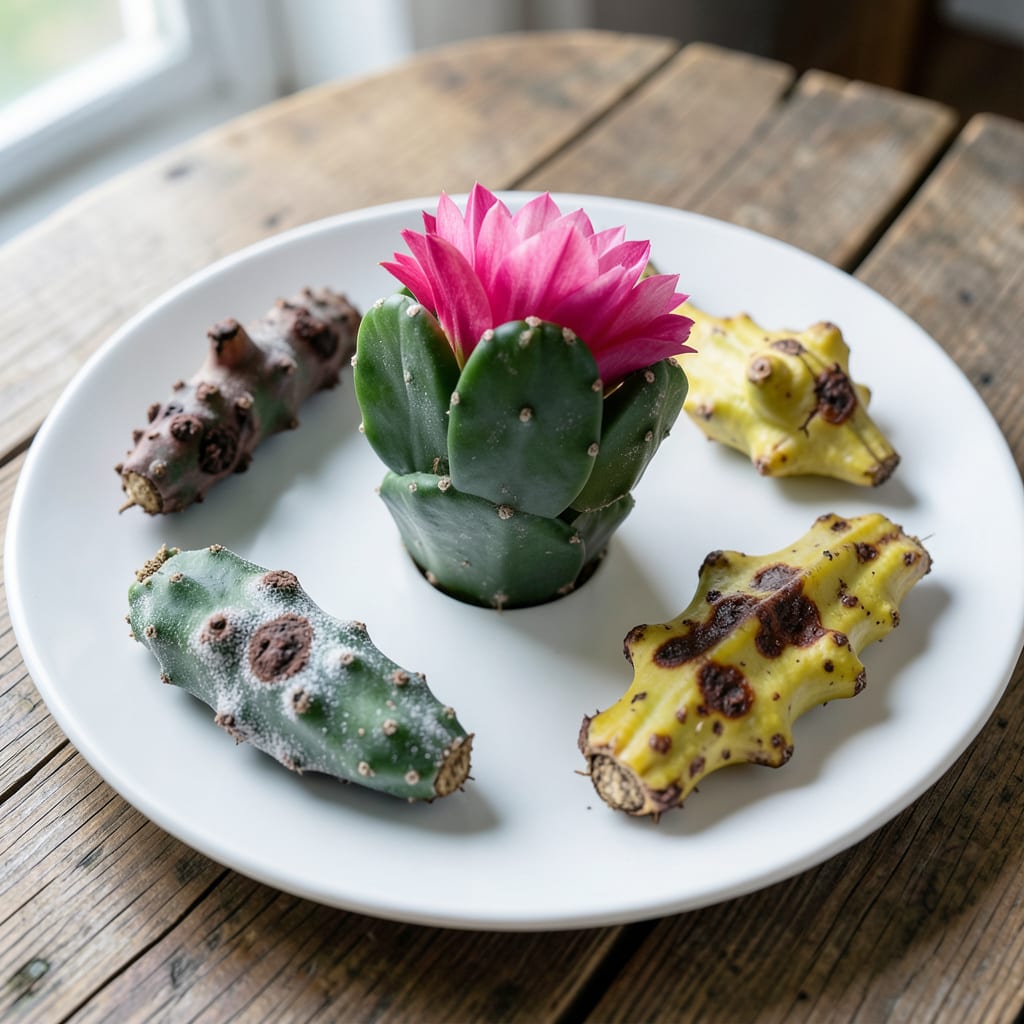
Spotting trouble on your Christmas cactus before it spreads saves the plant. I’ve seen healthy blooms turn to mush overnight from unchecked disease, but early action works every time.
Most issues show up as soft segments, yellow spots, or blackened stems—clear signals something’s wrong. The good news? 90% of problems fix with better watering habits and airflow adjustments.
What you’ll get here are the exact visual cues to watch for, paired with simple fixes. No guesswork, just healthy plants that keep blooming year after year.
Works for new growers and seasoned plant parents alike. Here’s how to spot and stop disease fast.
Understanding why your Christmas cactus falls ill is the first step to prevention. Here’s a breakdown of the most common causes, explained simply but backed by science.
Excessive moisture is the #1 culprit behind root rot and fungal diseases. Christmas cacti (Schlumbergera) are epiphytic succulents, meaning their roots need air as much as water. Soggy soil suffocates roots, creating an anaerobic environment where Phytophthora and Pythium fungi thrive. Always use well-draining soil and pots with drainage holes.
Temperature swings, drafts, or low humidity can weaken your plant, making it susceptible to infections. These cacti prefer 60–70°F (15–21°C) and 50–60% humidity. Sudden drops below 50°F (10°C) or exposure to heat sources (like radiators) stress the plant, reducing its ability to fend off pathogens like Botrytis (gray mold).
Pests like spider mites, mealybugs, and scale insects pierce plant tissues, creating entry points for bacteria and viruses. Mealybugs, for example, excrete honeydew—a sticky substance that fosters sooty mold. Regularly inspect the leaf joints and stems, where pests love to hide.
A lack of key nutrients (e.g., magnesium or potassium) can manifest as yellowing leaves or stunted growth, mimicking disease symptoms. Over-fertilizing, especially with high-nitrogen formulas, can also lead to salt buildup in the soil, burning roots and inviting infections. Use a balanced, diluted fertilizer (e.g., 10-10-10) every 4–6 weeks during growing season.
Don’t let diseases steal your Christmas cactus’s glow! Here’s how to tackle each problem with simple, effective fixes—and keep your plant thriving for seasons to come. 🌿✨
If your cactus has mushy, black roots, stop watering immediately. Remove it from the pot, trim away rotten roots with sterilized scissors, and repot in fresh, well-draining soil (mix in perlite or sand). Use a pot with drainage holes to prevent future sogginess. Prevention tip: Water only when the top inch of soil is dry. 💡
Spot tiny webs or speckling on leaves? Isolate the plant and wipe leaves with a soapy water cloth (1 tsp mild soap per liter). For stubborn infestations, spray with neem oil (follow label instructions). Prevention tip: Mist leaves regularly to deter mites—spiders hate humidity! 🌧️
Brown or scabby patches? Remove infected segments with clean shears, then apply a copper-based fungicide. Boost airflow around the plant to speed recovery. Prevention tip: Avoid overhead watering; water the soil, not the leaves. 🎯
Limp stems often mean underwatering or too much direct sun. Check soil moisture—if dry, water thoroughly. If the plant is sunburnt, move it to bright, indirect light. Prevention tip: Aim for 6–8 hours of gentle light daily. ☀️
Cotton-like clusters? Dip a cotton swab in rubbing alcohol (70%) and dab bugs off. Repeat weekly until gone. Prevention tip: Inspect new plants before bringing them near your cactus. ✨
Look for mushy, blackened stems or roots and a foul odor from the soil. Healthy roots are firm and white, while rotten ones feel soft and appear dark. Early signs include yellowing or wilting segments.
This often signals overwatering or sudden temperature changes. 60–70°F (15–21°C) is ideal. Check for drafts or heat sources nearby, and let the soil dry slightly between waterings.
Yes, if you act fast! Remove infected parts with sterilized shears and treat with a copper fungicide. Improve airflow and avoid wetting the leaves to prevent recurrence.
Inspect new plants before bringing them home and isolate them for 2–3 weeks. Regularly mist leaves and wipe them with soapy water to deter spider mites and mealybugs.
