
Beautiful Plants For Your Interior
Beautiful Plants For Your Interior
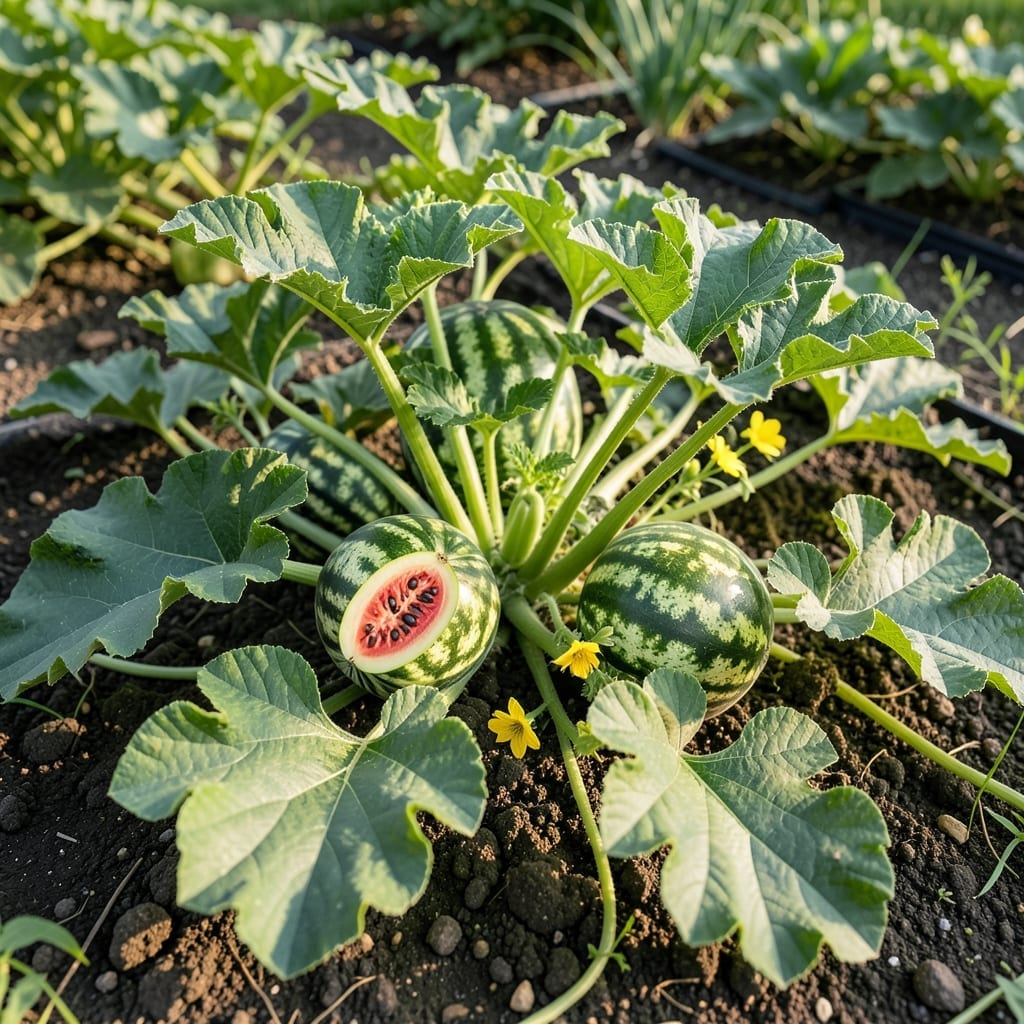
Nothing ruins summer like cutting into a lackluster 🍉 watermelon—except knowing how to pick a perfectly ripe one every time. These field-tested indicators will ensure you bring home the sweetest, juiciest fruit.
I’ve learned the hard way that looks can be deceiving. That shiny rind might be begging for attention, but it’s often the key sign of an underripe melon waiting to disappoint.
What if you could confidently choose watermelons that taste as good as they look? The secret lies in a few simple checks that anyone can master in seconds.
Let me walk you through what to look, listen, and feel for. You’ll discover how to turn every selection into a sweet victory.

When I’m scanning the patch for the perfect watermelon, the first thing I check is the rind color. A ripe one will have a dull, matte finish, not shiny or glossy.
The field spot is my next focus—that’s the area where the melon rested on the ground. It should be a creamy yellow or orange, not white or pale green.
| Sign | What to Look For | Why It Matters |
|---|---|---|
| Rind Color | Dull, not shiny | Indicates full ripeness |
| Field Spot | Creamy yellow or orange | Shows ground contact ripening |
| Stem Condition | Dry and brown | Signals natural detachment |
| Weight | Heavy for size | High water content |
| Shape | Symmetrical and uniform | Indicates even growth |
I always give the melon a gentle press with my palms. A ripe watermelon will have a slight give, but it shouldn’t feel soft or mushy.
The stem end is another telltale sign. If the stem is still green, the melon isn’t ready. I look for a dry, brown stem which means it detached naturally.
Weight is a big indicator for me. A ripe watermelon feels heavy for its size because it’s full of juice. I compare similar-sized melons and pick the heavier one.
I also check the underside of the melon. That field spot should be a rich cream or yellow color. A white spot means it was picked too early.
Symmetry matters too. I choose melons that are uniform in shape rather than lopsided. This usually means they received even sunlight while growing.
For the best results, I combine multiple indicators. No single sign is foolproof, but when I see a dull rind, a yellow field spot, and it feels heavy, I’m confident it’s ripe.
Remember, these signs work for both homegrown watermelons and store-bought ones. The same principles apply whether you’re in the garden or at the market 🌱
Beyond what you can see and feel, sound and smell are powerful indicators of a ripe watermelon. These methods are especially useful when you’re at a farm stand or garden patch with limited options.
The classic thump test works best: tap the watermelon with your knuckles and listen for a deep, hollow sound. A high-pitched or metallic tone means it’s underripe, while a dull thud suggests it’s overripe.☀️
For the smell test, turn the watermelon over and sniff the stem end. A ripe one will have a sweet, earthy aroma, while an unripe melon will have little to no scent. This works because the stem releases volatile compounds as it ripens.
I always combine these tests with the visual cues we discussed earlier. If a watermelon passes both the thump test and has a creamy field spot, I’m confident it’s ready to enjoy. The stem smell is the final confirmation I need before making my selection.
Remember, these methods work best with vine-ripened watermelons. Store-bought melons might not be as reliable, but the thump test still gives good results. Practice makes perfect—after testing a few, you’ll start to recognize the perfect sound instinctively.🌱
In my experience, the combination of sound, smell, and appearance never fails. Trust your senses, and you’ll rarely bring home a disappointing watermelon. The hollow thump and sweet aroma are nature’s way of telling you it’s time to enjoy the fruits of your labor.