
Beautiful Plants For Your Interior
Beautiful Plants For Your Interior
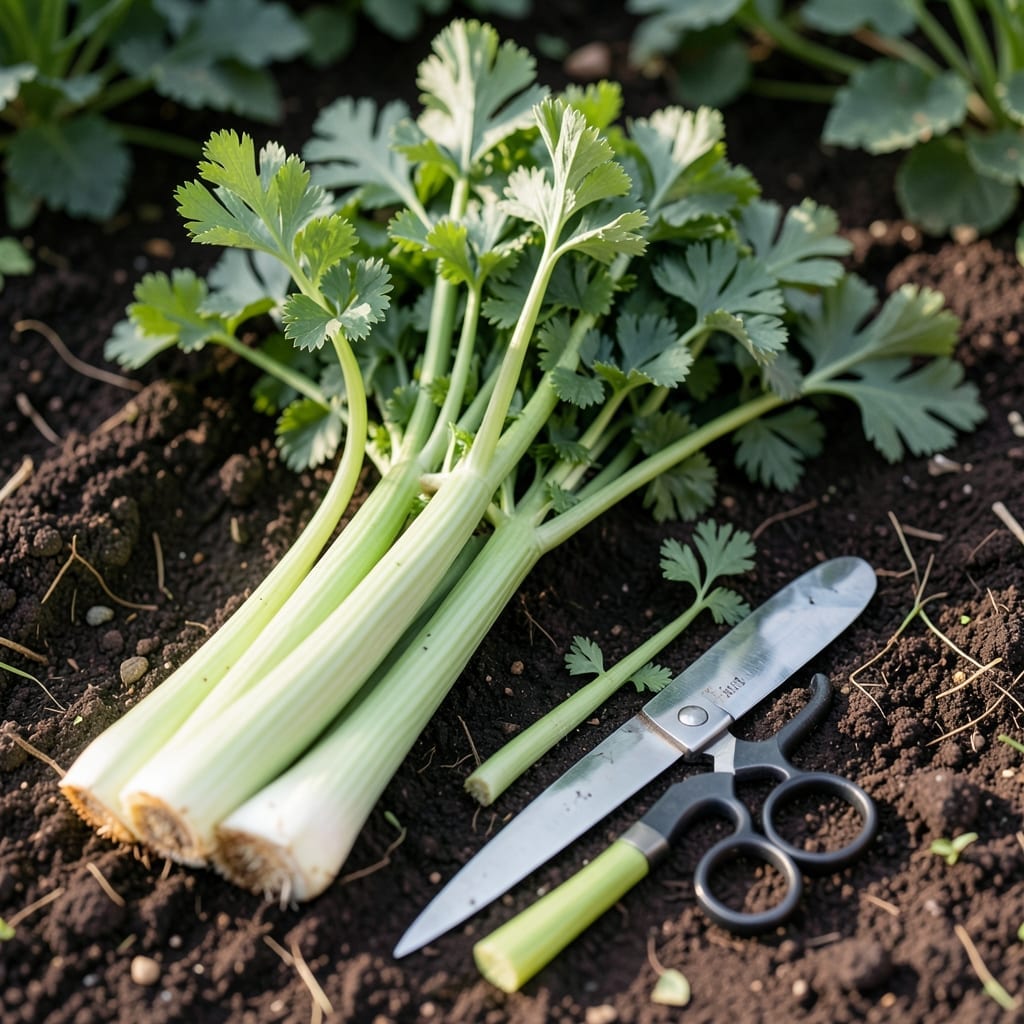
Knowing the perfect celery harvesting time can mean the difference between bitter, stringy stalks and crisp, sweet vegetables that elevate your dishes.
With 🥬 Celery, timing is everything. The visual cues are subtle but unmistakable once you know what to look for in your garden.
I’ll show you exactly when to harvest for the best flavor and texture, so you never have to second-guess again.
Discover how to read your plants like a pro and bring in a bountiful crop at its peak.

Timing your celery harvest perfectly ensures the best flavor and texture. I always watch for visual cues that indicate maturity, like stalk thickness and leaf color. Patience is key—rushing can lead to disappointment.
Your celery is likely ready when stalks reach 6-8 inches in height and feel firm to the touch. The base should be compact, and the leaves dark green. These are the telltale signs of peak ripeness.
| Sign | Ready To Harvest | Not Ready |
|---|---|---|
| Stalk Height | 6-8 inches ✅ | Under 6 inches ❌ |
| Stalk Texture | Thick, firm | Thin, spindly |
| Leaf Color | Dark green 🟢 | Light green/yellow |
| Base Appearance | Compact, full | Loose, underdeveloped |
I’ve found that celery aroma is another reliable indicator. When the plant smells strongly of celery, it’s a good sign the flavor has developed fully. This usually happens around 120 days after planting.
The growing season also plays a role. In USDA Zone 6, celery typically matures between August and October. If you started seeds indoors early, you might harvest sooner.
Don’t overlook the weather conditions. I recommend harvesting on a dry morning after the dew has evaporated. This helps prevent rot and disease from setting in post-harvest.
For those growing in containers, check that the roots aren’t bound. If they are, it might be time to harvest or transplant. Container-grown celery often matures a bit faster.
If you’re unsure, try the “snap test”. A mature celery stalk should snap cleanly when bent. If it bends without breaking, give it more time to develop.
Remember, celery continues growing if left in the ground. You can harvest outer stalks first and let the inner ones mature. This extends your harvest window significantly.
Finally, avoid harvesting during extreme heat or cold snaps. Both can stress the plant and affect flavor. Aim for mild, stable weather for the best results.
With these signs in mind, you’ll never miss the perfect celery harvesting time again 🌱
I always use a sharp knife or clean shears when harvesting celery to avoid tearing the stalks. This simple step prevents damage that can invite disease or stunt regrowth.
Cutting from the outside in is my preferred method. I start with the outer stalks first, leaving the inner growth to continue maturing for future harvests.
I find that morning harvesting works best. The cooler temperatures help maintain the stalks’ crispness and flavor during the process.
After cutting, I
For continuous harvests, I never remove more than one-third of the plant at a time. This approach ensures my celery patch keeps producing for weeks.
Remember, the root system is delicate. I always handle the base gently to avoid disturbing the soil around it, which helps prevent transplant shock.
With these techniques, I’ve found my celery plants often produce for 2-3 months longer than expected 🌱