
Beautiful Plants For Your Interior
Beautiful Plants For Your Interior
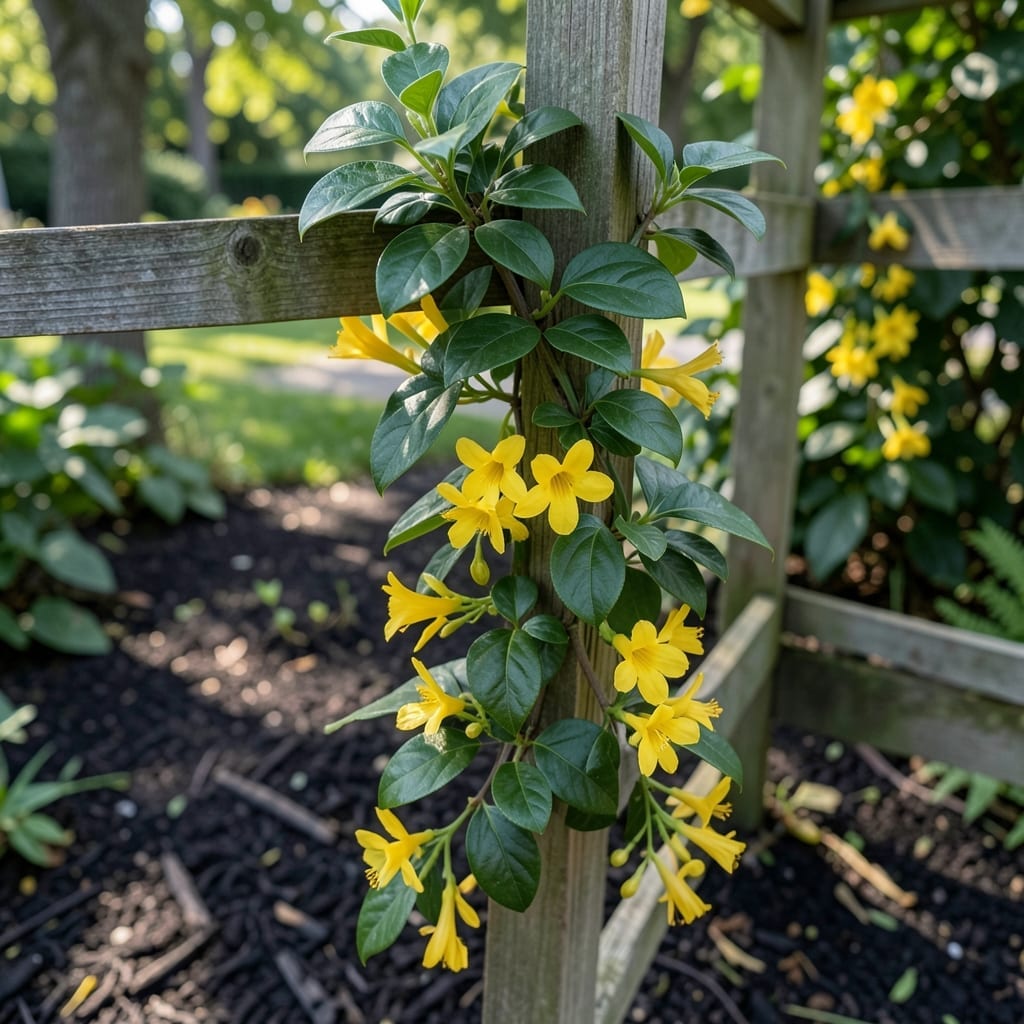
That first whiff of Carolina yellow jasmine in spring stops me every time. This vigorous vine climbs 20 feet with minimal help, draping fences and trellises in glossy green leaves and clusters of bright yellow flowers that perfume the entire yard.
I planted mine in well-draining soil with full sun exposure, and it rewarded me with faster growth and more blooms than the neighbor’s shaded specimen. It tolerates drought once established, though regular watering the first season helps roots settle in.
You’ll get fragrant blossoms from late winter through spring, with occasional repeat blooms in summer. The evergreen foliage stays lush year-round, providing screening and beauty even when nothing else is blooming.
Perfect for Southern gardens where it thrives in zones 7-10 with little fuss. Here’s how to give it the best start.
The Carolina yellow jasmine (Gelsemium sempervirens) flourishes in Southern gardens due to several natural and environmental advantages. Here’s why this fragrant vine grows so well in its native habitat:
This vine is perfectly suited to the warm, humid conditions of the Southeast. It thrives in USDA Zones 7-10, where mild winters and long growing seasons allow it to produce abundant blooms and lush foliage year-round.
Carolina yellow jasmine naturally grows in wetland edges and stream banks, making it highly adaptable to both well-drained and consistently moist soils. Its roots efficiently absorb water, reducing the risk of drought stress.
While it prefers full sun to partial shade, this vine can still perform well in dappled light, especially in hotter regions. Its ability to photosynthesize efficiently in varying light conditions contributes to its vigorous growth.
Unlike many ornamental plants, Carolina yellow jasmine doesn’t demand rich soil. It tolerates sandy or clay-based soils with minimal fertilization, thanks to its hardy root system and natural adaptability.
These traits make it a low-maintenance yet stunning addition to Southern landscapes. 🌿
If your Carolina yellow jasmine is looking lackluster, these practical fixes will nurse it back to health. Address each issue with targeted care to restore its vibrant blooms and lush foliage.
Soggy roots are often the culprit. Repot the vine in well-draining soil mixed with perlite or sand. For in-ground plants, amend the soil with organic matter to boost drainage. Raise beds or add a gentle slope if water pools frequently. Prevention tip: 💡 Water only when the top inch of soil feels dry.
Scale, aphids, or spider mites can stress the plant. Spray leaves with a mix of neem oil and water (1 tbsp per gallon) every 7–10 days until pests vanish. For severe cases, prune affected areas and dispose of them in sealed bags. Prevention tip: 🎯 Encourage ladybugs and lacewings—natural predators—by planting companion flowers like marigolds.
Thin, sparse stems signal a need for more light or shaping. Trim back overgrown vines by one-third to promote bushier growth. Train the plant onto a trellis or fence to direct energy upward. Prevention tip: ✨ Rotate potted specimens quarterly to ensure even light exposure.
Nutrient deficiencies can stall progress. Apply a balanced fertilizer (10-10-10) in early spring, then switch to a low-nitrogen formula before blooming. Avoid over-feeding, which can reduce flowers. Prevention tip: 🌡️ Test soil pH annually—Carolina yellow jasmine thrives in slightly acidic to neutral soil (6.0–7.0).
It can climb 10-20 feet in a single growing season under ideal conditions. Expect moderate growth (3-6 feet per year) in average soil and light.
Yes, it requires support to climb. Use a sturdy trellis, fence, or arbor. Without support, it will sprawl along the ground but won’t reach its full potential.
Yes, deer typically avoid it due to its slightly bitter foliage. While not completely deer-proof, it’s a good choice for gardens with occasional deer visits.
Prune after flowering in late spring or early summer. Avoid heavy pruning in fall, as this can remove next year’s flower buds.