
Beautiful Plants For Your Interior
Beautiful Plants For Your Interior
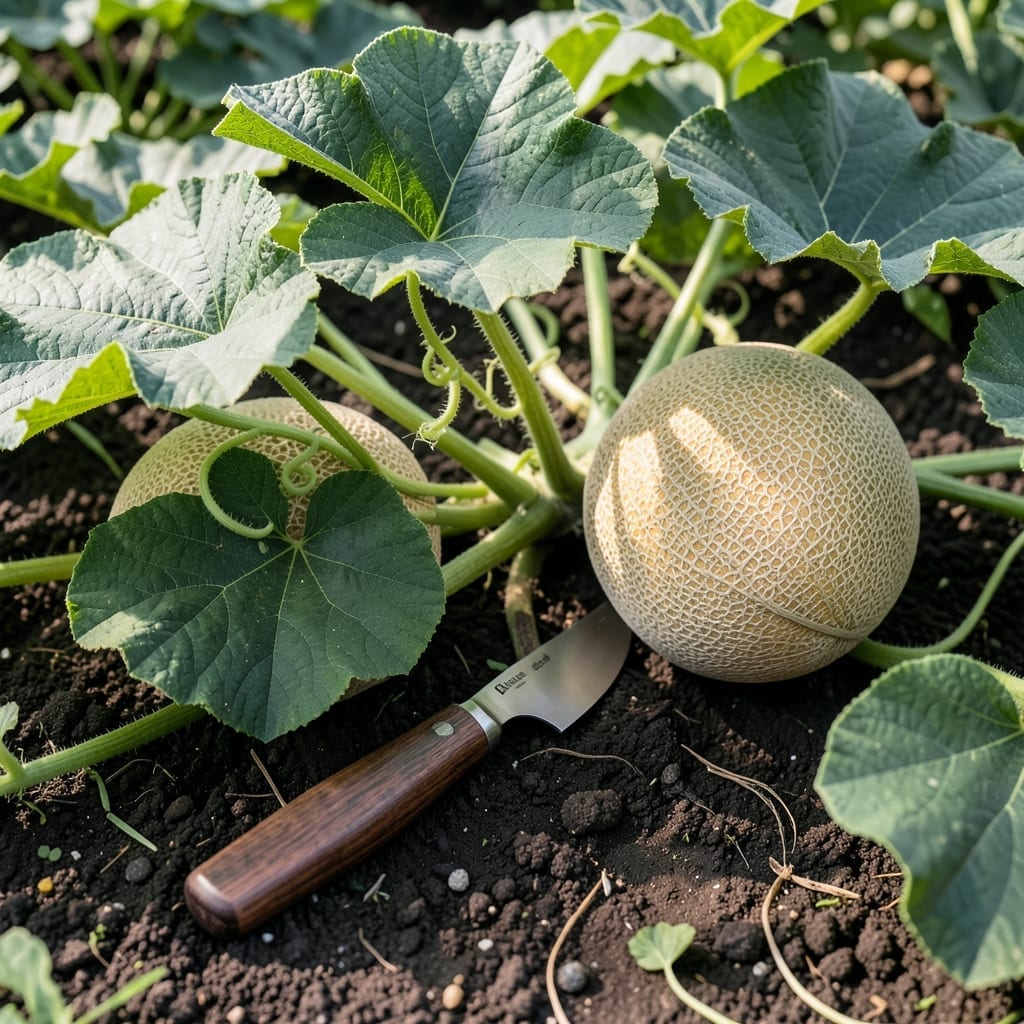
Nothing beats the sweet, juicy crunch of a perfectly ripe 🍈 cantaloupe straight from your garden. That moment when you sink your teeth into sun-warmed fruit is pure summer magic.
But here’s the key: unlike store-bought melons, homegrown cantaloupes won’t ripen further after harvest. This means timing is everything when it comes to picking.
I’ve learned the hard way that waiting for just the right signs makes all the difference between a meh melon and one that bursts with flavor.
Discover how to read your cantaloupe’s subtle signals – from stem slip to color changes – so you’ll never miss that perfect harvest window again.


I love checking my cantaloupe vines daily as harvest time nears. The most reliable sign is the stem slip, where the stem naturally detaches from the vine with gentle pressure. This indicates full ripeness and peak sweetness.
Another telltale cue is the rind color under the netting. When it shifts from green to tan or beige, your melon is likely ready. Combine this with a strong, sweet aroma at the stem end for confirmation.
| Ripeness Sign | What to Look For |
|---|---|
| Stem Slip | Detaches cleanly with gentle pressure |
| Rind Color | Tan/beige under the netting |
| Scent | Strong sweet aroma at stem end |
| Veins | Turn brown under the netting |
The sound test is another useful method. Tap the melon—if it sounds hollow, it’s ripe. A dull thud means it needs more time on the vine.
I always check the underside of the melon too. A creamy yellow or golden hue there often signals it’s ready, while green means it’s not quite there yet.
For the most accurate results, I combine multiple methods. The stem slip is my first check, followed by color and scent. If all three align, I’m confident in my harvest.
Remember that cantaloupes don’t ripen after picking, so wait until all signs are perfect. A slightly underripe melon will stay that way, but a fully ripe one will be bursting with flavor.
In my experience, morning harvests yield the best flavor. The melons are cool and crisp, and the sugars are at their peak after a night of rest.
If you’re unsure, mark the melon with a gardening tag and check it daily. The transition from unripe to ripe can happen quickly, especially in warm weather.
Finally, trust your senses. The combined clues of stem slip, color, scent, and sound will guide you to the perfect harvest every time. 🌱
I see gardeners make the same costly errors with cantaloupes every season. The biggest one? Relying only on color to judge ripeness. That green-to-tan shift is important, but it’s just one piece of the puzzle.
Another common misstep is ignoring the stem slip. If you have to tug hard to separate the fruit from the vine, it’s simply not ready. Patience pays off here.
⚠️ Harvesting Too Early
Picking before the stem slips easily or the aroma develops results in bland, underripe fruit. Always check multiple ripeness signs.
Many gardeners also harvest too late, thinking the fruit will keep getting sweeter. But cantaloupes left on the vine past peak ripeness can become mushy or split open.
The underside color is often overlooked. That spot where the melon touches the soil should turn from green to cream or yellow when ripe. Don’t skip this check.
Lastly, don’t forget the scent test. A ripe cantaloupe will have a sweet, musky fragrance at the stem end. If you can’t smell anything, it’s not ready.
By avoiding these common pitfalls and using all your senses, you’ll consistently pick cantaloupes at their peak of perfection 🌱