
Beautiful Plants For Your Interior
Beautiful Plants For Your Interior
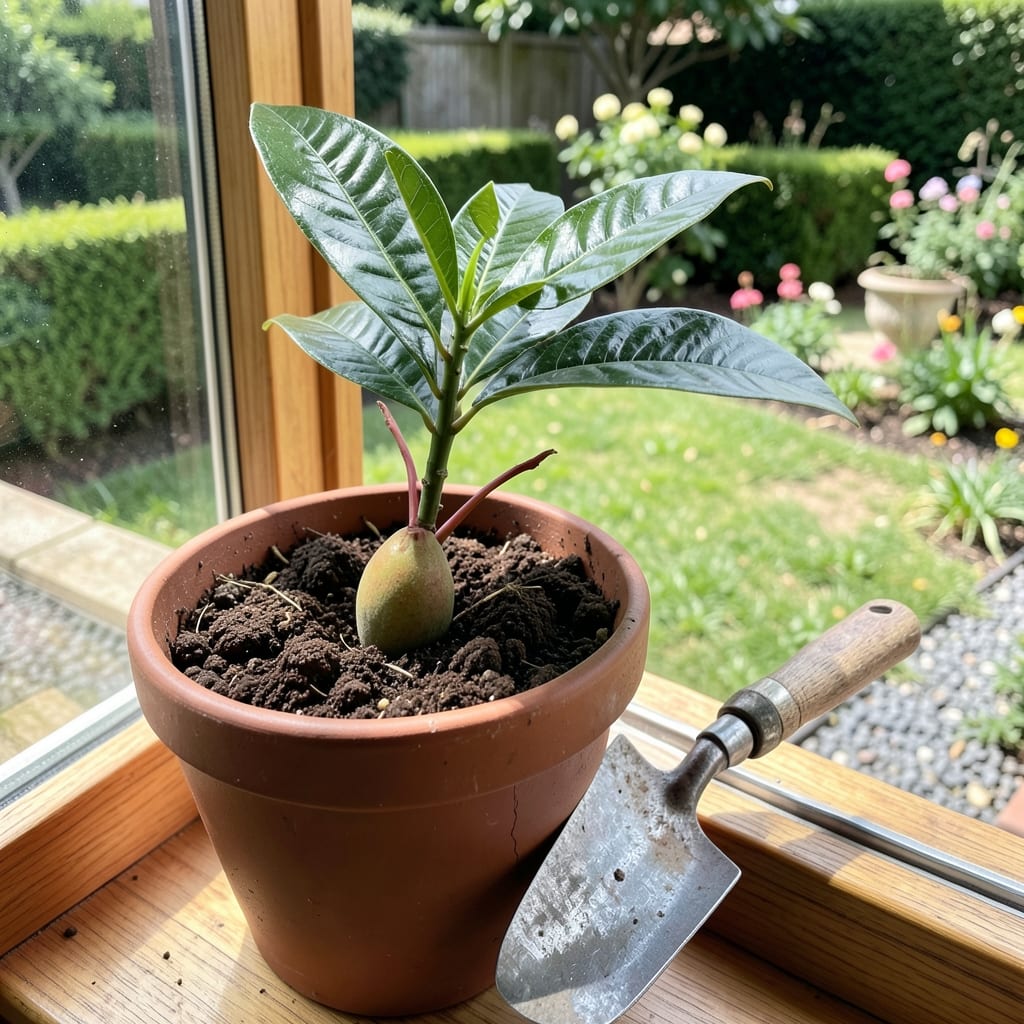
Yes, you can grow a mango tree from a seed, but it may not produce fruit identical to the parent. The process requires proper germination steps and a warm climate for best results.
I’ve successfully started mango trees from seeds by first removing the husk and letting the seed dry slightly before planting in moist, well-draining soil. Tropical climates give the best results, but you can begin indoors with consistent warmth and humidity. What surprises many is that seed-grown trees often take 5-8 years to bear fruit. 🌟
💡 In This Article
Mango seeds contain a hard, fibrous husk that must be removed to expose the inner embryo. This protective outer layer prevents moisture absorption, which is why germination begins with carefully cracking it open. The embryo inside needs consistent moisture and temperatures between 70-85°F to activate metabolic processes. 🔥
Once planted in well-draining soil, the seed absorbs water and swells, triggering enzyme activity that breaks down stored starches into sugars. These sugars fuel the initial root growth, which typically emerges within 2-4 weeks under ideal conditions. The process mimics how mango seeds naturally sprout in tropical forest floors after falling from the tree.
What many don’t realize is that the seed’s orientation matters. Planting it with the concave side facing downward (where the root will emerge) gives the seedling a 20-30% better chance of successful germination. This positioning allows gravity to assist the emerging radicle in growing downward into the soil.
The early root development is fascinating—it first produces a primary taproot that anchors the seedling and begins absorbing water and nutrients. Within days, secondary roots branch out, creating a network that will eventually support the tree’s massive canopy. This phase is critical, as the seedling is most vulnerable to drought or overwatering.
Humidity plays a crucial role during this stage. Maintaining 70-80% humidity prevents the delicate new roots from drying out while allowing enough air circulation to prevent rot. This is why many gardeners use a plastic bag or dome to create a mini greenhouse effect over the planting container.
Interestingly, mango seeds have a relatively short viability window. Fresh seeds germinate best, with success rates dropping significantly after 2-3 weeks of storage. The seeds contain polyembryony—a phenomenon where multiple embryos develop from a single seed, giving mango trees their unique genetic diversity.
Under ideal conditions, you’ll see roots emerging in 2-4 weeks. Keep the seed in warm, moist soil at 70-85°F for best results. Patience is key—some seeds may take longer to break dormancy.
Yes, the outer husk must be carefully cracked open to expose the inner embryo. This allows moisture to reach the seed and kickstart germination. Skipping this step can delay or prevent sprouting entirely.
It can, but the fruit may differ from the parent mango. Seed-grown trees often take 5-8 years to bear fruit, and the quality can vary. For consistent fruit, grafted trees are recommended.
Yes, but it requires bright light and warmth. Use a 12-hour grow light or place near a south-facing window. In cooler climates, keep it in a container and bring indoors when temperatures drop below 40°F.