
Beautiful Plants For Your Interior
Beautiful Plants For Your Interior
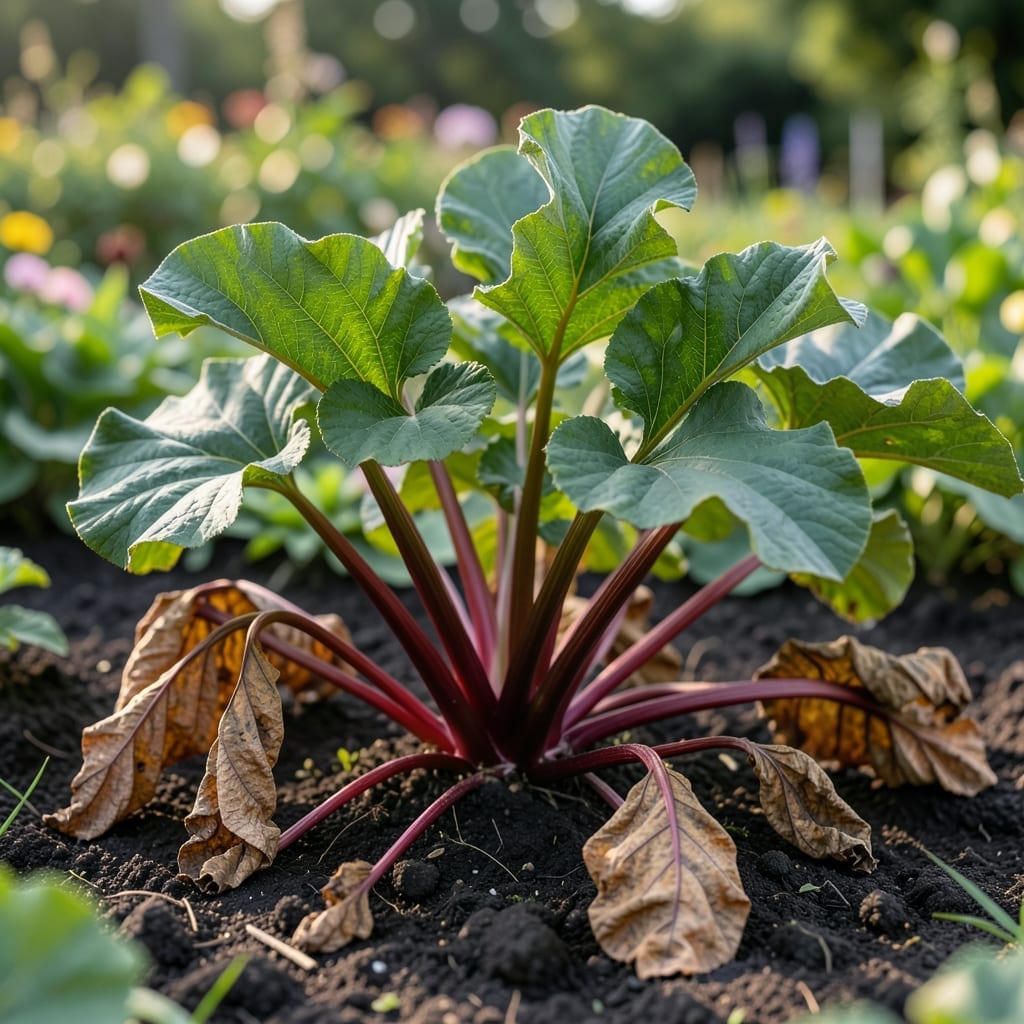
Yes, rhubarb leaves contain high levels of oxalic acid, which can be fatal if consumed in large quantities, causing kidney failure, seizures, or death. Even small amounts may cause severe poisoning.
The danger comes from oxalic acid binding with calcium in your body, creating crystals that damage kidneys and disrupt nerve function. I’ve seen cases where just a handful of raw leaves triggered violent nausea and muscle spasms within hours. Children and pets are especially vulnerable due to their lower body weight. ✨
💡 In This Article
Rhubarb leaves contain 0.5-1.5% oxalic acid by weight, a natural compound that binds with calcium in your bloodstream. This creates insoluble calcium oxalate crystals that accumulate in your kidneys, forming painful stones and potentially causing complete renal failure.
The process begins within 2-4 hours of ingestion as your body struggles to filter these sharp, needle-like structures.
What makes oxalic acid particularly dangerous is its effect on calcium metabolism. These crystals don’t just damage kidneys—they deplete your body’s calcium reserves. When blood calcium drops too low, it triggers hypocalcemia, leading to muscle spasms, irregular heartbeats, and seizures.
Adults may experience toxicity from consuming 5-25 grams of leaves, while children can be poisoned by far less. ✨
The concentration varies by plant age and growing conditions. Young leaves contain less oxalic acid (0.2-0.5%), but as they mature, levels spike dramatically. Cooking doesn’t neutralize the toxin—in fact, it can concentrate it as water evaporates. The leaves also contain anthraquinone glycosides, which add to their laxative and irritant effects on your digestive system.
Your body does have some defenses against small oxalate amounts. Healthy kidneys can excrete 20-40 mg daily without issue. However, rhubarb leaves deliver 500-1000 mg per 100 grams—overwhelming your system’s capacity. This is why even 5-10 raw leaves can cause severe symptoms, while 20-30 leaves may prove fatal without immediate medical intervention. 🔥
Interestingly, the edible stalks contain only 0.01-0.02% oxalic acid by comparison. The plant stores its toxic compounds in the leaves as a natural defense against herbivores. This evolutionary adaptation explains why the leaves are so much more dangerous than the stems we commonly eat in pies and jams.
Rhubarb leaves contain 0.5-1.5% oxalic acid by weight. A mere 100 grams can deliver 500-1000 mg, overwhelming your kidneys’ ability to filter it safely.
Early symptoms appear within 30-60 minutes and include burning mouth, nausea, and vomiting. These can progress to muscle spasms or difficulty breathing without treatment.
No, cooking doesn’t neutralize the toxin. In fact, it can concentrate the oxalic acid as water evaporates, making the leaves even more dangerous to consume.
Yes, dogs and cats are especially vulnerable due to their smaller size. Even small amounts can cause severe kidney damage or be fatal. Keep plants out of their reach.