
Beautiful Plants For Your Interior
Beautiful Plants For Your Interior
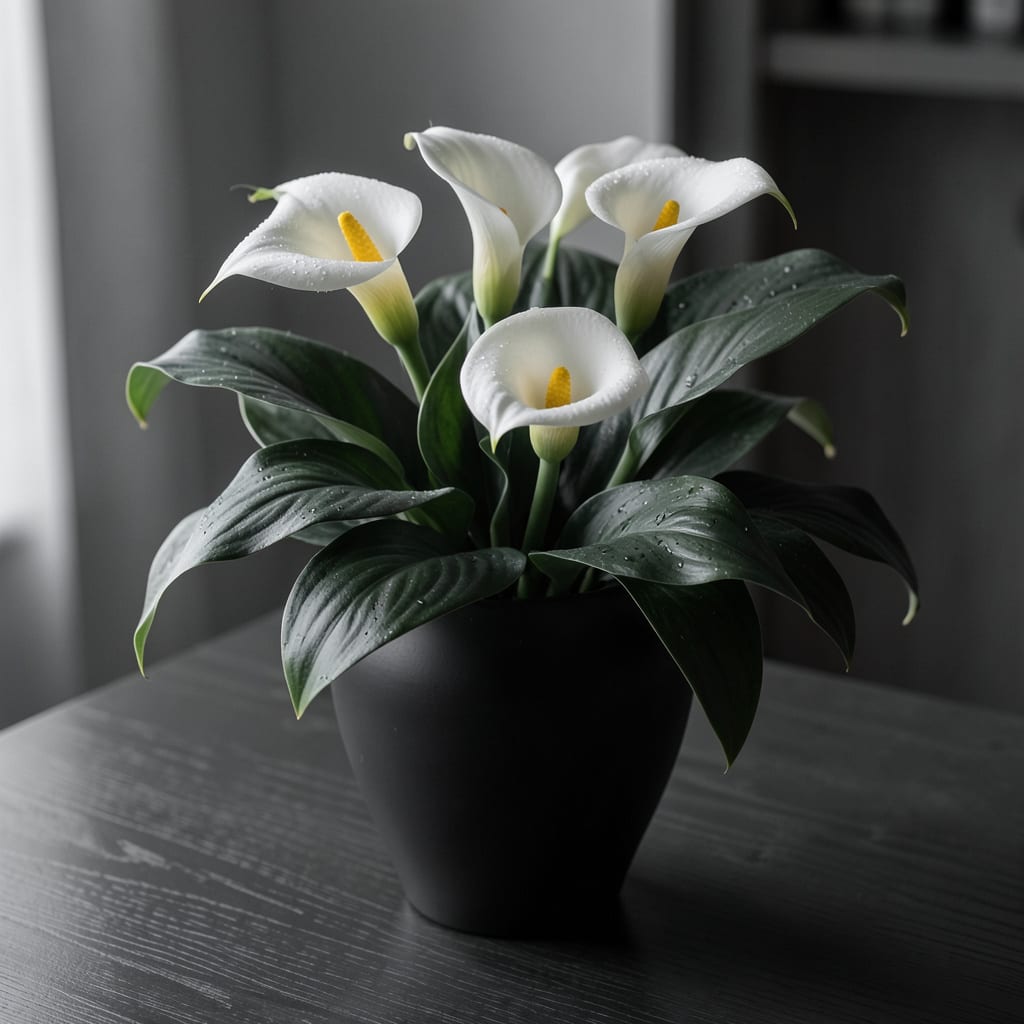
Black and white calla lilies bring drama to any garden with their bold contrast. I first planted them along my front walk, and the elegant blooms stopped visitors in their tracks every time they walked by.
These plants thrive in partial shade with moist, well-draining soil. They’re surprisingly low-maintenance once established, and the striking color combination makes them perfect for borders, containers, or cutting gardens. Here’s how to grow them right.
📚 In This Guide
Here’s how I create stunning contrast in any garden with these elegant, high-impact plants.
Choose a spot that receives partial to full sun—at least 4-6 hours of direct sunlight daily. Calla lilies thrive in bright light but can scorch in harsh afternoon sun, especially in hotter climates. I always check the area throughout the day to ensure it gets the right balance.
Ensure the soil drains well to prevent root rot. If your garden has heavy clay, amend it with compost or plant in raised beds. The ideal soil pH is 6.0-6.5, slightly acidic. Test your soil before planting to avoid issues later.
Loosen the soil to a depth of 12-15 inches using a garden fork or tiller. This helps the roots penetrate easily and encourages strong growth. Mix in 2-3 inches of organic matter like compost or well-rotted manure to improve fertility and drainage.
Remove any weeds or debris from the area. These can compete with your calla lilies for nutrients and water. I find that a clean planting area reduces maintenance and gives the plants the best start.
Place the rhizomes 3-4 inches deep and space them 12-18 inches apart to allow for mature growth. Plant them with the “eyes” (small bumps or growth points) facing upward. This ensures they sprout correctly and grow without delay.
Cover the rhizomes with soil and press down lightly to remove air pockets. Water immediately after planting to settle the soil and encourage root establishment. I always check that the soil feels moist but not waterlogged.
Water your calla lilies regularly, keeping the soil consistently moist but not soggy. Aim for 1-1.5 inches of water per week, either from rainfall or supplemental watering. Mulch around the plants with 2-3 inches of organic mulch to retain moisture and suppress weeds.
Fertilize lightly every 4-6 weeks during the growing season with a balanced, water-soluble fertilizer. Avoid high-nitrogen fertilizers, as they can promote leafy growth at the expense of flowers. I’ve found that a gentle approach keeps the plants healthy and blooming.
Watch for common pests like aphids, slugs, or snails, which can damage the foliage and flowers. Remove them by hand or use organic pest control methods like neem oil or diatomaceous earth. Regularly inspect the leaves and stems for signs of trouble.
Prevent fungal diseases by ensuring good air circulation around the plants. Avoid overhead watering, which can promote the spread of spores. If you notice yellowing leaves or black spots, address the issue immediately to keep your calla lilies thriving.
Small adjustments in planting and care make a world of difference for vibrant blooms.
Sunlight Balance: The 4-6 hours of daily sunlight is non-negotiable for healthy growth, but avoid harsh afternoon rays. In hotter climates, I’ve found morning sun with afternoon shade prevents scorching while still delivering that elegant contrast these plants are known for.
Soil Preparation Tip: When loosening the soil to 12-15 inches deep, don’t rush this step. Compacted soil stunts root development, and mixing in 2-3 inches of compost improves drainage—critical since calla lilies hate soggy roots. I learned this the hard way after losing a few rhizomes to rot.
Planting Depth Matters: Those 3-4 inches of depth for rhizomes aren’t arbitrary. Too shallow, and they dry out; too deep, and they struggle to sprout. Always plant with the eyes facing up—this simple orientation ensures they grow upward without wasting energy.
Watering Wisdom: Stick to the 1-1.5 inches of water weekly, but check soil moisture with your finger. Overwatering is the most common mistake I see. If the top inch of soil feels dry, it’s time to water; if it’s damp, wait a day.
Keep them in well-draining soil with partial shade to full sun. Water moderately, allowing the soil to dry slightly between waterings. They thrive in USDA zones 8-10 and can be grown as perennials or potted plants indoors.
These elegant flowers typically bloom in late spring to early summer, with some varieties producing a second flush in fall. Proper care and deadheading spent blooms can encourage longer flowering periods.
Yes! Consider black mondo grass, white snapdragons, or black petunias for a similar dramatic effect. These pair beautifully with calla lilies or stand out on their own in monochrome gardens.
Yellowing leaves often signal overwatering or poor drainage. Check soil moisture and ensure pots have drainage holes. If the issue persists, test for nutrient deficiencies or pests like aphids.
Absolutely! Use a large pot with well-draining soil. Place it in a sunny spot and water when the top inch of soil feels dry. Container-grown callas can be moved indoors during colder months.
