
Beautiful Plants For Your Interior
Beautiful Plants For Your Interior
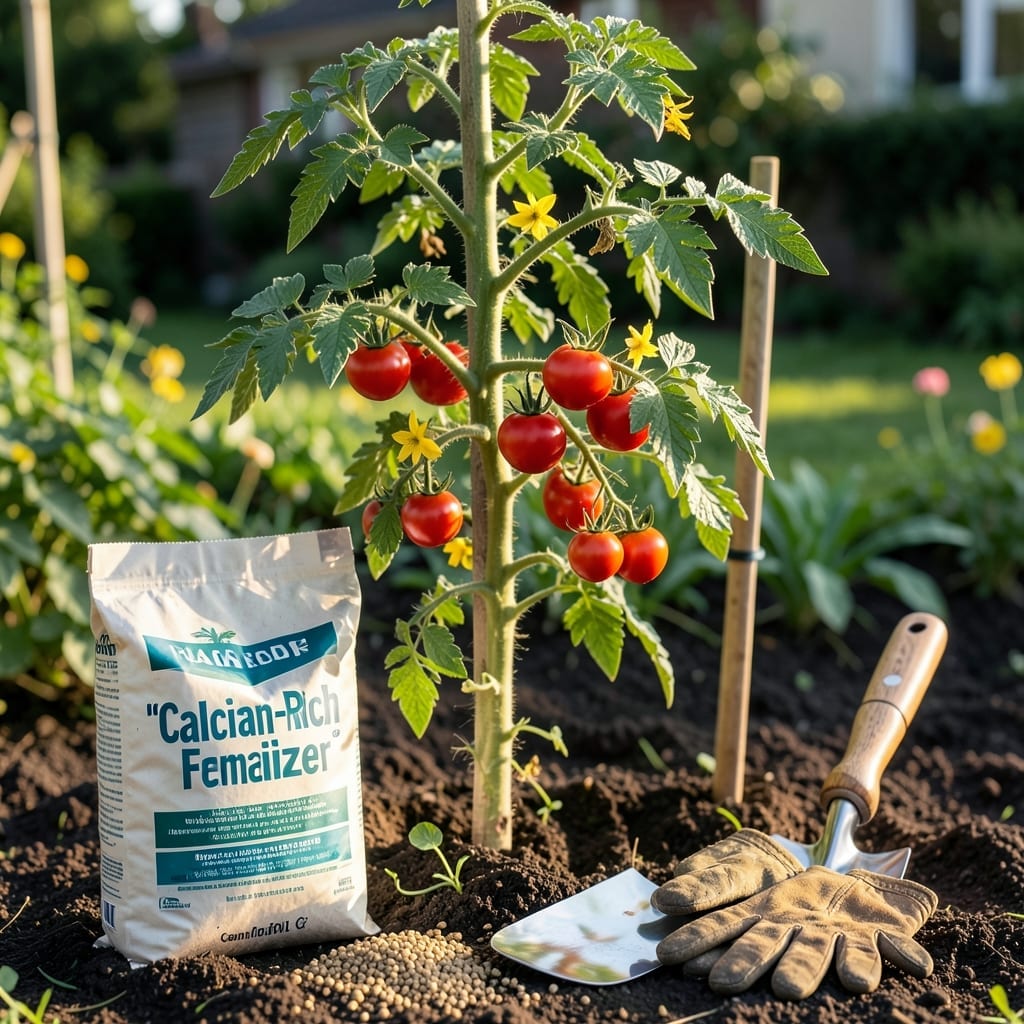
Struggling with blossom end rot on your 🍅 Tomato plants? This common issue often signals a calcium shortage that’s easily preventable with the right approach.
Calcium is the silent hero that strengthens your Tomato’s cell walls and ensures healthy fruit development. Without it, you might be watching your hard work literally rot on the vine.
I’ll show you exactly how to choose and use calcium-rich fertilizers to transform your harvest. Let’s turn those disappointing tomatoes into the star of your garden.
I’ve seen too many gardeners lose their tomato harvest to blossom end rot, a telltale sign of calcium deficiency. This nutrient is vital for cell wall formation, ensuring your plants grow strong and healthy.
Calcium deficiency doesn’t just cause rot—it leads to stunted growth, weak stems, and poor fruit quality. Without enough calcium, your tomatoes can’t reach their full potential.
| Deficiency Sign | Description | Solution |
|---|---|---|
| Blossom End Rot | Dark, sunken spots on fruit bottoms | Add calcium nitrate or gypsum |
| Stunted Growth | Slow development, small leaves | Foliage spray with calcium |
| Weak Stems | Brittle, easily broken stems | Soil amendment with lime |
| Poor Fruit Set | Flowers drop before fruiting | Use calcium-rich fertilizer |
Calcium is a mobile nutrient in plants, but it’s not always easy for tomatoes to absorb. This is why I recommend soil testing before applying any fertilizer to check current levels.
Uneven watering can hinder calcium uptake, leading to deficiencies even when the soil has enough. I always advise maintaining consistent moisture in your tomato beds.
For best results, I use a balanced approach—combining soil amendments with foliar sprays. This ensures calcium reaches both the roots and leaves where it’s needed most.
Organic options like eggshells and bone meal are great for long-term soil health. However, they release calcium slowly, so I often pair them with faster-acting liquid calcium for immediate needs.
Remember, too much calcium can be just as problematic as too little. It can lock out other essential nutrients like magnesium and potassium, so moderation is key.
I’ve found that heirloom varieties often need more calcium than hybrids. If you’re growing Brandywine or Cherokee Purple, keep a close eye on their calcium needs.
By understanding these signs and solutions, you can prevent most calcium-related issues before they start. A little attention to calcium levels can make a huge difference in your tomato harvest 🌱
Choosing the right calcium rich fertilizer can be overwhelming with so many options available. I’ve tested various types to find the most effective for tomato plants, from organic to synthetic solutions.
Each fertilizer type has its pros and cons, depending on your soil conditions and growing goals. Some work quickly, while others provide long-term benefits to your garden soil.
| Fertilizer Type | Calcium Content | Application Method | Speed of Action |
|---|---|---|---|
| Gypsum | 23% Calcium | Soil amendment | Moderate |
| Lime | 30-40% Calcium | Soil amendment | Slow |
| Eggshells | 35-40% Calcium | Compost/Soil mix | Very Slow |
| Calcium Nitrate | 19% Calcium | Foliar spray/Soil | Fast |
| Bone Meal | 10-15% Calcium | Soil amendment | Slow |
For immediate results, I recommend calcium nitrate as it’s quickly absorbed by plants. It’s perfect when you first notice blossom end rot and need fast action to save your crop.
Gypsum is my go-to for clay soils as it improves soil structure while adding calcium. It won’t alter soil pH, which is great for gardens where you’re growing a variety of plants.
If you prefer organic solutions, crushed eggshells are excellent but require patience. I crush them finely and mix into planting holes or compost for gradual calcium release over the season.
Lime is powerful but should be used carefully. It raises soil pH, which can be beneficial if your soil is too acidic, but test your soil first to avoid over-alkalizing.
For a balanced approach, I often combine gypsum for quick results with bone meal for long-term soil health. This gives your tomatoes both immediate and sustained calcium benefits 🌿