
Beautiful Plants For Your Interior
Beautiful Plants For Your Interior
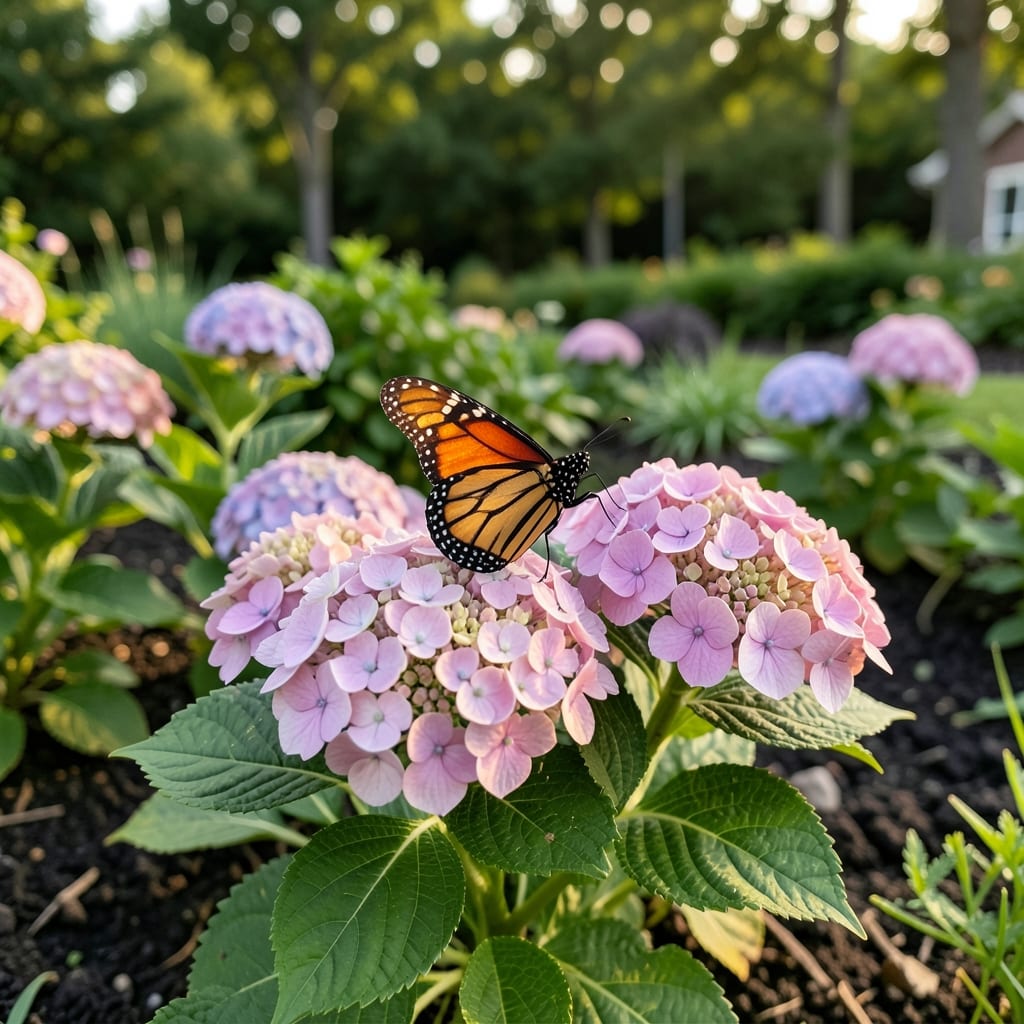
Butterflies on hydrangeas primarily seek nectar, aiding pollination while these insects feed. Their presence signals a healthy garden ecosystem and supports biodiversity.
I’ve noticed these delicate visitors are drawn to hydrangeas for their flat flower clusters, which provide easy landing pads. As they sip nectar, pollen sticks to their bodies and transfers to other blooms, boosting plant reproduction. 💫 A garden teeming with butterflies often means your soil and plant health are thriving, creating a ripple effect for local wildlife.
💡 In This Article
The process starts with hydrangea’s unique flower structure. Unlike tubular blooms, hydrangeas produce flat, open clusters (called corymbs) that act like landing platforms. Butterflies, with their 6-inch wingspans and delicate legs, can easily access the tiny individual flowers within these clusters. As they land, their legs and proboscis brush against pollen-bearing stamens. ✨
What most people don’t realize is that butterflies aren’t just passive pollen carriers. Their feeding behavior involves probing deeply into multiple flowers per visit, which maximizes pollen transfer. A single butterfly may visit 20-30 hydrangea blooms in a 10-minute period, dramatically increasing cross-pollination chances.
The pollen grains hitch a ride on their fuzzy bodies and wing edges.
Hydrangeas have evolved specific adaptations to attract these pollinators. Their flowers produce ultraviolet patterns invisible to humans but visible to butterflies, acting like neon signs. The nectar’s sugar concentration typically ranges from 15-25%, providing the perfect energy source for these active insects. This sweet reward fuels their flight while ensuring pollen distribution. 💫
The relationship benefits both species. Butterflies get sustenance, while hydrangeas achieve up to 30% higher seed production in butterfly-visited flowers compared to those pollinated only by wind. This mutualism explains why hydrangeas in butterfly-rich gardens often produce more vibrant blooms in subsequent seasons, as the plants invest energy into reproduction.
Interestingly, different butterfly species contribute uniquely. Larger varieties like swallowtails can carry more pollen due to their size, while smaller species like cabbage whites may visit more flowers in a shorter time. The diversity of butterfly visitors actually enhances genetic diversity in hydrangea populations, leading to stronger, more adaptable plants over generations. 🌟
Hydrangeas offer flat flower clusters that act as perfect landing pads. Their nectar has a 15-25% sugar concentration, ideal for energy, and the flowers emit ultraviolet patterns visible only to butterflies.
Look for butterflies moving between blooms with pollen dust on their bodies. You may also notice increased seed production in these flowers, often up to 30% higher than unvisited ones.
Butterflies are most active on warm, sunny days between 10 AM and 4 PM. They need sunlight to warm their flight muscles, so midday is ideal for spotting them feeding.
Pair hydrangeas with milkweed, coneflowers, or bee balm. These provide additional nectar sources and create a more inviting garden ecosystem.