
Beautiful Plants For Your Interior
Beautiful Plants For Your Interior
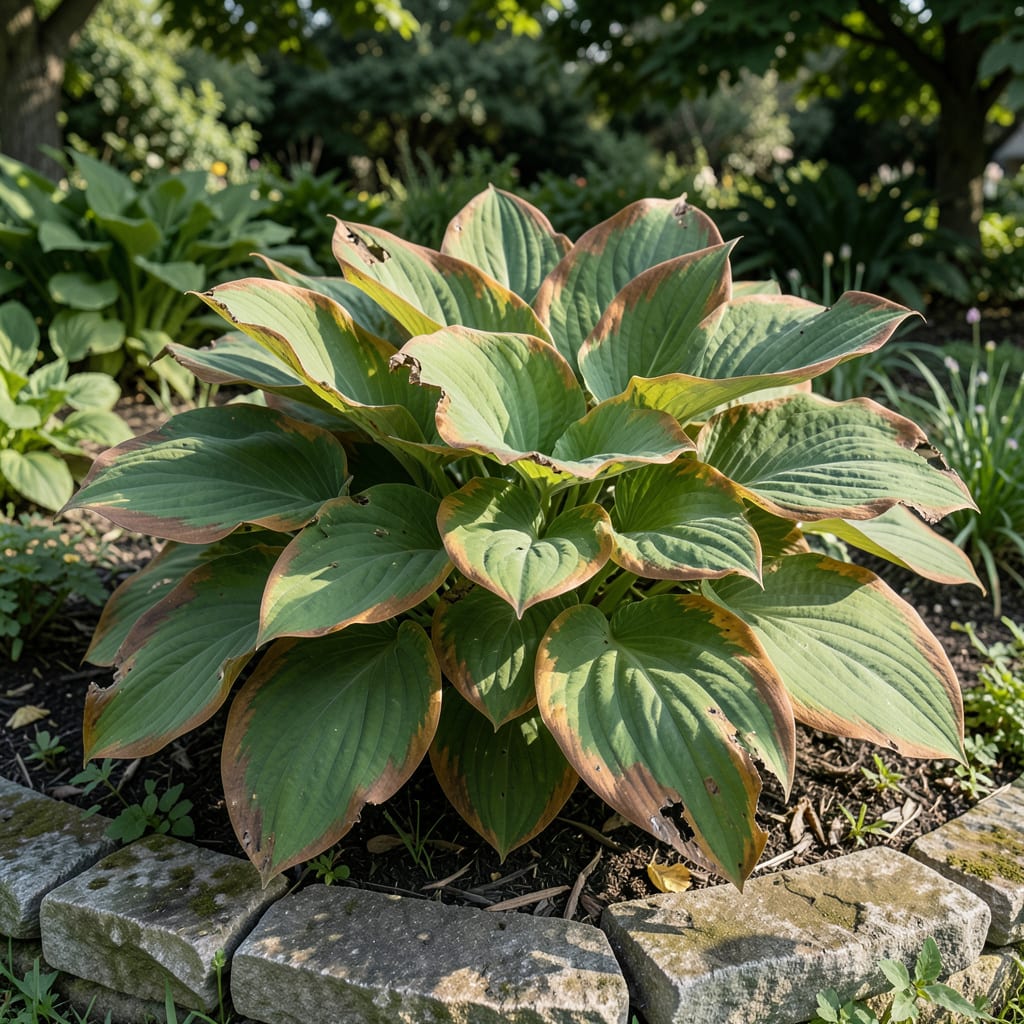
Those crispy brown edges on your hostas aren’t just unsightly—they’re a cry for help. I’ve seen this happen to my own plants, and it’s usually a sign of stress from water, nutrients, or even the weather.
The good news? Most causes are fixable with simple tweaks. You’ll get back that lush green foliage once you address the root issue, and your hostas will thank you with healthy growth all season long.
📚 In This Guide
Here’s how I diagnose and fix the issue to restore vibrant, healthy foliage.
Start by examining the hosta closely. Look for patterns in the browning—whether it’s crispy, dry edges or soft, mushy spots. I always check the soil first with my finger to see if it feels bone dry or soggy.
Note the location too. If the hosta sits in full afternoon sun, especially in hot climates, that’s often the culprit. Hostas prefer partial to full shade, and too much direct light can scorch the edges. Also, observe if the browning spreads inward or stays confined to the tips.
Hostas need consistent moisture but despise waterlogged roots. If the soil feels dry to the touch at 1 inch deep, it’s time to water. I water deeply at the base, avoiding the leaves, and ensure the soil drains well. A simple test: if the soil stays wet for more than 2-3 hours after watering, it’s not draining properly.
Overwatering shows up as yellowing leaves with brown edges, while underwatering causes crisp, dry edges. Aim for soil that feels like a wrung-out sponge—moist but not dripping. Mulching with 2-3 inches of organic matter helps retain moisture evenly.
If your hosta is exposed to hot afternoon sun, move it to a shadier spot or provide temporary shade with a lightweight shade cloth. I’ve seen dramatic improvements within 1-2 weeks after relocating plants to dappled light.
Wind can also dry out leaves, especially in exposed areas. A natural windbreak, like a fence or larger plants, can protect the foliage. Check for heat stress signs like wilting during the hottest part of the day—this often accompanies edge browning.
Brown edges can result from salt accumulation in the soil, often from tap water or over-fertilizing. If you’ve recently fertilized, flush the soil with 1-2 gallons of water to wash away excess salts. I use rainwater or distilled water for hostas if my tap water is hard.
If you suspect chemical burn from herbicides or pesticides, rinse the leaves gently with water and avoid further applications. Always apply products in the early morning or late evening to prevent leaf burn, and follow the exact dilution rates on the label.
Inspect the undersides of leaves for pests like slugs, snails, or earwigs, which can chew edges and cause browning. I handpick pests early in the morning when they’re most active. A beer trap or diatomaceous earth can help control slugs and snails effectively.
For fungal issues, which often appear as brown spots with yellow halos, improve air circulation around the plant. Space hostas 12-18 inches apart and remove any debris around the base. A fungicide may be necessary if the problem persists, but I start with cultural fixes first.
These practical insights will help you diagnose and prevent browning more effectively.
Diagnosis Tip: In Step 1, pay close attention to the pattern of browning. Crispy, dry edges usually indicate underwatering or too much sun, while soft, mushy spots often point to overwatering or poor drainage. I’ve found that checking the soil moisture at 1 inch deep, as mentioned in Step 2, gives the clearest indication of what’s wrong.
Sunlight Strategy: Step 3 emphasizes relocating hostas from hot afternoon sun, and I can’t stress this enough. Even a lightweight shade cloth can make a world of difference. Hostas thrive in partial to full shade, and moving them to dappled light often resolves browning within the 1-2 weeks mentioned in the instructions.
Watering Wisdom: The 2-3 hour drainage test in Step 2 is critical. If your soil stays wet longer than that after watering, it’s a sign of poor drainage. To fix this, consider amending the soil with organic matter or ensuring your pots have adequate drainage holes. Mulching with 2-3 inches of organic material, as suggested, really helps maintain that ideal wrung-out sponge consistency.
Prevention Hack: For chemical or salt buildup, as covered in Step 4, flushing the soil with 1-2 gallons of water works wonders. If you’re in an area with hard water, switching to rainwater or distilled water for your hostas can prevent future issues. Consistency is key here.
Brown edges on hosta leaves are often caused by underwatering, over-fertilizing, or environmental stress like too much sun. Check your watering routine and soil conditions first.
Yes! Trim the damaged edges with clean scissors, then address the root cause—whether it’s inconsistent watering, poor drainage, or exposure to harsh sunlight.
Some browning can occur in extreme heat or drought, but it’s not ideal. Ensure your hostas stay hydrated and shaded during peak summer months.
Yes, removing brown-edged leaves improves appearance and prevents further stress. Use sterilized tools to avoid spreading disease.
Maintain consistent moisture, avoid over-fertilizing, and provide partial shade. Mulching helps retain soil moisture and protect roots.
