
Beautiful Plants For Your Interior
Beautiful Plants For Your Interior
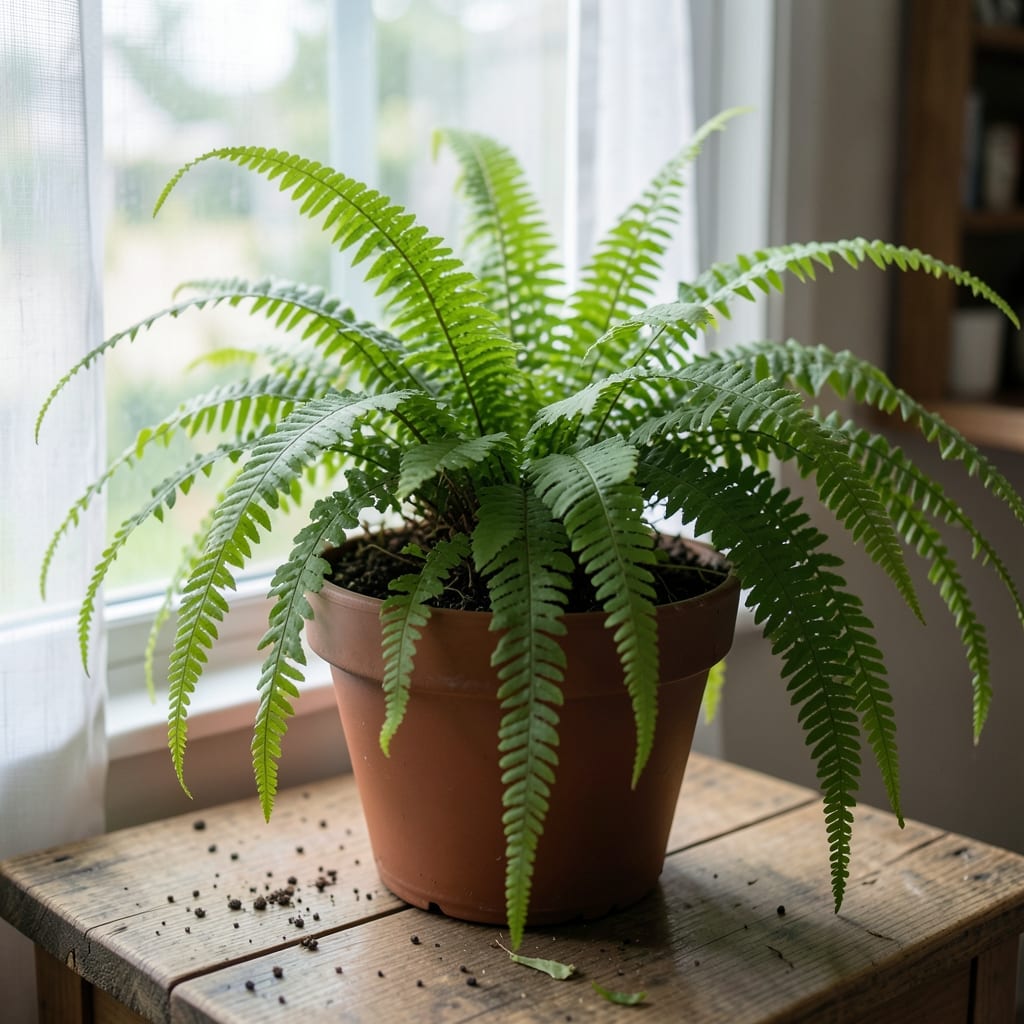
Boston ferns thrive in bright, indirect light and cannot tolerate full sun. Direct sunlight scorch their fronds, causing brown, crispy leaves. They prefer shaded or filtered light conditions for healthy growth.
I’ve learned through experience that these ferns evolved as understory plants in nature, which is why they flourish under dappled light rather than harsh exposure. The key is mimicking their natural environment by providing gentle illumination. Even a few hours of intense sunlight can stress the plant, leading to irreversible leaf damage. ✨
💡 In This Article
Boston ferns evolved as understory plants in tropical forests, where they receive filtered light through the canopy. Their delicate fronds contain thin cell walls that can’t protect against intense UV radiation. When exposed to direct sunlight, the chlorophyll in their leaves overheats, disrupting photosynthesis and causing the characteristic brown, crispy appearance. 🔥
These ferns have a high transpiration rate—meaning they lose water rapidly through their leaves. In full sun, this process accelerates dangerously, leading to dehydration. Their natural habitat provides about 10-30% of full sunlight intensity, while direct outdoor sun can deliver 100% of UV radiation, overwhelming their water retention capabilities.
The damage isn’t just cosmetic. Prolonged sun exposure breaks down the plant’s cellular structure, permanently weakening its ability to absorb nutrients. Even 2-3 hours of afternoon sun can trigger this process, especially in hotter climates where temperatures exceed 85°F. The fronds may recover from brief exposure but will eventually die back if the stress continues.
✨
What’s particularly fascinating is how Boston ferns have adapted to low-light conditions. Their fronds grow wider and more delicate to maximize light absorption in shaded areas. This same adaptation makes them vulnerable in direct sun, as their broad leaf surfaces can’t reflect excess light like some desert plants can.
You’ll often see the damage appear first on the outermost fronds, which receive the most light. These leaves may turn yellow before crisping, as the plant attempts to conserve water by sacrificing its less essential growth. The contrast between healthy and damaged fronds can be striking, with the affected areas appearing almost paper-thin. 💫
Direct sunlight causes the delicate fronds to scorch, turning them brown and crispy. This happens because their thin cell walls can’t protect against intense UV rays, disrupting photosynthesis. Even 2-3 hours of afternoon sun can start the damage.
An east-facing window is ideal for gentle morning light. Avoid south or west-facing windows without filtering, as the intense afternoon sun can overwhelm the plant. Keep it 2-3 feet away from the glass for extra protection.
Yes, a 30-50% shade cloth works perfectly to filter harsh sunlight while allowing beneficial light through. This reduces UV exposure by half, creating a safer environment for your fern.
Look for faded or yellowing fronds, especially on the outer edges. This is your plant’s way of signaling stress from too much light. Adjust its position by 6-12 inches to provide relief.