
Beautiful Plants For Your Interior
Beautiful Plants For Your Interior
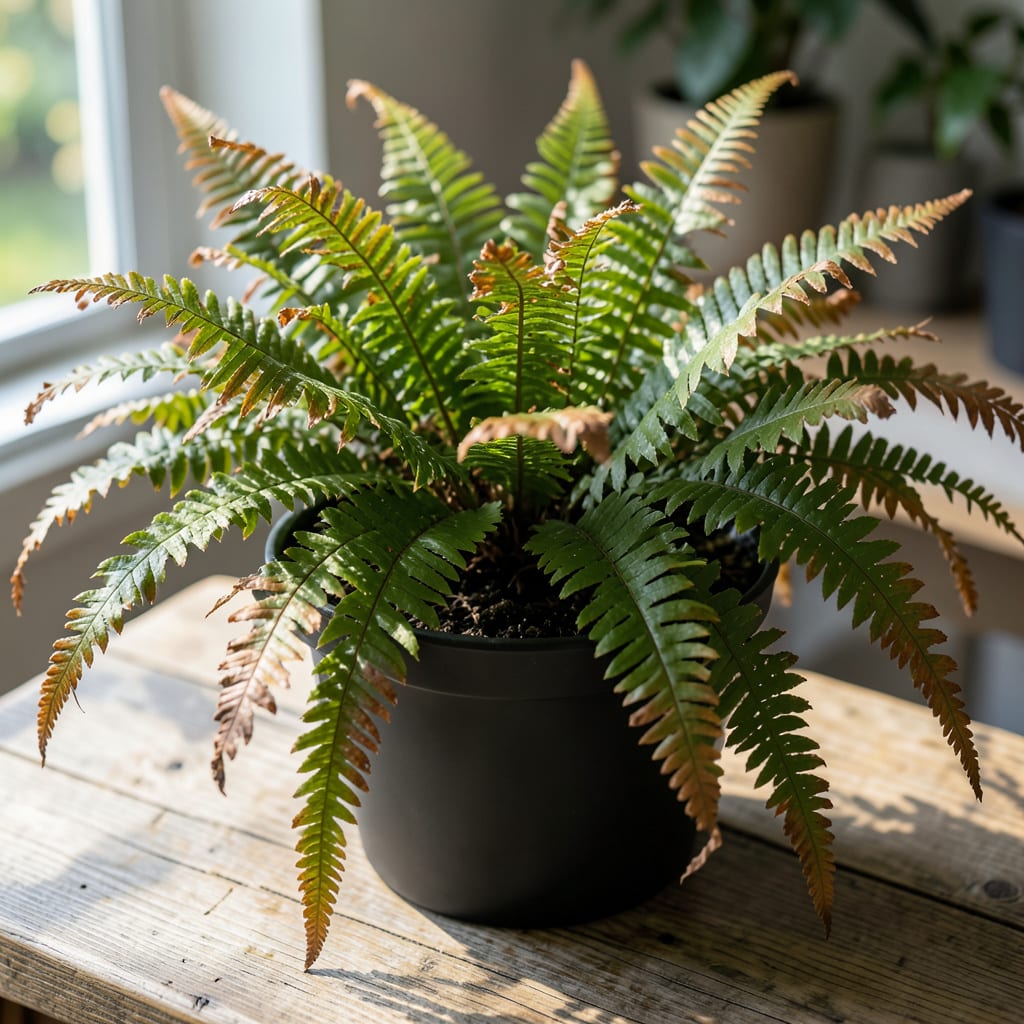
Brown tips on your Boston fern mean it’s crying for help. I’ve rescued mine from crispy edges more times than I care to admit.
Usually, it’s either too-dry air or inconsistent watering. These plants crave humidity and steady moisture—not soggy soil, just reliable. My living room fern perked up within a week once I fixed both.
You’ll see new fronds unfurling in bright green within days of adjusting. No fancy tools required—just a spray bottle and a little attention to its environment.
Works for any indoor space, from dim corners to sunny windowsills. Here’s how to turn those brown tips green again.
Brown tips on your Boston fern are often a sign of stress. Here are the most common causes and the science behind them:
Boston ferns are tropical plants that thrive in humidity levels between 50-80%. When indoor air is too dry (common in heated or air-conditioned spaces), the fern loses moisture faster than it can absorb it. This leads to transpiration stress, causing the leaf edges to dry out and brown. A hygrometer can help monitor humidity levels effectively.
Direct sunlight or overly bright indirect light can scorch the delicate fronds. Boston ferns prefer bright, indirect light (around 500-1,000 foot-candles). Too much light increases chlorophyll breakdown and triggers photooxidative damage, resulting in crispy, brown tips.
Inconsistent watering disrupts the fern’s root system. Underwatering leads to dehydration, while overwatering causes root rot by suffocating roots in soggy soil. Both conditions impair nutrient uptake, starving the fronds of essential moisture and minerals. Aim for evenly moist (not soggy) soil.
Tap water high in chlorine, fluoride, or salts can accumulate in the soil, leading to tip burn. Similarly, poor-draining soil or fertilizer buildup can cause toxicity. Using filtered or distilled water and well-draining potting mix prevents these issues.
If your Boston fern is sporting unsightly brown tips, don’t worry—there are simple fixes for each common cause. Here’s how to nurse it back to health:
Boston ferns thrive in humidity levels of 50% or higher. Fix: Mist the fronds daily with room-temperature water, or place a tray of water and pebbles near the plant. For a hands-off approach, use a humidifier. Prevention tip: Group plants together to create a microclimate with higher humidity. 💡
Direct sunlight can scorch the delicate fronds. Fix: Move your fern to a spot with bright, indirect light, such as an east-facing window. If natural light is too intense, use a sheer curtain to diffuse it. Prevention tip: Rotate the plant occasionally to ensure even light exposure. ✨
Brown tips can signal both thirst and drowning. Fix: Check the soil—if it’s dry an inch down, water thoroughly until it drains from the bottom. If soggy, let it dry out before watering again. Always use a pot with drainage holes. Prevention tip: Water when the topsoil feels slightly dry to the touch. 🌡️
Salt buildup from tap water or poor soil can cause browning. Fix: Flush the soil with distilled water to remove excess salts. Repot in fresh, well-draining potting mix if the soil is compacted. Prevention tip: Use rainwater or distilled water for sensitive plants. 🎯
With these adjustments, your Boston fern should bounce back, flaunting lush, green fronds in no time!
Mist your Boston fern daily if humidity is below 50%. For best results, use room-temperature water in the morning. This gives fronds time to dry before evening.
No, brown tips won’t recover. Trim them off with clean scissors to help the plant focus energy on new growth. Prevent future browning by addressing the root cause.
Bright, indirect light is ideal. An east-facing window works perfectly. Avoid direct sun, which can scorch fronds in as little as a few hours.
Avoid tap water if it’s high in chlorine or salts. Filtered, distilled, or rainwater prevents tip burn. Let tap water sit out for 24 hours to evaporate chlorine.
