
Beautiful Plants For Your Interior
Beautiful Plants For Your Interior
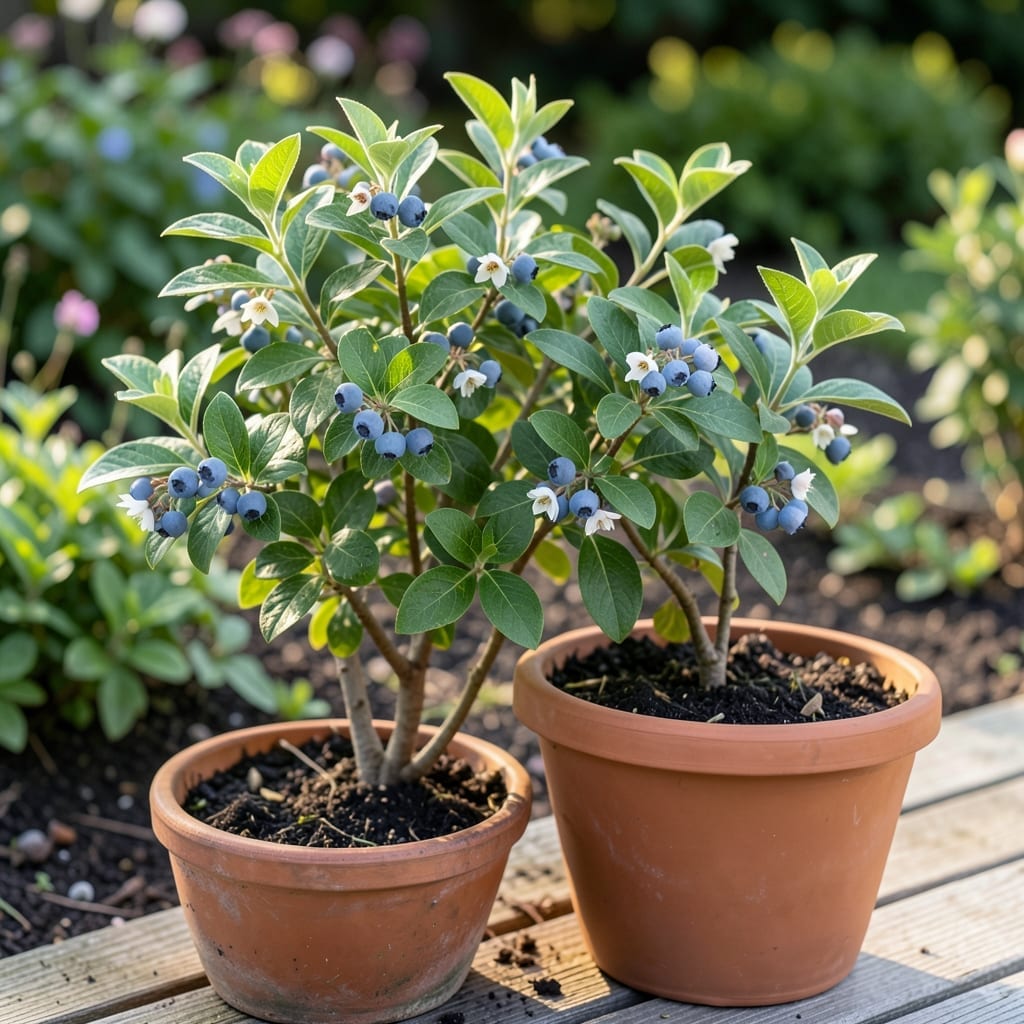
Growing blueberries in containers opens up a world of fresh, homegrown fruit possibilities, even in small spaces. But here’s the catch: the wrong container size can seriously limit your success.
I’ve seen firsthand how the right pot transforms a struggling 🫐 bush into a thriving, fruit-producing powerhouse. It’s all about giving those roots the space they need to stretch and grow.
Whether you’re a beginner or a seasoned gardener, nailing the container dimensions is the key to healthy plants and bountiful harvests. Let’s dig into what works best for these delicious shrubs.
You’ll discover exactly what to look for in a container and why size matters more than you might think. Trust me, your future self will thank you.


Choosing the right blueberry container size is crucial for healthy root development and maximum fruit production. Different varieties have unique space needs that directly impact their growth and yield.
I’ve found that dwarf blueberries thrive in smaller pots, while full-size bushes demand much more room. The container must accommodate both root depth and spread for long-term success.
| Variety | Container Size | Root Depth | Material Tips |
|---|---|---|---|
| Dwarf | 2-3 gallon | 12-18 inches | Fabric pots prevent circling |
| Half-High | 5-7 gallon | 18-24 inches | Plastic/wood with drainage holes |
| Full-Size | 15-25 gallon | 24-30 inches | Wooden barrels for insulation |
For dwarf blueberries like ‘Top Hat’, a 2-3 gallon container works well. These compact plants stay under 2 feet tall and have shallow root systems that don’t need deep pots.
Half-high varieties such as ‘Northsky’ reach 3-4 feet and require 5-7 gallon containers. This size gives roots enough room while keeping the plant manageable on patios or balconies.
Standard blueberry bushes like ‘Bluecrop’ can grow 4-6 feet tall and need 15-25 gallon containers. I recommend wooden barrels or large plastic tubs for these bigger plants.
The material matters too. Fabric pots air-prune roots naturally, while wooden containers insulate roots better in extreme temperatures. Always ensure your pot has drainage holes to prevent waterlogging.
Remember that blueberries need acidic soil (pH 4.5-5.5). No matter the container size, use a mix of peat moss, pine bark, and perlite for best results. This combination ensures proper drainage and root aeration.
If you’re growing multiple plants, space containers at least 3 feet apart for good air circulation. This helps prevent fungal diseases and makes harvesting easier when your bushes are heavy with fruit.
I always check my containers each spring to see if roots are circling the bottom—this means it’s time to upsize to the next recommended dimension.
Even with the best intentions, your blueberry container might be holding your plant back. I’ve learned that root-bound plants show clear warning signs before they stop producing fruit entirely.
Catching these early indicators can save your harvest and help your bush thrive. Here’s what to watch for in your potted blueberries.
If you see roots growing out of drainage holes, it’s a sure sign your blueberry needs upsizing. This happens when roots run out of space and start circling the container.
Stunted growth is another red flag. When a normally vigorous plant barely grows despite proper water and fertilizer, the container is likely too small for its root system.
Yellow leaves often appear when roots can’t access enough nutrients. In containers, this usually means the soil is exhausted and roots are too crowded to absorb what’s left.
When your blueberry produces few berries, it’s often because the plant can’t store enough energy. A larger container gives roots room to support more fruit production.
I check my containers every spring and upsize if I see these signs. A 2-inch larger pot can make a huge difference in plant health and yield. 🪴