
Beautiful Plants For Your Interior
Beautiful Plants For Your Interior
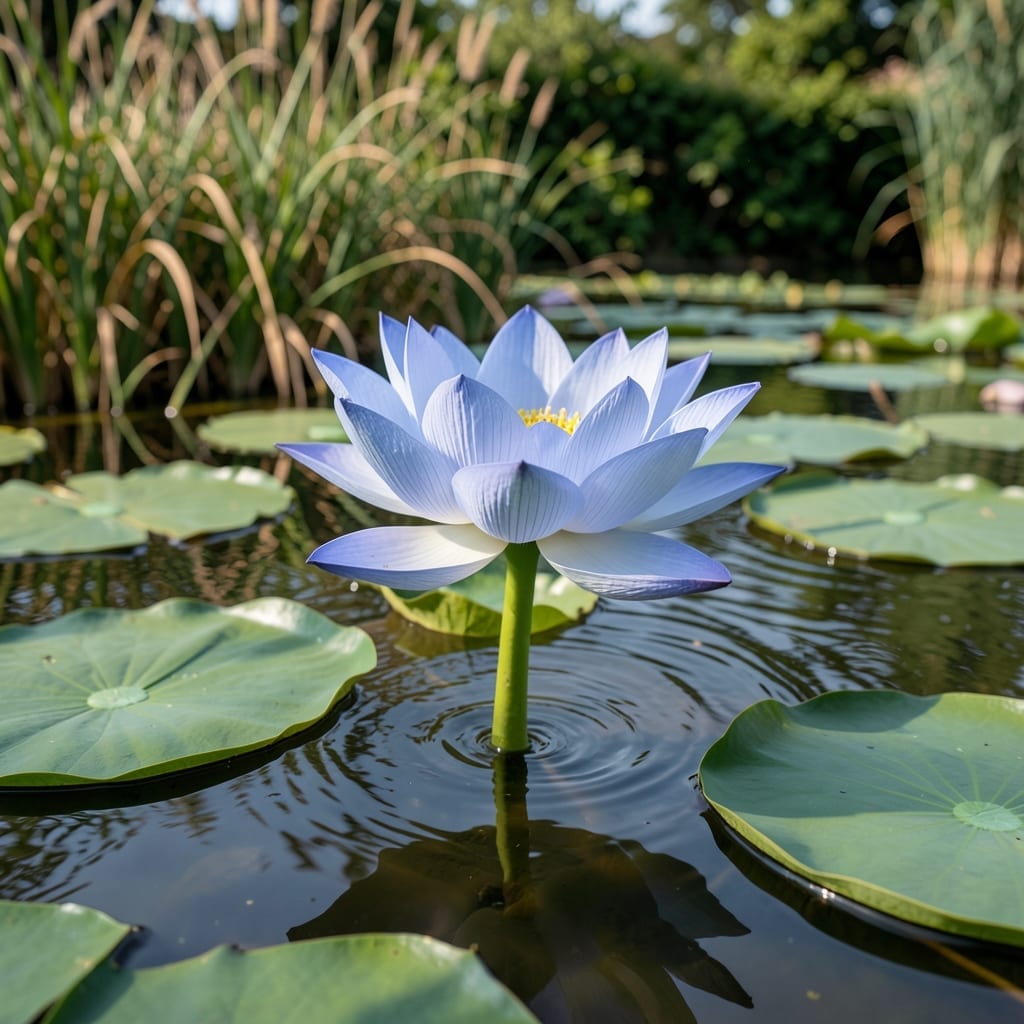
The blue lotus is scientifically classified as Nymphaea caerulea, a water lily species native to Northeast Africa and parts of Asia, prized for its striking blue flowers.
I find this aquatic plant fascinating because it thrives in shallow waters, with floating leaves and those iconic blue petals that close at night. It’s often confused with true lotus species, but its classification as a water lily sets it apart. Historically, it held cultural significance in ancient civilizations for its beauty and symbolic meaning. ✨
💡 In This Article
This aquatic beauty belongs to the Nymphaeaceae family, distinct from true lotuses in the Nelumbonaceae clan. The Nymphaea caerulea classification places it among water lilies, with floating leaves that can span 10-12 inches across. Its flowers emerge above water, opening during daylight to reveal 6-12 petals in shades from pale to vivid blue. 🔥
The plant thrives in freshwater ecosystems with slow currents, often rooted in muddy substrates at depths of 1-4 feet. Its stems can extend up to 6 feet long to reach the surface. Unlike true lotuses that produce seeds in cone-like receptacles, this water lily develops spherical seed pods that split open when ripe.
This fundamental difference in reproduction is a key identifier.
What sets Nymphaea caerulea apart visually are its pointed petals and yellow stamens that create a star-like center. The leaves have a waxy coating that repels water, while the undersides feature prominent veins. In ideal conditions, each plant can produce 20-30 blooms per growing season, with flowers lasting 3-5 days each. ✨
Its natural habitat stretches from the Nile River basin through East Africa to parts of Southeast Asia. The plant prefers water temperatures between 68-86°F and requires at least 6 hours of direct sunlight daily. This specific combination of aquatic environment and sunlight exposure enables its characteristic vibrant blue pigmentation. 💫
The classification becomes even clearer when examining the plant’s structure. True lotuses have upright leaves and flowers, while Nymphaea caerulea features floating pads with a distinct notch where the leaf stem attaches. This adaptation helps the plant maximize light absorption while minimizing water resistance. 🌟
It belongs to the Nymphaeaceae family, which distinguishes it from true lotuses. This classification places it among water lilies, not the Nelumbonaceae family where true lotuses reside.
Look for floating leaves with a distinct notch where the stem attaches. True lotuses have upright leaves and flowers, while this plant’s blooms and pads float on the water’s surface.
It thrives in 68-86°F water with 6+ hours of daily sunlight. Use a container at least 2 feet deep with heavy soil to anchor the tubers properly.
In ideal conditions, each plant produces 20-30 blooms per season. The flowers typically last 3-5 days each, opening during daylight hours.
Using light potting soil that floats away is a frequent error. Always use heavy garden soil mixed with clay to properly anchor the tubers in your pond or container.