
Beautiful Plants For Your Interior
Beautiful Plants For Your Interior
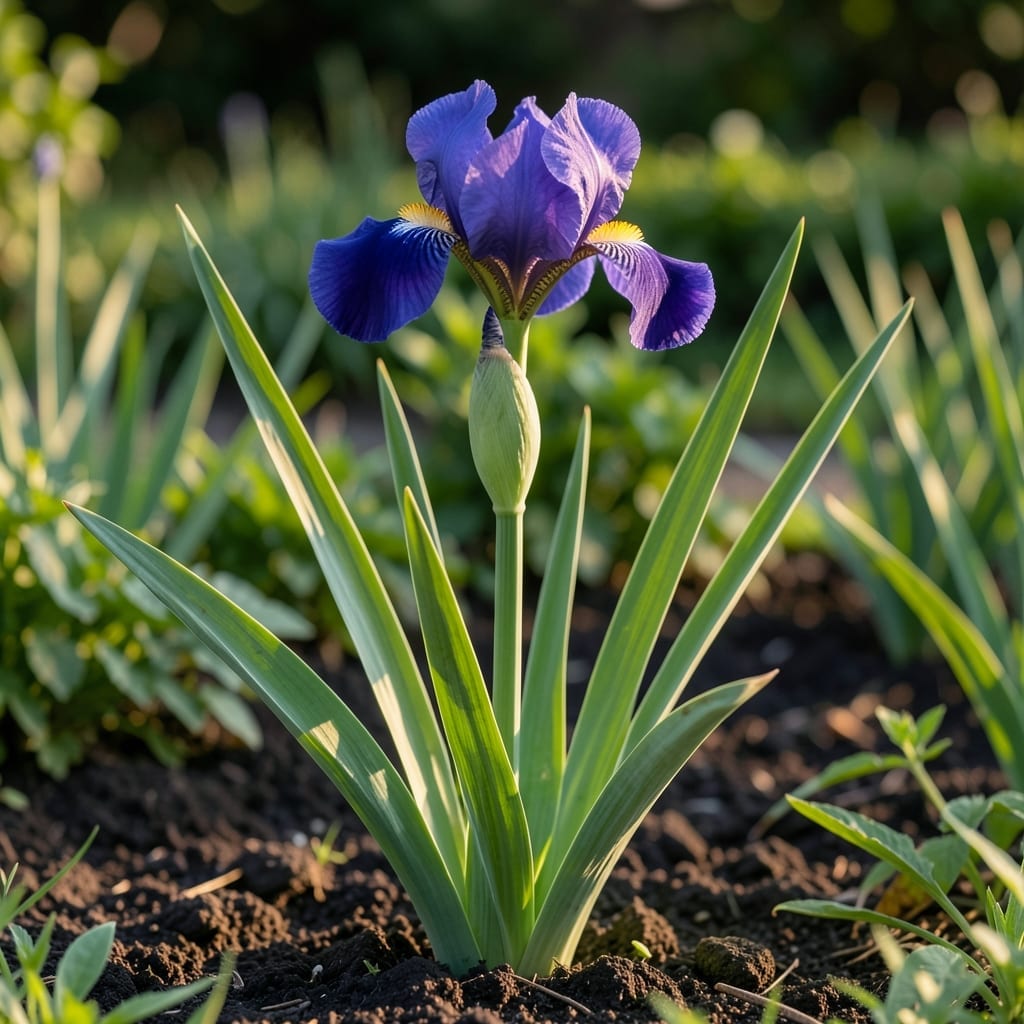
Blue Iris Place is a striking succulent with thick, blue-green leaves arranged in a rosette pattern, producing vibrant yellow flowers. It thrives in well-draining soil and full sunlight.
I love how this plant stands out with its powdery, almost silvery leaf coating that intensifies in bright light. 🌟 Its compact size makes it perfect for rock gardens or container arrangements, and the yellow blooms add a cheerful contrast to the cool-toned foliage.
What’s especially rewarding is its drought tolerance once established, though I find it grows best with occasional watering during dry spells.
💡 In This Article
The Blue Iris Place succulent, scientifically known as Echeveria ‘Blue Prince’, features thick, fleshy leaves with a distinctive glaucous coating that gives them their signature powdery blue-green hue. This farinose layer acts as natural sunscreen, protecting the plant in its native arid habitats.
The leaves grow in tight, symmetrical rosettes that typically reach 6-8 inches in diameter at maturity. 🔥
Each leaf has a slightly pointed tip and can measure 2-3 inches long, with a subtle curl at the edges that intensifies during drought periods. The color varies from pale blue to deep teal depending on sunlight exposure—more UV light deepens the pigmentation.
Unlike some echeverias, this cultivar maintains its striking color year-round rather than only in cooler months.
What truly sets it apart are its flower stalks that emerge in spring and summer. These 12-18 inch arching stems produce clusters of bell-shaped, vibrant yellow blooms with red-orange interiors. The flowers last for weeks, attracting pollinators like hummingbirds. The contrast between the cool foliage and warm flowers creates a visually stunning display. ✨
The growth pattern is compact and slow, with offsets (or “pups”) forming around the base as the plant matures. These can be separated and propagated, making it easy to expand your collection. The root system is shallow but extensive, adapted to quickly absorb moisture from brief desert rains while storing it in the leaves.
An interesting adaptation is its ability to close its stomata (leaf pores) during the hottest part of the day to conserve water. This is why it thrives in temperatures between 65-80°F but can tolerate brief periods down to 20°F if kept dry. The plant’s resilience makes it ideal for both beginner and experienced succulent enthusiasts.
💫
Water every 2-3 weeks in growing season when soil is completely dry. Reduce to once a month in winter. Always water at the base, not the leaves, to prevent rot.
Use a well-draining mix of 50% cactus soil and 50% perlite or pumice. Terracotta pots with drainage holes help wick away excess moisture.
Provide at least 6 hours of bright, indirect sunlight daily. More UV exposure deepens the blue-green leaf color. Rotate pots quarterly for even growth.
Flower stalks emerge in spring and summer, producing vibrant yellow blooms with red-orange interiors. These last for weeks and attract pollinators like hummingbirds.
Separate offsets (or “pups”) that form around the base. Let them dry for a day, then plant in fresh soil. This is the easiest way to expand your collection.