
Beautiful Plants For Your Interior
Beautiful Plants For Your Interior
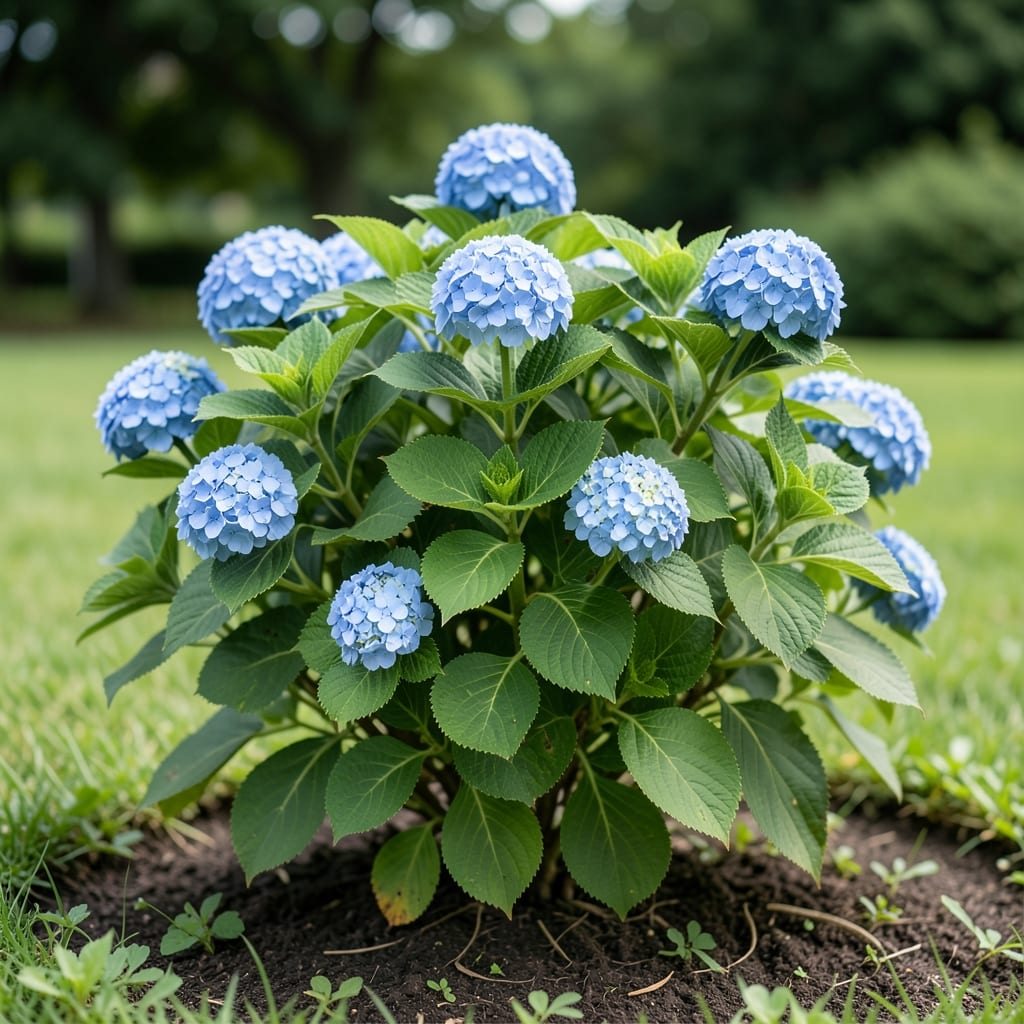
Blue hydrangea leaves shouldn’t look sickly or spotted. 🌿 I’ve seen healthy bushes turn problematic overnight when soil pH drifts or pests move in, and the fix is always simpler than you’d expect.
Yellowing often signals iron deficiency, while brown spots usually mean too much water or fungal issues. The leaves themselves aren’t toxic, but your plant is trying to tell you something’s wrong with its growing conditions.
With a soil test and some pruning, you can turn things around in 2-3 weeks. I rescued my grandmother’s 20-year-old hydrangea last summer using just these basic steps.
Works for any hydrangea variety, in ground or containers. Here’s how to diagnose and fix it.
Blue hydrangea leaves are a rare but alarming sight, often signaling underlying issues. Here’s why it happens:
Hydrangeas are famous for their color-changing blooms, but leaves turning blue? That’s unusual. While Hydrangea macrophylla flowers shift from pink to blue in acidic soil (pH 5.0–5.5), leaves shouldn’t. If they do, it may indicate excess aluminum uptake—a byproduct of extreme acidity. Aluminum toxicity disrupts chlorophyll, causing abnormal pigmentation. Test your soil; if pH drops below 5.0, lime applications can neutralize it.
Accidental exposure to aluminum sulfate or other acidifying agents can trigger blue-green discoloration. This often happens when gardeners overapply treatments to enhance blue flowers. Always follow dosage guidelines and avoid direct leaf contact. Rinse foliage immediately if splashes occur.
Severe phosphorus or nitrogen deficiencies can lead to purple or blue tints in leaves, as the plant struggles to produce chlorophyll. A soil test can confirm imbalances. Use a balanced, slow-release fertilizer (10-10-10) to restore nutrient levels. Iron deficiency (common in high-pH soils) may also play a role—supplement with chelated iron if needed.
Certain fungal diseases, like Phyllosticta leaf spot, can cause dark, irregular blotches that may appear blue-black. Improve air circulation, avoid overhead watering, and apply copper-based fungicides at the first sign of infection.
If your hydrangea leaves are turning blue, the issue is often tied to soil pH or nutrient imbalances. Here’s how to address common causes and restore vibrant green foliage:
Fix: Test your soil with a pH kit. If the reading is below 5.5, add dolomitic lime (1 cup per 10 sq ft) to raise the pH. Mix it into the top 6 inches of soil and water thoroughly. Retest in 2–3 weeks.
Prevention:
Fix: Let the soil dry slightly between waterings. If the plant is in a pot, ensure it has drainage holes. For soggy garden soil, amend with compost or sand to improve drainage.
Prevention:
Fix: For yellowing leaves with green veins (iron deficiency), apply chelated iron foliar spray. For general yellowing (magnesium deficiency), use Epsom salt (1 tbsp per gallon of water) as a soil drench.
Prevention:
Fix: Move potted hydrangeas to a spot with morning sun and afternoon shade. For garden plants, use shade cloth to filter intense light.
Prevention:
Act quickly at the first sign of blue or discolored leaves to keep your hydrangeas thriving! 🌿
No, healthy leaves should stay green. Blue tint usually signals soil pH issues or aluminum toxicity from over-acidification. Test your soil immediately if you notice this change.
With proper treatment like adding dolomitic lime, you may see improvement in 2-3 weeks. Retest soil pH after this period to confirm the adjustment worked.
Yes, soggy soil leads to poor nutrient uptake and can create blue-black spots. Let soil dry slightly between waterings and ensure good drainage.
Gradual changes are best. For acidic soil, add 1 cup lime per 10 sq ft and retest. Never apply aluminum sulfate directly to leaves.