
Beautiful Plants For Your Interior
Beautiful Plants For Your Interior
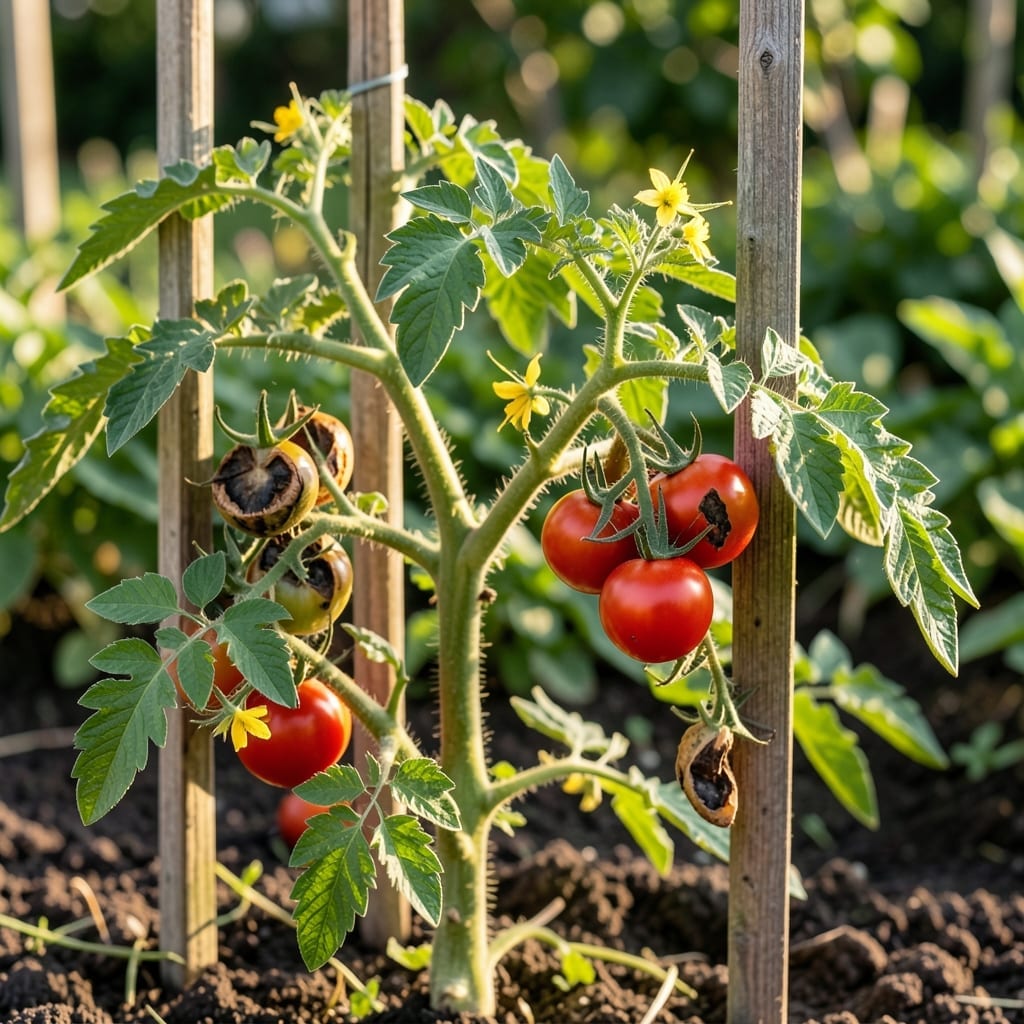
Blossom end rot in tomatoes results from calcium deficiency, causing dark, sunken spots on fruit bottoms. Irregular watering and soil imbalances often trigger this common garden issue.
I’ve seen this issue derail entire tomato harvests when calcium can’t reach the developing fruit. 🔥 The problem often starts with uneven moisture levels—too much or too little water disrupts calcium uptake. Even with ample calcium in soil, inconsistent watering prevents the plant from moving it to where it’s needed most. That’s why maintaining steady soil moisture is just as critical as the nutrient itself.
💡 In This Article
Calcium is the backbone of a plant’s cell walls, and tomatoes need a steady supply to maintain structural integrity. When supply is inconsistent, the fruit’s distal end (farthest from the stem) suffers first because calcium moves through the plant via water transport in the xylem.
Without consistent moisture, this transport system fails, leaving the blossom end starved for calcium. 🔥
The first visible sign is a small, water-soaked spot at the blossom end. As cell walls weaken without calcium, the tissue collapses and darkens. This typically happens when fruits are 1/3 to 1/2 mature. The affected area becomes leathery and sunken, eventually turning black and rotting. Secondary infections often follow, worsening the damage.
Soil pH plays a crucial role in calcium availability. In acidic soils (pH below 6.0), calcium becomes less soluble and harder for roots to absorb. Even if your soil test shows adequate calcium, a pH imbalance can prevent uptake.
Conversely, in alkaline soils (pH above 7.5), other nutrients like iron and manganese become less available, creating different problems. ✨
Temperature extremes compound the issue. During heat waves, plants transpire more rapidly, potentially outpacing calcium delivery. Cold snaps slow root activity, reducing calcium absorption. Both scenarios leave developing fruits vulnerable. The most susceptible tomatoes are often the first fruits of the season or those growing during temperature swings.
What many gardeners overlook is that calcium deficiency symptoms often appear even when soil calcium levels are normal. This happens because the plant can’t transport calcium fast enough to meet the fruit’s demand. The blossom end, being the last to receive nutrients, shows the deficiency first. 💫
Unfortunately, affected fruits won’t recover, but you can prevent further damage. Remove the rotten tomatoes immediately to redirect the plant’s energy. Focus on consistent watering and calcium supplementation for developing fruits.
Foliar calcium chloride spray can be absorbed within 24-48 hours. Apply in the early morning or late evening to avoid leaf burn. For best results, use it as soon as you notice early symptoms.
Yes, peppers, eggplants, and squash can also develop similar symptoms. The same calcium deficiency and water stress issues apply. Preventative measures like soil testing and consistent watering help all susceptible crops.
Crushed eggshells can add calcium, but they break down very slowly. For immediate needs, they’re less effective than gypsum or lime. Work them into the soil in fall to benefit next season’s plants.