
Beautiful Plants For Your Interior
Beautiful Plants For Your Interior
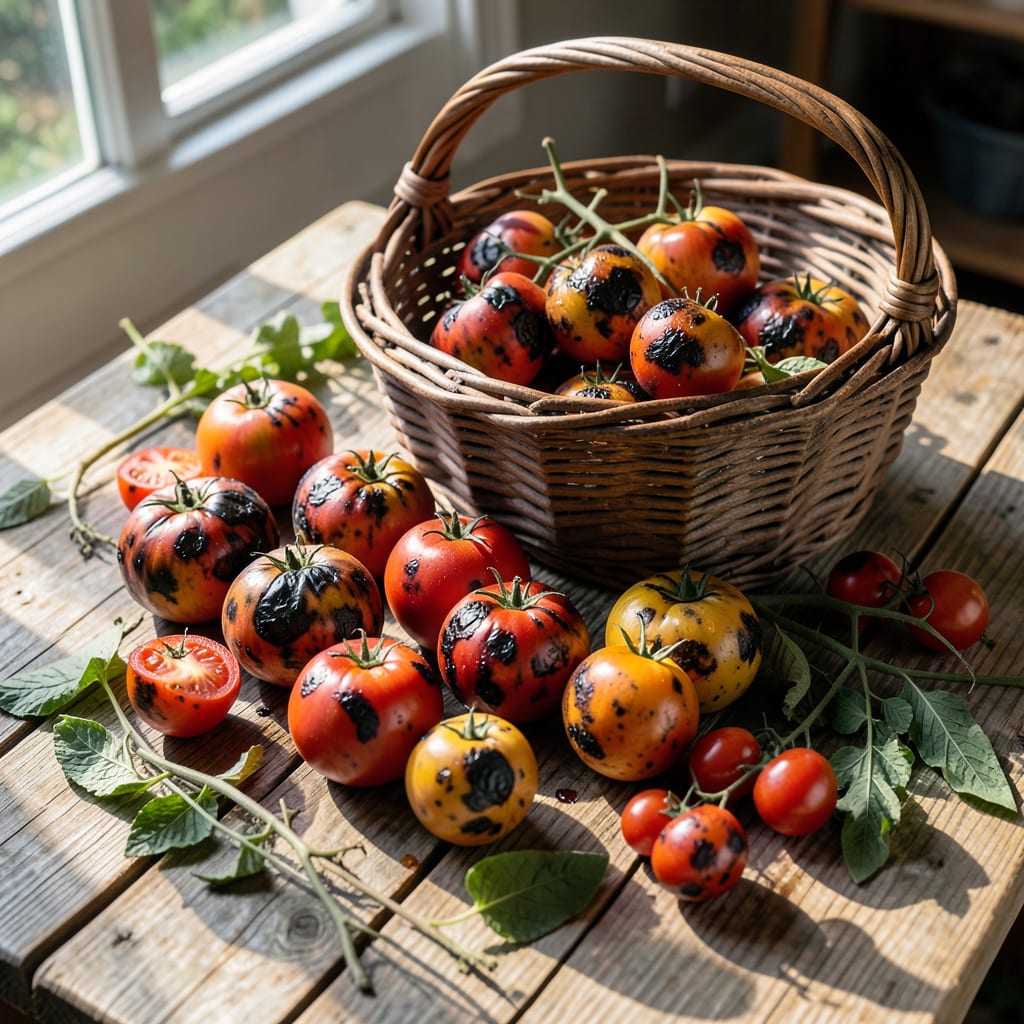
Nothing stings like watching your tomatoes turn black just as they ripen. I’ve lost entire harvests to this, and it always comes down to three common culprits—blossom end rot, disease, or environmental stress.
Blossom end rot hits first, turning the bottom of the fruit dark and leathery. It’s not a disease but a calcium deficiency, often caused by uneven watering. Early blight and frost damage show up differently, each leaving their own telltale marks.
Fixing it starts with consistent moisture and a soil test. Most cases clear up with better watering habits and a calcium boost. For disease, remove affected leaves and improve air circulation around your plants.
Prevention is simpler than you think. A little attention now saves your harvest next season.
Tomatoes turning black is often a sign of blossom end rot (BER), a physiological disorder caused by a calcium deficiency in the developing fruit. This doesn’t always mean your soil lacks calcium—it can also result from uneven watering, which disrupts calcium uptake. When plant cells don’t get enough calcium, the tissue at the blossom end (opposite the stem) breaks down, turning dark, leathery, and sunken. 🌱
Fluctuations in soil moisture—drought followed by overwatering—stress the plant and hinder calcium transport. Tomatoes need steady moisture (1–2 inches per week) to absorb nutrients effectively. Mulching can help maintain even soil hydration.
Even if calcium is present in the soil, high salt levels (from over-fertilization) or acidic pH (below 6.0) can lock it out. Test your soil: ideal pH for tomatoes is 6.2–6.8. Amend with lime or gypsum if tests confirm a deficiency.
Heatwaves or cold snaps disrupt nutrient uptake.When roots are stressed by temperature swings, they absorb calcium poorly. Shade cloth can mitigate heat stress, while row covers protect against unexpected chills.
Fast-growing varieties or over-fertilization (especially with nitrogen) can outpace the plant’s ability to distribute calcium. Balance fertilization with a calcium-rich supplement (e.g., crushed eggshells or calcium nitrate) during fruiting.
Once you’ve identified the cause of your tomatoes turning black, these targeted fixes can save your crop—and help prevent future issues.
Add crushed eggshells or bone meal to the soil at planting time. For a quick fix, use a calcium-rich foliar spray (like calcium nitrate) every 10 days. Prevention tip: 💡 Keep soil moisture consistent—mulch helps!
Water deeply 1–2 inches per week (more in heatwaves) and use drip irrigation to avoid wetting leaves. Prevention tip: 🌡️ Check soil with your finger—if the top inch is dry, it’s time to water.
Prune dense foliage to boost circulation and remove infected fruit immediately. Apply copper fungicide or a baking soda spray (1 tbsp baking soda + 1 tsp dish soap + 1 gallon water). Prevention tip: ✨ Space plants 2–3 feet apart and water at the base.
Use shade cloth (30–50%) during peak sun or plant near taller crops for natural cover. Prevention tip: 🎯 Avoid over-pruning—some leaves protect fruit from harsh rays.
Handpick pests like stink bugs or use neem oil or insecticidal soap. For slugs, set up beer traps or diatomaceous earth barriers. Prevention tip: 🔥 Rotate crops yearly to disrupt pest cycles.
Combine these fixes with regular monitoring, and your tomatoes will stay healthy and vibrant!
Only if the issue is blossom end rot. Cut off the black portion—the rest is fine. For fungal diseases or pest damage, discard the fruit to avoid spreading problems.
Yes! Overwatering leads to root stress and poor calcium uptake. Stick to 1-2 inches per week and ensure good drainage.
Symptoms develop in 3-5 days as the fruit grows. Early signs are small, water-soaked spots that darken and expand.
Lime helps long-term by raising soil pH but takes 2-3 months to fully integrate. For quick results, use a calcium foliar spray.
