
Beautiful Plants For Your Interior
Beautiful Plants For Your Interior
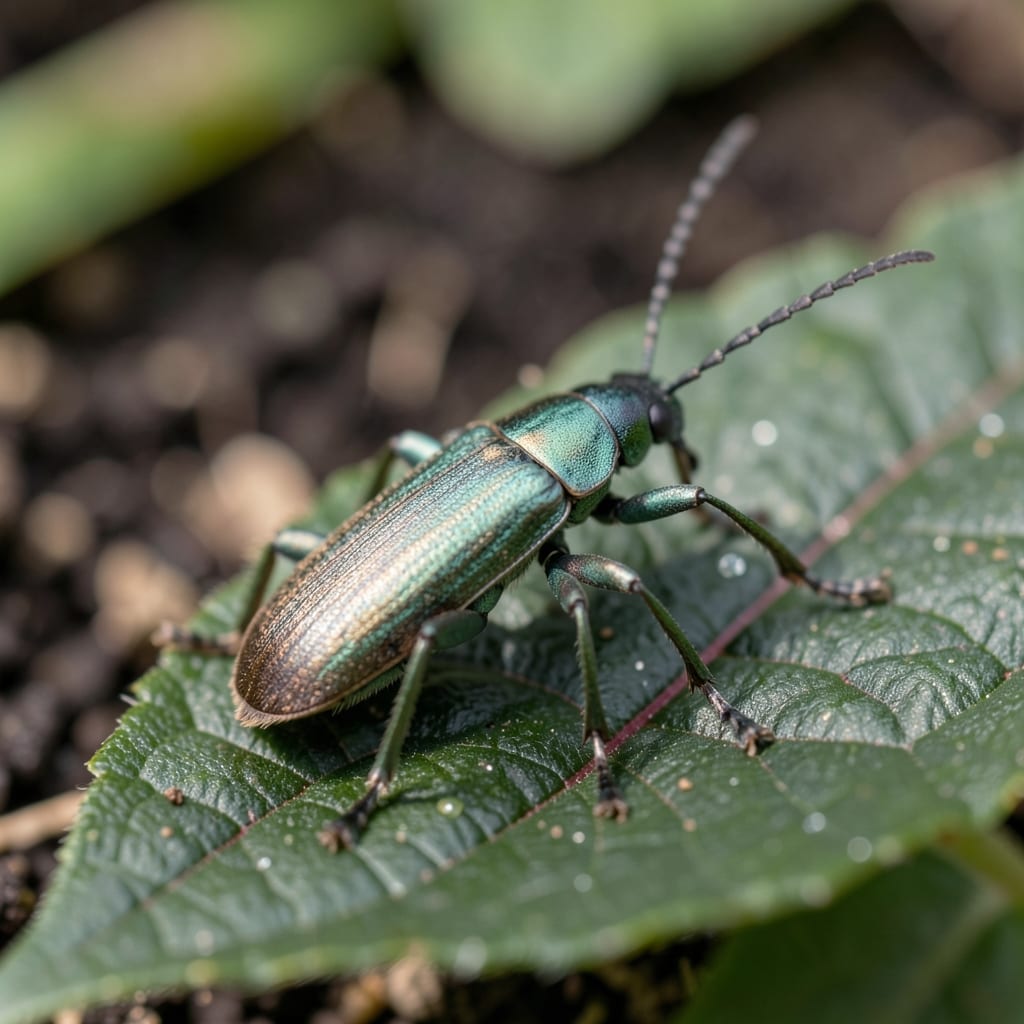
The blister beetle belongs to the family Meloidae, with the most common genera being Epicauta, Lytta, and Meloe. Over 7,500 species exist worldwide.
What fascinates me about these insects is their unique defense mechanism—producing cantharidin, a toxic compound that causes blistering. This chemical adaptation helps them deter predators in the wild. 🔥
They’re often found in gardens, where their elongated bodies and soft wing covers make them distinguishable from other beetles. Identifying them early can prevent crop damage.
💡 In This Article
The family Meloidae distinguishes itself through unique biological traits. These beetles undergo hypermetamorphosis, a development process where larvae pass through multiple distinct forms before adulthood. This is unlike most beetles, which follow a simpler metamorphosis pattern. 🔥
Morphologically, they possess soft, flexible wing covers called elytra, unlike the hard shells of many other beetle families. Their bodies are typically elongated, ranging from 0.2 to 1.2 inches in length, with some species displaying bright warning colors like red, orange, or yellow. These colors signal toxicity to potential predators.
What sets Meloidae apart is their chemical defense. They produce cantharidin, a terpenoid compound stored in their hemolymph. This toxin causes severe skin irritation and blistering in humans and animals. The concentration varies by species, with some containing up to 5% of their body weight in cantharidin.
Their antennae are another key identifier. Unlike the club-shaped antennae of many beetles, blister beetles have thread-like or slightly thickened antennae. This adaptation aids in detecting chemical signals in their environment, crucial for finding mates and food sources. ✨
Geographically, these insects thrive in temperate and tropical regions, with the highest diversity found in North America and Eurasia. The genus Epicauta alone contains over 400 species, many of which are agricultural pests, while Lytta species are often more colorful and less destructive.
They are classified under the Meloidae family. This group includes over 7,500 species with unique traits like soft wing covers and elongated bodies.
They produce cantharidin, a toxic compound that causes severe skin irritation and blistering. This chemical is stored in their hemolymph and deters most predators.
Epicauta, Lytta, and Meloe are the most widespread. Epicauta alone has over 400 species, many of which are garden pests.
They thrive in temperate and tropical regions, especially in North America and Eurasia. Look for them on flowers, particularly in legume, nightshade, or composite plant families.
Wear gloves to avoid cantharidin contact. Drop them into soapy water to drown them—never crush them, as this releases the toxin.