
Beautiful Plants For Your Interior
Beautiful Plants For Your Interior
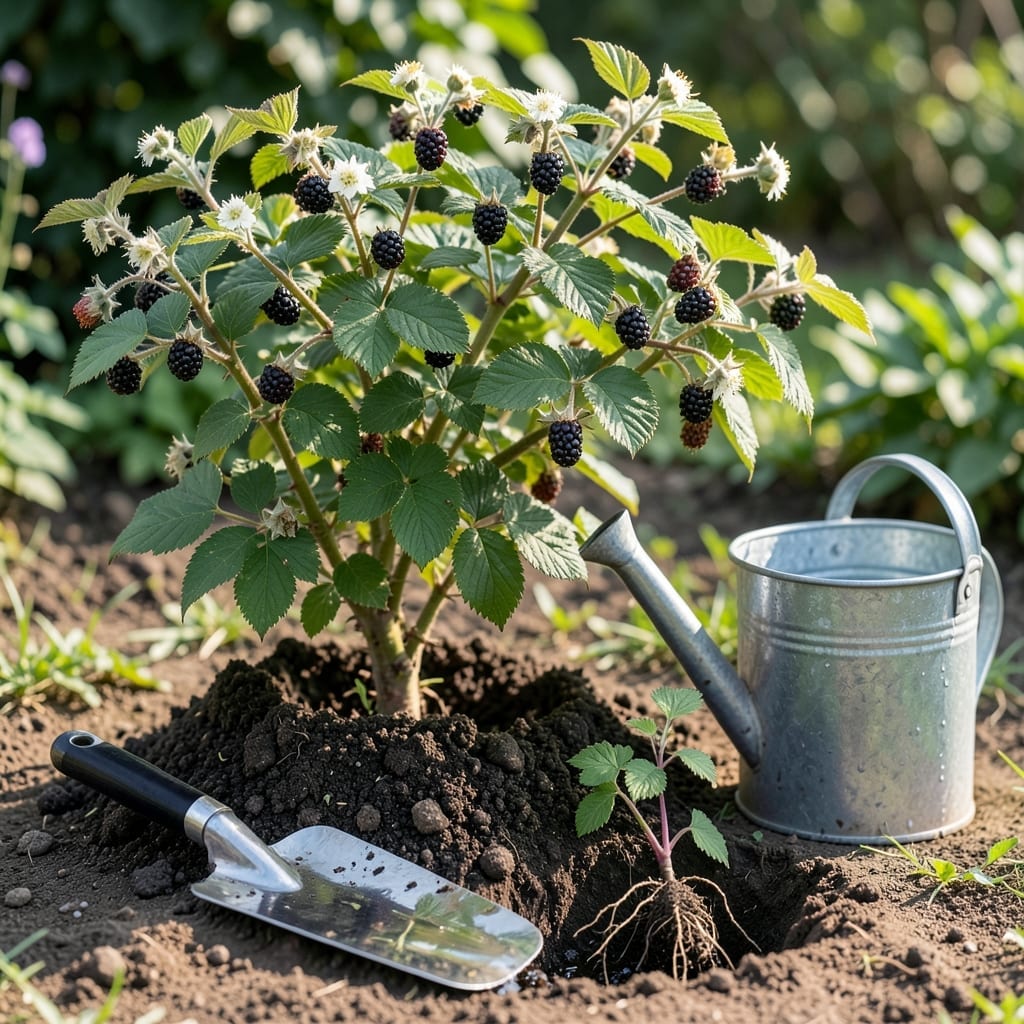
Growing your own blackberries is easier than you think. With the right approach, you can enjoy sweet, juicy harvests for years to come.
I remember my first attempt at planting a 🫐 Blackberry Bush – the excitement of watching those first green shoots appear was unforgettable. Whether you’re a beginner or have some gardening experience, proper planting makes all the difference.
What most people don’t realize is that the foundation for a productive bush is set in those first few weeks. From choosing the right location to proper spacing, every detail matters.
Let me walk you through the essential steps to get your Blackberry Bush off to the best start possible. You’ll be amazed at how rewarding this process can be.

Planting blackberry bushes correctly ensures a strong start for years of harvests. I always recommend early spring or fall planting for best results. The soil should be worked when it’s dry enough to crumble in your hand. 🌱
First, choose a location with full sun exposure—at least 6 hours daily. Blackberries thrive in well-draining soil with a pH between 5.5 and 6.5. I test my soil before planting to avoid issues later. ☀️
For spacing, I plant erect varieties about 3 feet apart in rows 6 feet apart. Trailing varieties need more room—4-6 feet between plants and 8-10 feet between rows. This prevents overcrowding as they mature. 🌿
Support structures are crucial for trailing types. I use a trellis system with wires at 3-foot intervals. For erect varieties, a simple stake or cage works well. Install supports at planting to avoid disturbing roots later.
After planting, prune canes to 6-12 inches tall to encourage strong growth. This might seem drastic, but it pays off with healthier plants and better yields in the long run. ✂️
Watering is key in the first year—1-2 inches weekly, more in hot weather. I water in the early morning to reduce evaporation and prevent fungal issues. Avoid wetting the leaves to minimize disease risk.
For fertilizing, I wait until new growth appears, then apply a balanced 10-10-10 fertilizer. In subsequent years, fertilize in early spring and again after harvest. Always follow package instructions for amounts.
Weed control is essential, especially early on. I maintain a 2-3 inch mulch layer and hand-pull any weeds that appear. Avoid using herbicides near your bushes, as they can damage the shallow root system.
Finally, monitor for pests like aphids or diseases like anthracnose. Regular inspections help catch problems early. With proper care, your blackberry bushes will reward you with delicious fruit for 15-20 years. 🪴
Selecting the right blackberry variety makes all the difference in your garden’s success. I’ve found that matching the plant type to your space and climate is key. Some varieties thrive in cold climates, while others prefer warmer zones. 🌱
You’ll want to consider whether you prefer thornless or thorny varieties, as well as erect versus trailing types. Each has its own benefits for different garden setups. ☀️
| Variety Type | Key Features | Best For |
|---|---|---|
| Thornless | Easier harvesting, less maintenance | Families, small gardens |
| Thorny | More disease resistant, higher yield | Large gardens, commercial |
| Erect | Self-supporting, compact growth | Small spaces, containers |
| Trailing | Long canes, needs trellis | Large gardens, vertical spaces |
For cold climates, I recommend ‘Chester’ or ‘Illini Hardy’—both handle USDA zones 4-7 beautifully. In warmer areas, ‘Ouachita’ and ‘Natchez’ perform exceptionally well in zones 7-10. 🌿
If space is limited, consider dwarf varieties like ‘Baby Cakes’. These stay compact at just 3-4 feet tall and work great in containers. For maximum yield, ‘Triple Crown’ is a thornless favorite.
Remember that trailing varieties need strong support systems. I use a 5-6 foot trellis for my trailing blackberries. Erect types still benefit from stakes or cages, especially in windy areas. ✂️
Lastly, consider your harvest timing. Early varieties like ‘Apache’ ripen in June, while late varieties such as ‘Kiowa’ produce until August. Planting a mix gives you continuous harvests all summer long. 🪴