
Beautiful Plants For Your Interior
Beautiful Plants For Your Interior
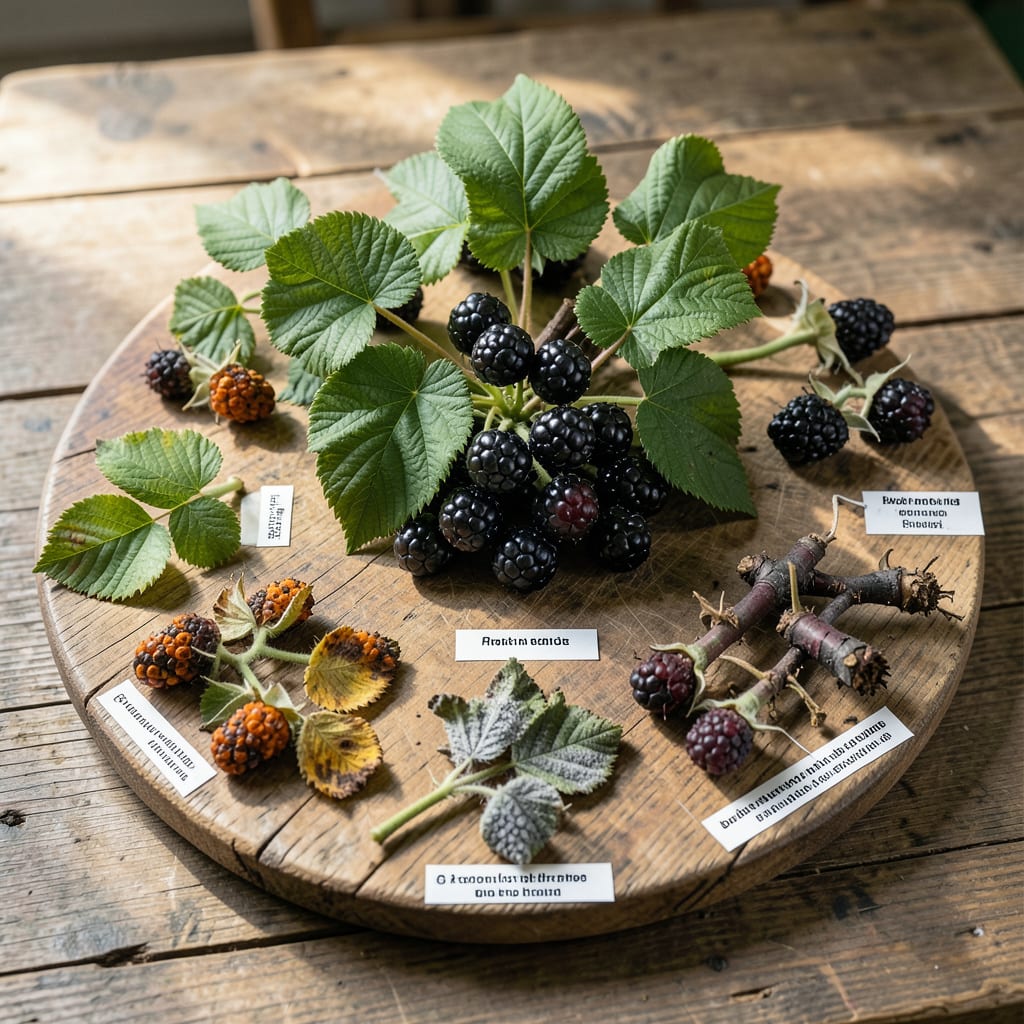
Spotted leaves or stunted canes on your blackberry bushes aren’t just eyesores—they’re red flags. I’ve lost entire harvests to diseases that started with subtle changes I ignored for too long.
Most blackberry diseases spread through poor air circulation, wet foliage, or contaminated tools. The good news? Early detection means you can stop problems before they wipe out your plants. Organic solutions work surprisingly well when you catch issues early.
You’ll learn to recognize the telltale signs: white powder on leaves, purple spots on canes, or berries that shrivel before ripening. Each symptom points to a specific culprit and treatment approach.
From rust to anthracnose, this guide helps you diagnose with confidence and treat effectively. Your bushes can bounce back stronger next season.
Blackberry bushes can fall victim to various diseases due to environmental, biological, and cultural factors. Understanding the root causes helps in prevention and targeted treatment. Below are the primary reasons these issues arise.
Fungi like Anthracnose (Elsinoe veneta) and Cane Blight (Leptosphaeria coniothyrium) thrive in humid, wet conditions. Overhead watering, poor air circulation, or prolonged leaf wetness create ideal environments for spores to germinate and infect tissues. Fungi often enter through wounds from pruning cuts or insect damage.
Bacteria such as Pseudomonas syringae (causal agent of cane gall) spread via contaminated tools, rain splash, or insects. These pathogens exploit stressed plants, often due to drought, nutrient deficiencies, or physical injury. Once inside, they multiply rapidly in the plant’s vascular system, blocking water and nutrient flow.
Insects like aphids, raspberry cane borers, and spotted wing drosophila act as vectors for viruses (e.g., Raspberry Bushy Dwarf Virus). They transmit pathogens through feeding wounds or by laying eggs in canes. Weakened bushes from pest infestations are also more susceptible to secondary infections.
Overcrowding restricts airflow, increasing humidity and disease risk. Improper pruning (e.g., leaving stubs or using dull tools) creates entry points for pathogens. Soil imbalances, such as excessive nitrogen or compacted soil, stress plants and reduce their natural defenses. Additionally, planting susceptible varieties in disease-prone areas exacerbates issues.
Extreme weather—drought, frost, or waterlogged soil—weakens bushes, making them vulnerable. High humidity and mild temperatures (60–75°F) accelerate fungal growth, while cold snaps can damage canes, inviting infections. Poor drainage leads to root rot, further compromising plant health.
Blackberry bush diseases can be frustrating, but with the right approach, your plants can bounce back. Below are targeted solutions for common issues, paired with prevention tips to keep your bushes thriving.
Remove infected canes immediately to stop the spread. Copper-based fungicides (organic-approved) work well as a treatment. Apply in early spring or after harvest.
Prune out infected canes below the damaged area (at least 6 inches under). Disinfect tools with rubbing alcohol between cuts. Neem oil can help prevent further infection when applied weekly during wet seasons.
This disease is systemic—once a plant is infected, it must be pulled and destroyed (do not compost). Replace with rust-resistant varieties like ‘Chester’ or ‘Hull’.
Spray plants with a strong jet of water to dislodge mites. For severe infestations, use insecticidal soap or horticultural oil, applying in the early morning or late evening.
Look for small, purple spots on young canes that turn gray with sunken centers. Leaves may develop brown edges. These signs often appear in spring on new growth.
Prune during dry weather and disinfect tools between cuts. Use drip irrigation to keep foliage dry. Plant resistant varieties like ‘Black Satin’ for extra protection.
No, orange rust is systemic. Infected plants must be removed and destroyed immediately to prevent spreading to healthy bushes. Replace with rust-resistant varieties.
Apply copper-based fungicides in early spring or after harvest. Reapply every 10-14 days during wet seasons for best results. Always follow label instructions.
